A traveling exhibition dedicated to Aristide Maillol (1861–1944) and Manolo Hugué (1872–1945) brings together sculptures and drawings that highlight their artistic proximity and stylistic differences.24.02.2026
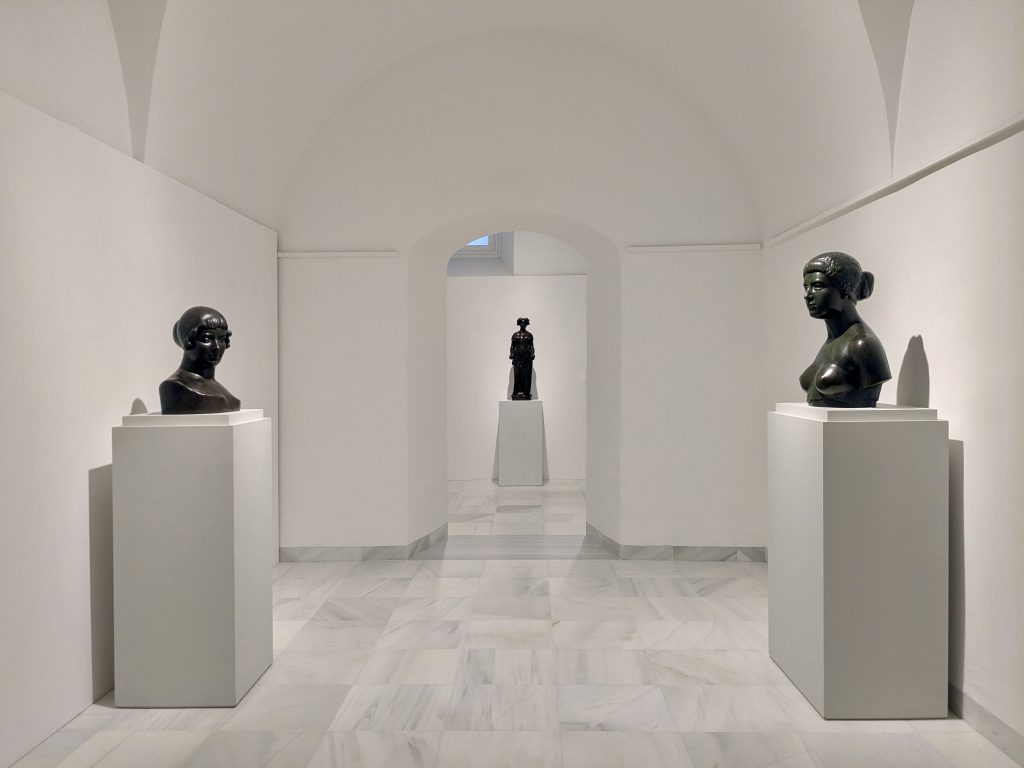
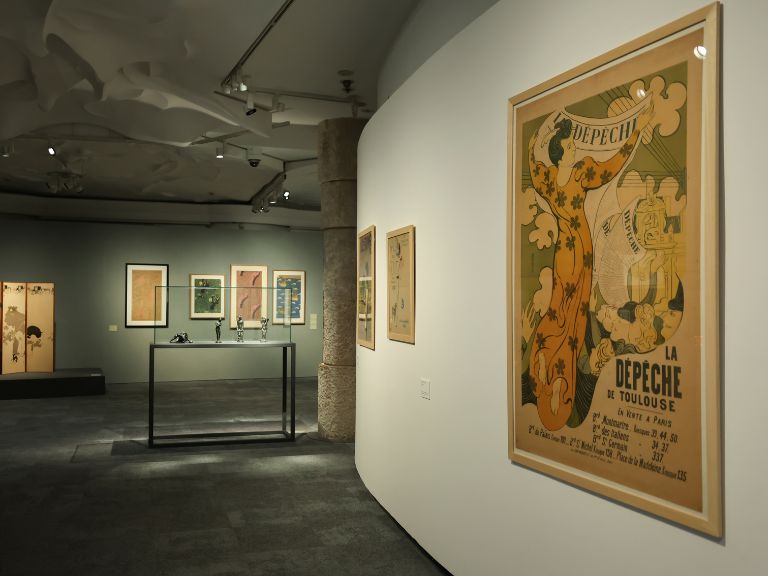
View of the Maillol – Manolo exhibition. La escultura pura © Galería Leandro Navarro The project was conceived by Àlex Susanna, a philosopher and art historian who has studied the work of these two sculptors throughout his career. The pieces on display come from several collections, with a key role played by Artur Ramon Art, which preserves and promotes Manolo’s work, and the Galerie Dina Vierny, the guardian of Maillol’s legacy. Following its run in Madrid, the exhibition will move to Barcelona at Artur Ramon Art, and then to Paris at the Galerie Dina Vierny next autumn. Maillol and Manolo met at the beginning of the 20th century and grew closer during World War I when they retreated to the Pyrénées-Orientales. With Maillol in Banyuls-sur-Mer and Manolo in Céret, they found a Mediterranean setting for creation and artistic exchange. Their relationship, documented notably by Pierre Camo—a magistrate, writer, and poet native to Céret—underscores a mutual admiration and a lasting dialogue between the two artists. In his writings, Pierre Camo records several encounters between Maillol and Manolo, particularly during the Etienne Terrus exhibition in Perpignan in late 1912. He recalls Maillol’s stay in Céret in December 1912, where the two sculptors attended midnight mass accompanied by Déodat de Séverac. Years later, Camo would keep a photograph of the bust Manolo made of him and reminisce about shared meals at the house in Banyuls, where the likes of Matisse, Marquet, Terrus, and Daniel de Monfreid would cross paths.

View of the Maillol – Manolo exhibition. La escultura pura © Galería Leandro Navarro
View of the Maillol – Manolo exhibition. La escultura pura © Galería Leandro Navarro
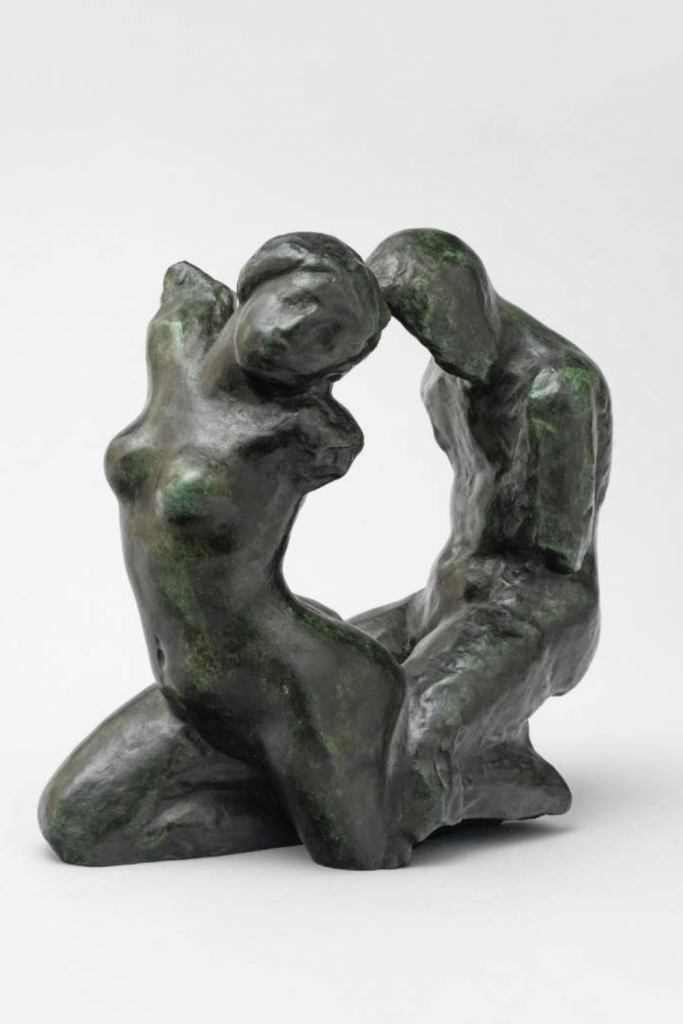
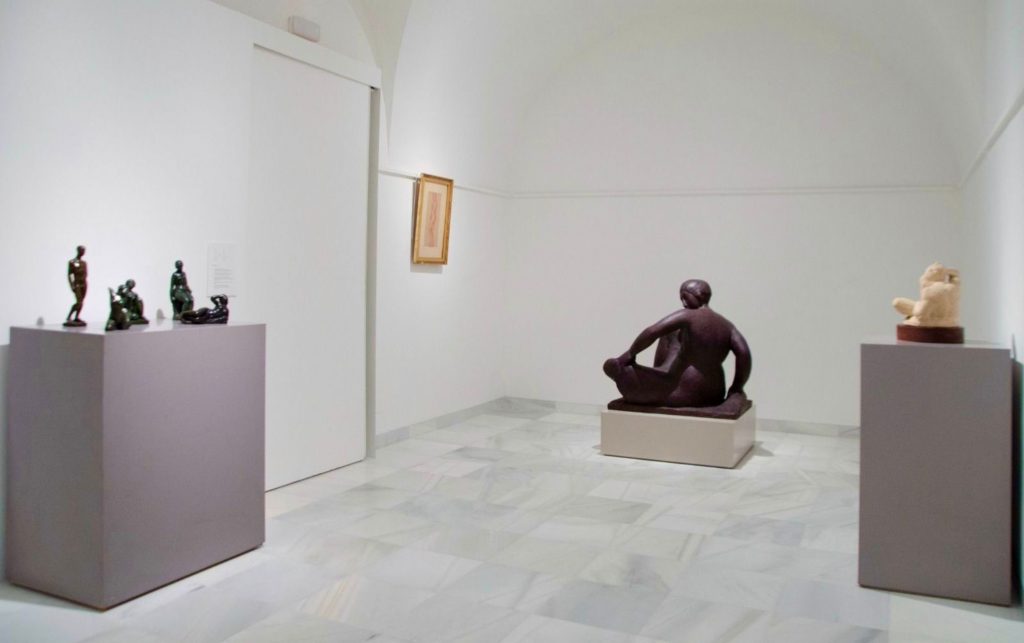
Both artists shared a quest for pure sculpture, rooted in balance and simplicity of form. The female body occupies a central place in their work. Maillol developed full, continuous volumes with smooth surfaces, while Manolo adopted a more restrained, sometimes more archaic approach. Both worked with stone, bronze, and terracotta, using drawing as a preparatory tool. While woman was a favorite theme for both—with the nude female body perceived as an ideal of perfection and a symbol of harmony—their approaches differed. Maillol approached the female body through sensuality, whereas Manolo’s approach was more cautious, innocent, or primitive.

Aristide Maillol, 'Le Couple' (or 'L’homme et la femme'), 1896, Bronze, 17 × 16 × 8,6 cm
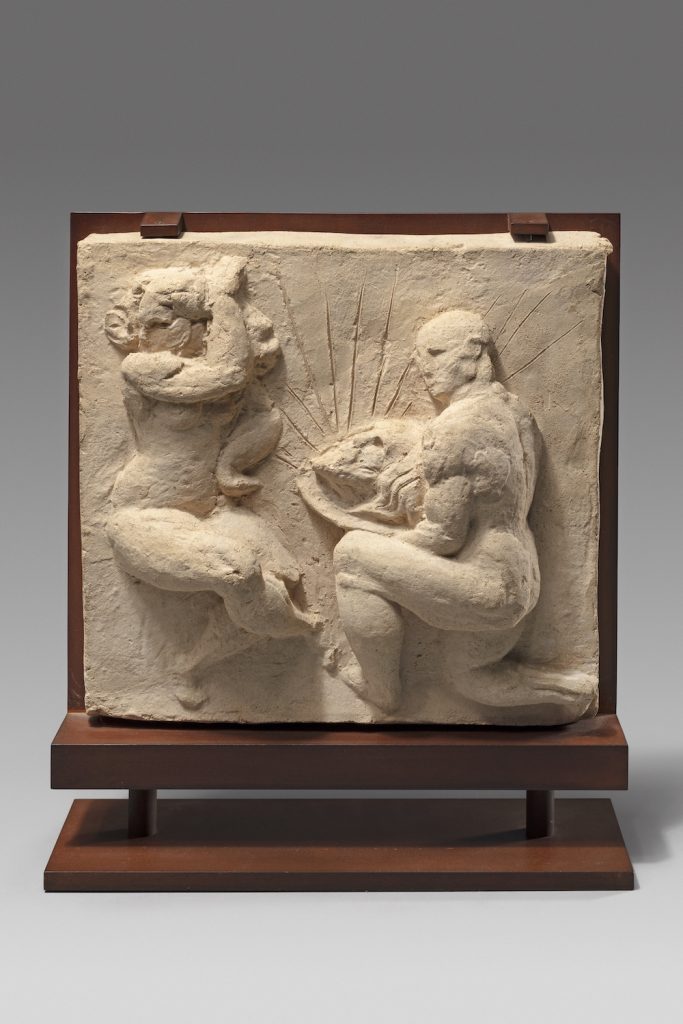
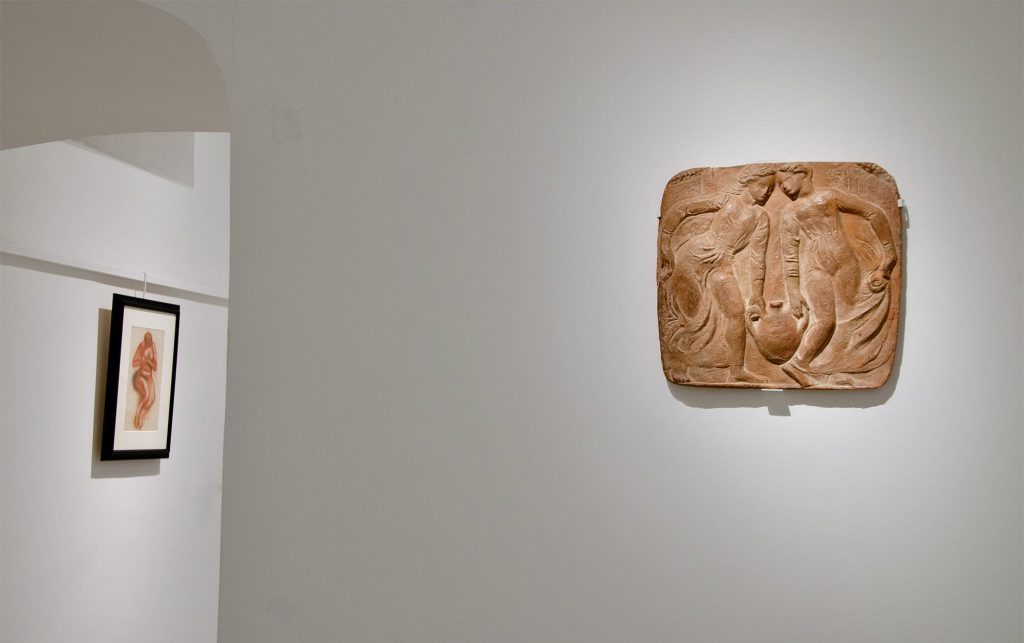
Manolo Hugué, 'Danse de Salomé', 1927–28, Terracotta, 23 × 22,5 × 6 cm
Maillol and Manolo were self-taught artists who came to sculpture late in life: the former after woodcarving, and the latter after jewelry-making under the tutelage of Paco Durrio, a disciple of Gauguin. Introduced to the Nabis group through Gauguin, Maillol was a friend of Pierre Bonnard, Édouard Vuillard, and Maurice Denis, who regarded him as a "classical primitive." From 1900 onwards, due to an eye disease, he devoted himself exclusively to sculpture. He created a prototype of a woman with voluptuous forms typical of the Roussillon region, symbolizing the joy of living. The fullness of the volumes resolves into a smooth sculpture with defined contours where the artist's hand is imperceptible. The figure is expressive through the roundness of its silhouette, whereas the face is usually expressionless—a lack of emotion that he shares with Manolo. The exhibition juxtaposes works that maintain a particularly close formal dialogue. Certain pieces mirror each other in their treatment of volume and posture, such as the terracotta reliefs ‘Les Porteuses d’eau de Maillol’ (1898) and ‘Deux femmes de Manolo’ (1924). Thematic and expressive correspondences regarding the human body and movement are also evident in Manolo's ‘La Danse de Salomé’ (terracotta relief, 1927–1928) and Maillol's ‘Le Couple’ (bronze, 1896). While both works convey a tension between bodies through dance, they offer different interpretations: in Maillol’s work, the movement suggests proximity and sensuality; in Manolo’s, the female figure becomes a vessel for symbolic narrative and tragedy. Maillol and Manolo embody a singular modernity based on the study of the human body and the rigor of form. Standing apart from the dominant avant-gardes of the 20th century, they developed a coherent and demanding body of work focused on permanence rather than rupture. Two names, two men seeking to represent the beauty of the world and woman as a symbol, through works of archaic Greek lineage that explore flat surfaces and the power of a gesture immortalized in bronze or clay.
Both artists shared a quest for pure sculpture, rooted in balance and simplicity of form. The female body occupies a central place in their work. Maillol developed full, continuous volumes with smooth surfaces, while Manolo adopted a more restrained, sometimes more archaic approach. Both worked with stone, bronze, and terracotta, using drawing as a preparatory tool. While woman was a favorite theme for both—with the nude female body perceived as an ideal of perfection and a symbol of harmony—their approaches differed. Maillol approached the female body through sensuality, whereas Manolo’s approach was more cautious, innocent, or primitive.
View of the Maillol – Manolo exhibition. La escultura pura © Galería Leandro Navarro A traveling exhibition dedicated to Aristide Maillol (1861–1944) and Manolo Hugué (1872–1945) brings together sculptures and drawings that highlight their artistic proximity and stylistic differences.
The project was conceived by Àlex Susanna, a philosopher and art historian who has studied the work of these two sculptors throughout his career. The pieces on display come from several collections, with a key role played by Artur Ramon Art, which preserves and promotes Manolo’s work, and the Galerie Dina Vierny, the guardian of Maillol’s legacy. Following its run in Madrid, the exhibition will move to Barcelona at Artur Ramon Art, and then to Paris at the Galerie Dina Vierny next autumn. Maillol and Manolo met at the beginning of the 20th century and grew closer during World War I when they retreated to the Pyrénées-Orientales. With Maillol in Banyuls-sur-Mer and Manolo in Céret, they found a Mediterranean setting for creation and artistic exchange. Their relationship, documented notably by Pierre Camo—a magistrate, writer, and poet native to Céret—underscores a mutual admiration and a lasting dialogue between the two artists. In his writings, Pierre Camo records several encounters between Maillol and Manolo, particularly during the Etienne Terrus exhibition in Perpignan in late 1912. He recalls Maillol’s stay in Céret in December 1912, where the two sculptors attended midnight mass accompanied by Déodat de Séverac. Years later, Camo would keep a photograph of the bust Manolo made of him and reminisce about shared meals at the house in Banyuls, where the likes of Matisse, Marquet, Terrus, and Daniel de Monfreid would cross paths.
Both artists shared a quest for pure sculpture, rooted in balance and simplicity of form. The female body occupies a central place in their work. Maillol developed full, continuous volumes with smooth surfaces, while Manolo adopted a more restrained, sometimes more archaic approach. Both worked with stone, bronze, and terracotta, using drawing as a preparatory tool. While woman was a favorite theme for both—with the nude female body perceived as an ideal of perfection and a symbol of harmony—their approaches differed. Maillol approached the female body through sensuality, whereas Manolo’s approach was more cautious, innocent, or primitive.

Aristide Maillol, 'Le Couple' (or 'L’homme et la femme'), 1896, Bronze, 17 × 16 × 8,6 cm

Manolo Hugué, 'Danse de Salomé', 1927–28, Terracotta, 23 × 22,5 × 6 cm
Maillol and Manolo were self-taught artists who came to sculpture late in life: the former after woodcarving, and the latter after jewelry-making under the tutelage of Paco Durrio, a disciple of Gauguin. Introduced to the Nabis group through Gauguin, Maillol was a friend of Pierre Bonnard, Édouard Vuillard, and Maurice Denis, who regarded him as a "classical primitive." From 1900 onwards, due to an eye disease, he devoted himself exclusively to sculpture. He created a prototype of a woman with voluptuous forms typical of the Roussillon region, symbolizing the joy of living. The fullness of the volumes resolves into a smooth sculpture with defined contours where the artist's hand is imperceptible. The figure is expressive through the roundness of its silhouette, whereas the face is usually expressionless—a lack of emotion that he shares with Manolo. The exhibition juxtaposes works that maintain a particularly close formal dialogue. Certain pieces mirror each other in their treatment of volume and posture, such as the terracotta reliefs ‘Les Porteuses d’eau de Maillol’ (1898) and ‘Deux femmes de Manolo’ (1924). Thematic and expressive correspondences regarding the human body and movement are also evident in Manolo's ‘La Danse de Salomé’ (terracotta relief, 1927–1928) and Maillol's ‘Le Couple’ (bronze, 1896). While both works convey a tension between bodies through dance, they offer different interpretations: in Maillol’s work, the movement suggests proximity and sensuality; in Manolo’s, the female figure becomes a vessel for symbolic narrative and tragedy. Maillol and Manolo embody a singular modernity based on the study of the human body and the rigor of form. Standing apart from the dominant avant-gardes of the 20th century, they developed a coherent and demanding body of work focused on permanence rather than rupture. Two names, two men seeking to represent the beauty of the world and woman as a symbol, through works of archaic Greek lineage that explore flat surfaces and the power of a gesture immortalized in bronze or clay.
Galerie Dina Vierny
36 rue Jacob 75006 Paris
53 Rue de Seine, 75006 Paris
Open from Tuesday to Saturday from 11 a.m. to 7 p.m.
Galerie Dina Vierny
36 rue Jacob 75006 Paris
53 Rue de Seine, 75006 Paris
Open from Tuesday to Saturday from 11 a.m. to 7 p.m.