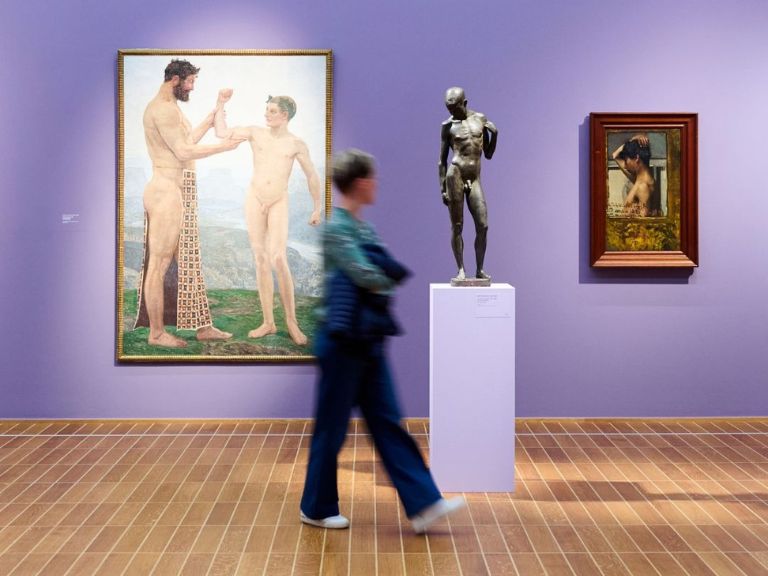
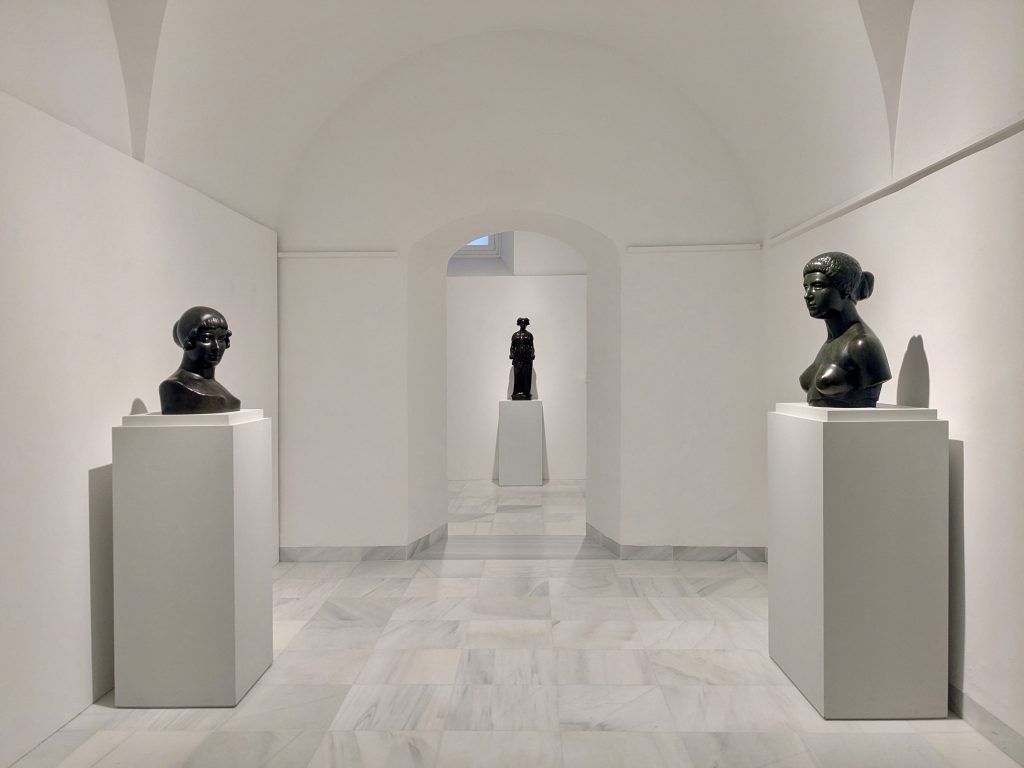
One of Aristide Maillol's major works, Le coureur cycliste (The Cyclist), is currently on display at the Kunstmuseum Basel in Switzerland, as part of the exhibition The First Homosexuals: The Birth of New Identities.30.03.26
View of the exhibition The First Homosexuals - The Birth of New Identities This ambitious exhibition explores a pivotal moment in art history, from the late 19th century to the interwar period, when new identities were emerging and asserting themselves. It traces the evolution of the depiction of the nude in connection with shifting conceptions of sexuality, and analyzes how classical motifs from art history could serve as discreet codes for the expression of same-sex desire. The exhibition notably highlights a fundamental change that occurred around 1900 in the depiction of male bodies. While the late 19th century favored slender and youthful figures, the early 20th century saw the rise of a more muscular and virile bodily ideal. This evolution is linked to a transformation in the very perception of homosexuality: gradually moving away from the theory of a "third sex" with a female soul, a new conception emerged in which a masculine gender identity is fully asserted, in accordance with the desire for another man.
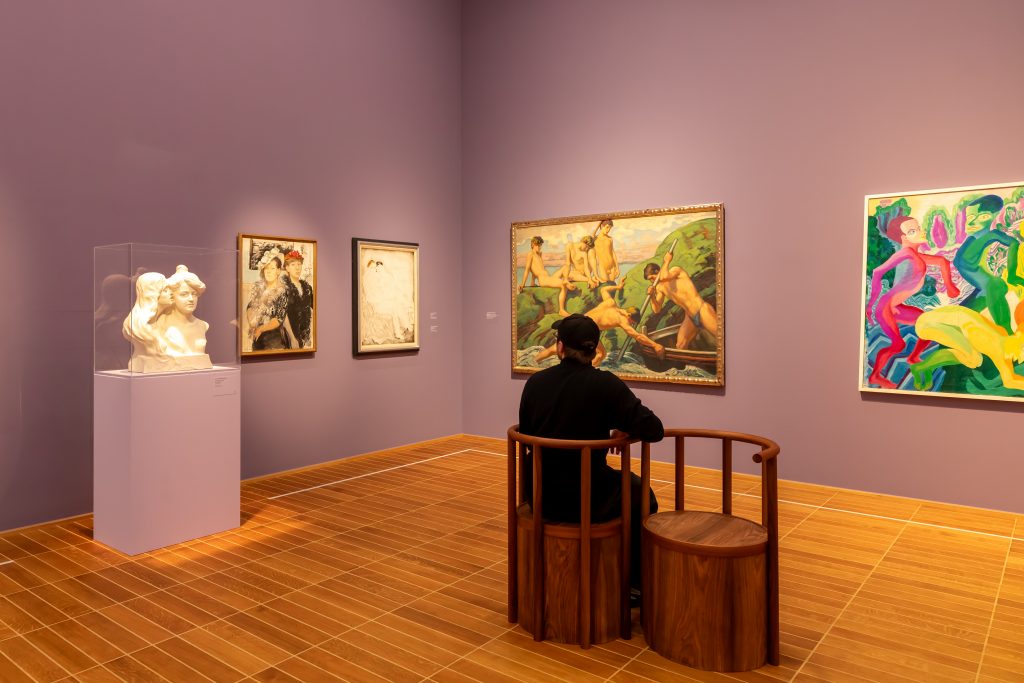

View of the exhibition The First Homosexuals - The Birth of New Identities
© Julian Salinas
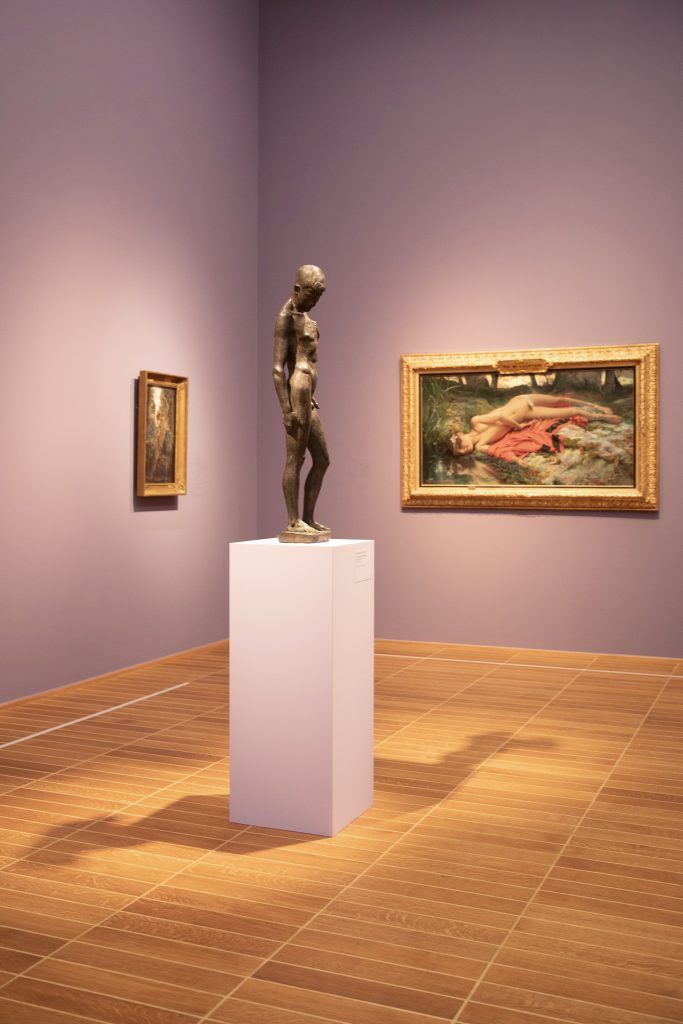
The genesis of Le coureur cycliste fits perfectly within this context. The work was born from a commission by the German writer, collector, and patron Harry von Kessler, during a trip to Greece with Aristide Maillol. Fascinated by the athletic body of his lover, the cyclist and jockey Gaston Colin, Kessler wished to immortalize the slender figure that embodied the homoerotic ideals of his time. Guided by his patron's aesthetic preferences, Maillol crafted a sculpture that, through its posture and lowered gaze, evokes ancient representations of the god Apollo. The work celebrates a male body that is both powerful and idealized, drawing its inspiration from the canons of Greek statuary.

View of the exhibition The First Homosexuals - The Birth of New Identities
© Sonja Maria Schobinger
In a context where homosexuality was repressed, the turn to Antiquity was not insignificant. Classical Greece appeared as a model of freedom and a cultural touchstone that made it possible to express and legitimize a desire that contemporary society condemned. Maillol's Le coureur cycliste thus becomes much more than the portrait of an athlete; it is a testament to a quest for identity and an aesthetic affirmation, finding in the classical ideal a resonance that is both intimate and universal.
The genesis of Le coureur cycliste fits perfectly within this context. The work was born from a commission by the German writer, collector, and patron Harry von Kessler, during a trip to Greece with Aristide Maillol. Fascinated by the athletic body of his lover, the cyclist and jockey Gaston Colin, Kessler wished to immortalize the slender figure that embodied the homoerotic ideals of his time. Guided by his patron's aesthetic preferences, Maillol crafted a sculpture that, through its posture and lowered gaze, evokes ancient representations of the god Apollo. The work celebrates a male body that is both powerful and idealized, drawing its inspiration from the canons of Greek statuary.
View of the exhibition The First Homosexuals - The Birth of New Identities One of Aristide Maillol's major works, Le coureur cycliste (The Cyclist), is currently on display at the Kunstmuseum Basel in Switzerland, as part of the exhibition The First Homosexuals: The Birth of New Identities.
This ambitious exhibition explores a pivotal moment in art history, from the late 19th century to the interwar period, when new identities were emerging and asserting themselves. It traces the evolution of the depiction of the nude in connection with shifting conceptions of sexuality, and analyzes how classical motifs from art history could serve as discreet codes for the expression of same-sex desire. The exhibition notably highlights a fundamental change that occurred around 1900 in the depiction of male bodies. While the late 19th century favored slender and youthful figures, the early 20th century saw the rise of a more muscular and virile bodily ideal. This evolution is linked to a transformation in the very perception of homosexuality: gradually moving away from the theory of a "third sex" with a female soul, a new conception emerged in which a masculine gender identity is fully asserted, in accordance with the desire for another man.
The genesis of Le coureur cycliste fits perfectly within this context. The work was born from a commission by the German writer, collector, and patron Harry von Kessler, during a trip to Greece with Aristide Maillol. Fascinated by the athletic body of his lover, the cyclist and jockey Gaston Colin, Kessler wished to immortalize the slender figure that embodied the homoerotic ideals of his time. Guided by his patron's aesthetic preferences, Maillol crafted a sculpture that, through its posture and lowered gaze, evokes ancient representations of the god Apollo. The work celebrates a male body that is both powerful and idealized, drawing its inspiration from the canons of Greek statuary.

View of the exhibition The First Homosexuals - The Birth of New Identities
© Sonja Maria Schobinger
In a context where homosexuality was repressed, the turn to Antiquity was not insignificant. Classical Greece appeared as a model of freedom and a cultural touchstone that made it possible to express and legitimize a desire that contemporary society condemned. Maillol's Le coureur cycliste thus becomes much more than the portrait of an athlete; it is a testament to a quest for identity and an aesthetic affirmation, finding in the classical ideal a resonance that is both intimate and universal.
Galerie Dina Vierny
36 rue Jacob 75006 Paris
53 Rue de Seine, 75006 Paris
Open from Tuesday to Saturday from 11 a.m. to 7 p.m.
Galerie Dina Vierny
36 rue Jacob 75006 Paris
53 Rue de Seine, 75006 Paris
Open from Tuesday to Saturday from 11 a.m. to 7 p.m.