‘La Nuit’ (1902) by Aristide Maillol is on loan for the exhibition ‘L’empire du sommeil’, presented at the Musée Marmottan Monet until 1 March 2026. This loan continues the gallery’s collaborations around Maillol’s work.18.12.2025
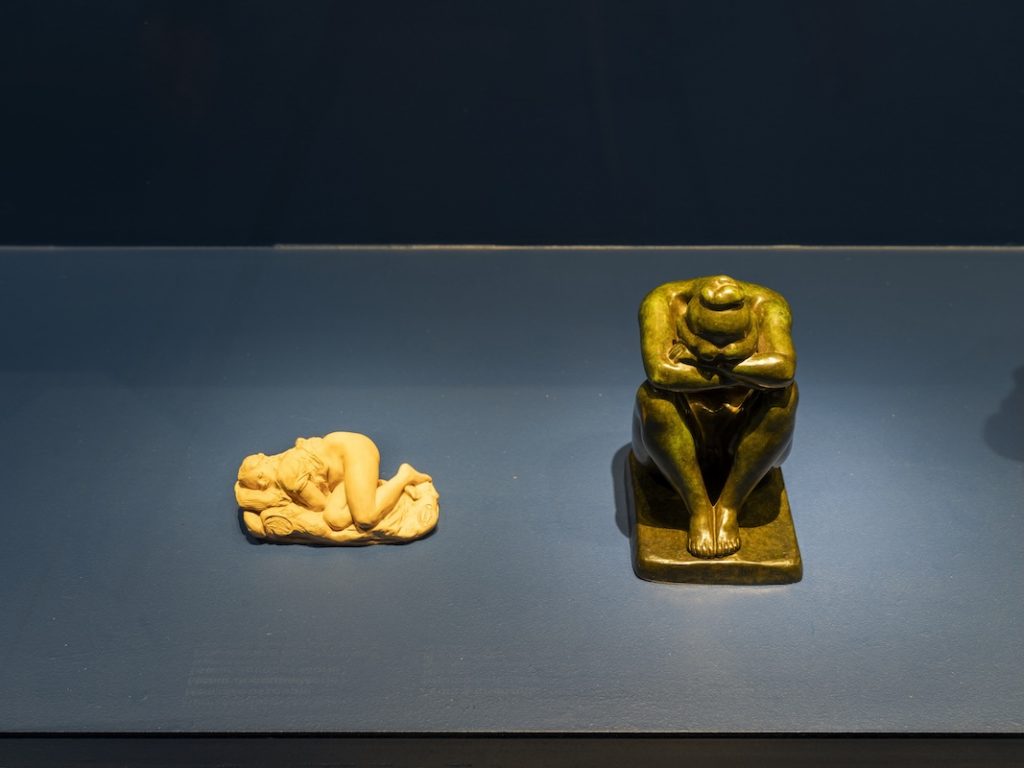
Jean-Baptiste Carpeaux, 'Femme endormie' (1876) and Aristide Maillol, 'La Nuit' (1902) © Studio Christian Baraja SLB Created in 1902, this bronze is a preparatory study for the monumental version of ‘La Nuit’. The work belongs to a pivotal period in Maillol’s production, marked by the development of the theme of the seated female figure, for which he often used his wife, Clotilde Narcis, as a model. The figure is contained within a cubic volume, folded in on itself, the face buried between the arms resting on the knees. Maillol emphasizes the solidity of the torso and thighs, while narrow openings - between the bust and the legs, and between the calves and the backs of the thighs - introduce pauses within the composition.
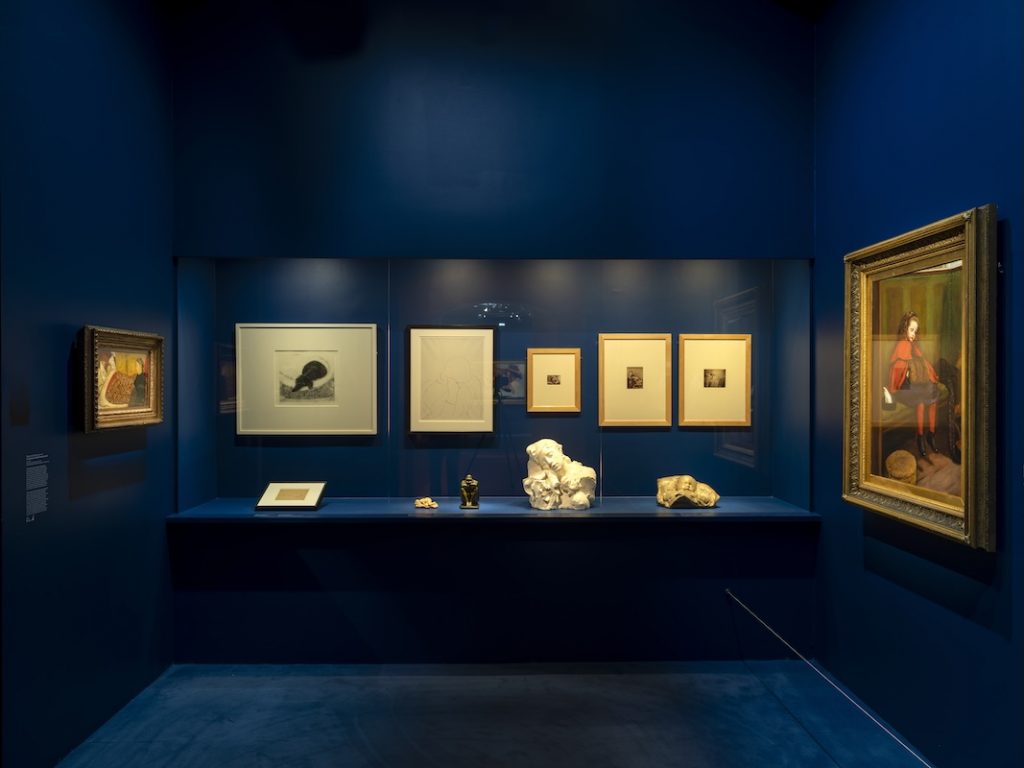

Exhibition view 'L'empire du sommeil' © Studio Christian Baraja SLB
The exhibition brings together nearly one hundred and thirty works, most of them situated within the framework of the ‘long nineteenth century’, from the Enlightenment to the First World War. Drawn from various public institutions and private collections, both national and international, these works attest to the sustained presence of this motif in the history of art. Presented in the first section of the exhibition, entitled ‘Doux sommeil, bonheur pur’, ‘La Nuit’ is shown alongside ‘Femme endormie’ (1876) by Jean-Baptiste Carpeaux and ‘Sommeil, buste de femme’ (1889) by Auguste Rodin. This dialogue highlights differing sculptural approaches, from the expressive modeling of the late nineteenth century to Maillol’s smooth and inward-looking treatment. Integrated into this itinerary, ‘La Nuit’ resonates with works devoted to rest, dream, and the allegorical figure of sleep.
Jean-Baptiste Carpeaux, 'Femme endormie' (1876) and Aristide Maillol, 'La Nuit' (1902) © Studio Christian Baraja SLB ‘La Nuit’ (1902) by Aristide Maillol is on loan for the exhibition ‘L’empire du sommeil’, presented at the Musée Marmottan Monet until 1 March 2026. This loan continues the gallery’s collaborations around Maillol’s work.
Created in 1902, this bronze is a preparatory study for the monumental version of ‘La Nuit’. The work belongs to a pivotal period in Maillol’s production, marked by the development of the theme of the seated female figure, for which he often used his wife, Clotilde Narcis, as a model. The figure is contained within a cubic volume, folded in on itself, the face buried between the arms resting on the knees. Maillol emphasizes the solidity of the torso and thighs, while narrow openings - between the bust and the legs, and between the calves and the backs of the thighs - introduce pauses within the composition.
The exhibition brings together nearly one hundred and thirty works, most of them situated within the framework of the ‘long nineteenth century’, from the Enlightenment to the First World War. Drawn from various public institutions and private collections, both national and international, these works attest to the sustained presence of this motif in the history of art. Presented in the first section of the exhibition, entitled ‘Doux sommeil, bonheur pur’, ‘La Nuit’ is shown alongside ‘Femme endormie’ (1876) by Jean-Baptiste Carpeaux and ‘Sommeil, buste de femme’ (1889) by Auguste Rodin. This dialogue highlights differing sculptural approaches, from the expressive modeling of the late nineteenth century to Maillol’s smooth and inward-looking treatment. Integrated into this itinerary, ‘La Nuit’ resonates with works devoted to rest, dream, and the allegorical figure of sleep.