

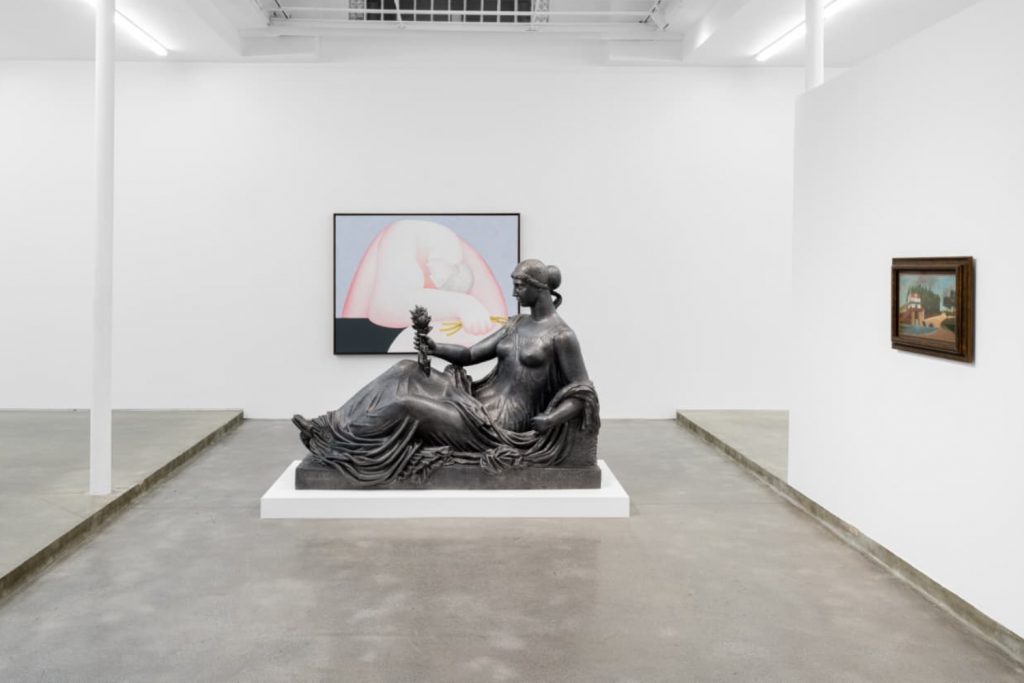
The Galerie Derouillon is presenting a new exhibition dedicated to the work of Vojtěch Kovařík, set in dialogue with works by Aristide Maillol and Henri Rousseau. The exhibition will run from June 10 to July 25, 2026, and explores the connections between these historic artists and Kovařík’s contemporary approach.16.06.2026
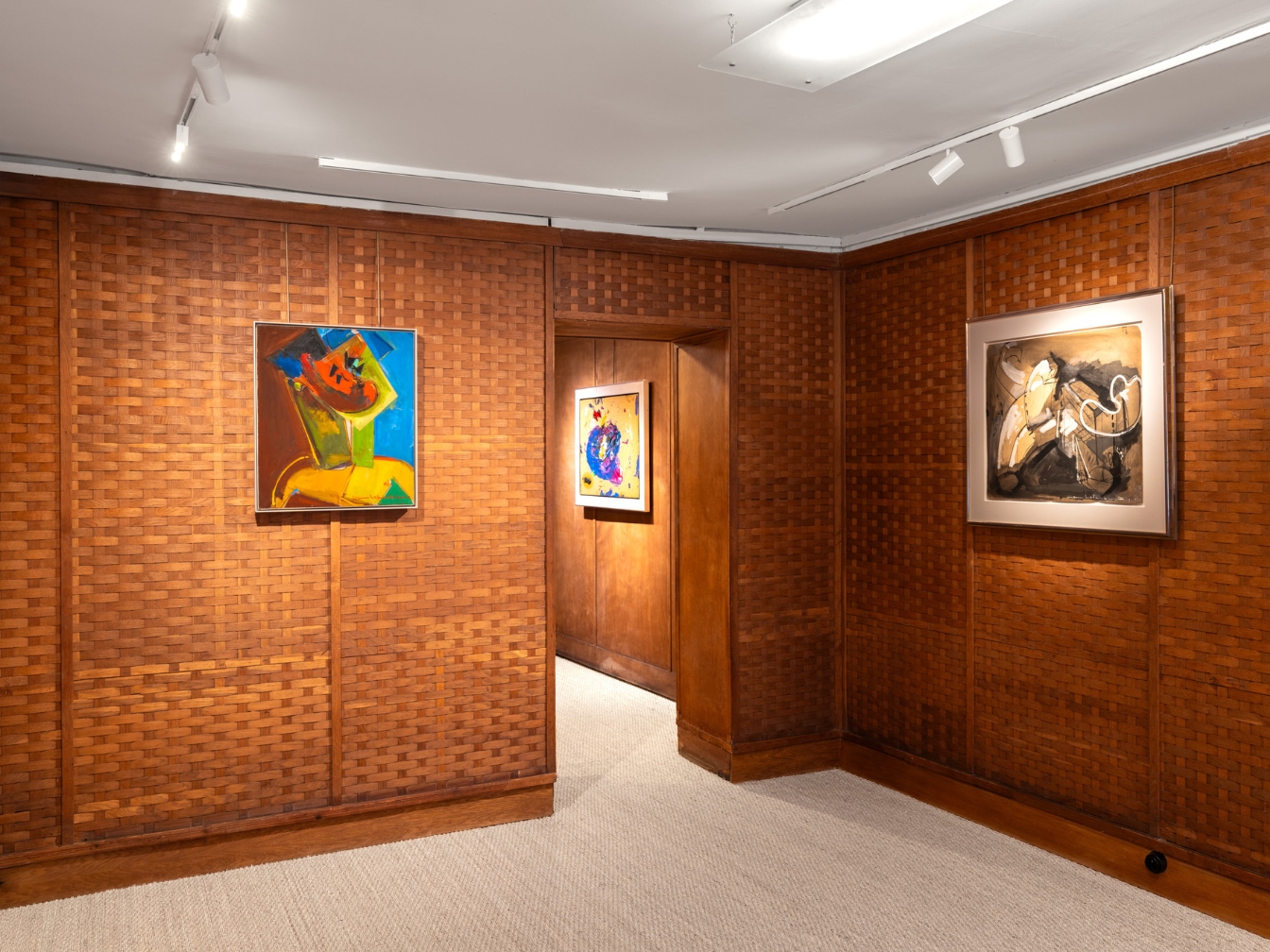
View of the exhibition © Galerie Derouillon There is something daring about bringing together the work of Aristide Maillol and Henri Rousseau in an exhibition of contemporary painting. The Catalan sculptor, born in Banyuls-sur-Mer in 1861, is not merely a name in art history: he represents a gesture, a stance, a way of resisting. This is precisely what Vojtěch Kovařík sought in Aristide Maillol. Conversely, Kovařík seeks his opposite in the naïve artist Henri Rousseau. When the setting stands alone, as in Le Moulin (1896), exhibited here, the entire plane becomes flattened. With Kovařík, it is the reverse: the imposing figures often create the illusion of real roundness, as if actual sculptures were carved into the canvas.

View of the exhibition © Galerie Derouillon
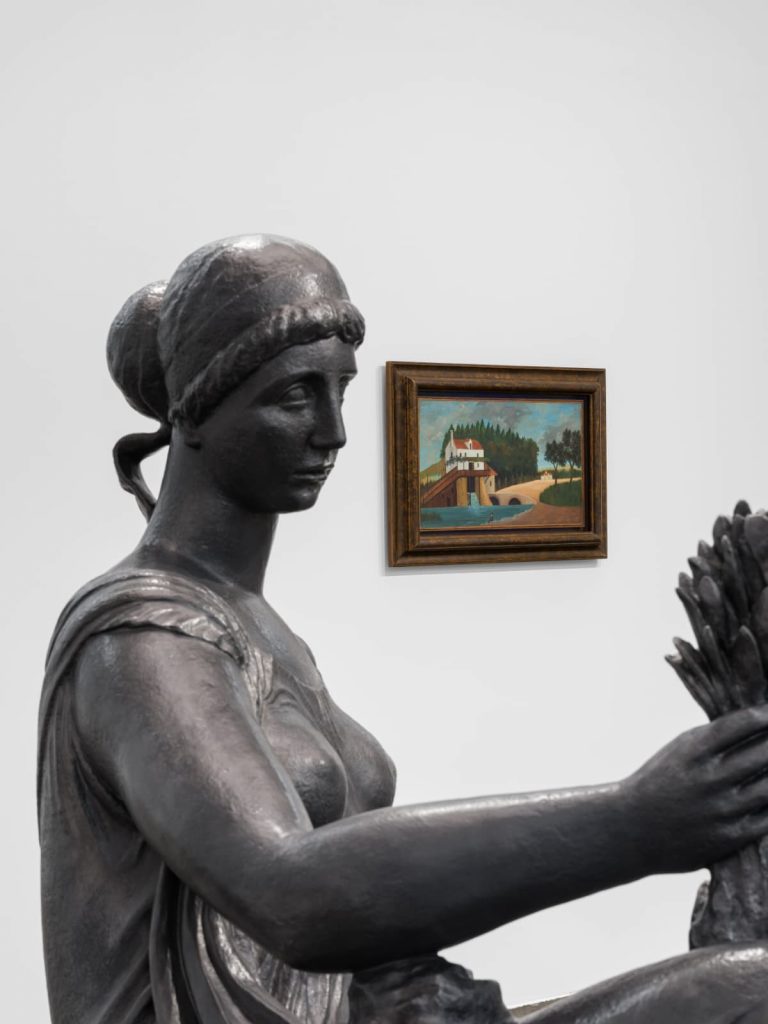
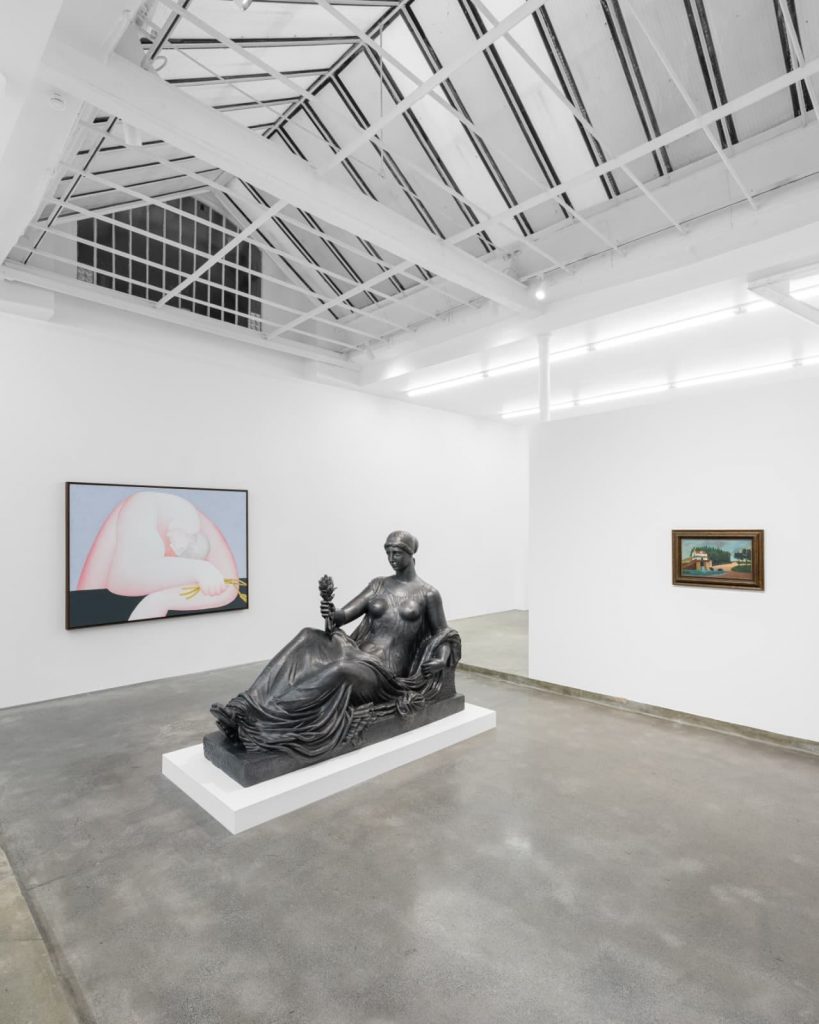
To understand the choice of Maillol as a guiding influence, it is necessary to recall the context in which the Monument aux morts à Port-Vendres was created. After the First World War, France commissioned its sculptors to create war memorials. The one in Port-Vendres, commissioned in 1919 and unveiled in 1923 on the Place de l’Obélisque, perfectly embodies this quiet subversion. Whilst most other sculptors produced heroic bronzes – soldiers straining towards victory or allegorical representations of war – Maillol did something unusual yet courageous: he made an offering in the form of a large, reclining woman with a contemplative expression, holding olive branches in her right hand, without a helmet or sword. Today, this monument is classified as an official historical monument.

View of the exhibition © Galerie Derouillon
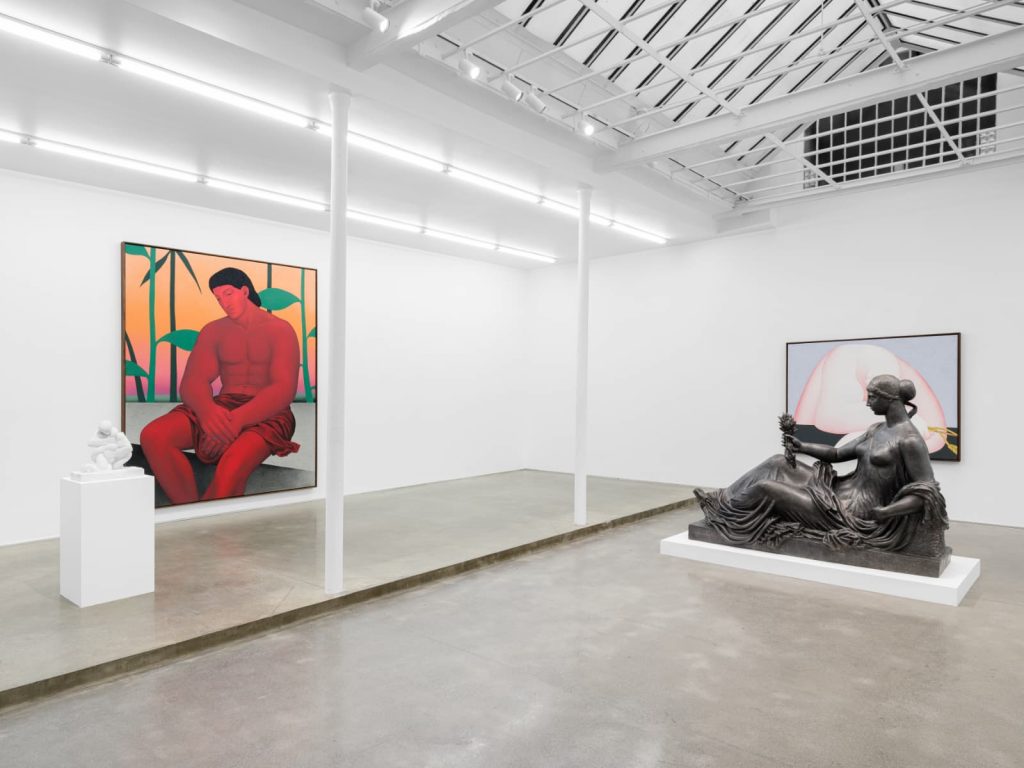
Maillol’s style became more austere, massive and monumental in the wake of the First World War. His works gained in power and presence, and were characterised by a refined classicism tinged with ancient influences. Yet this massiveness is never used to dominate. His rejection of the exaggerated dynamism that characterised much of late nineteenth-century sculpture—particularly the work of Rodin—marked a return to classical simplicity and purity, the influence of which was felt as far as Henry Moore. What Maillol invented was a monumentality of stillness. This is precisely what Vojtěch Kovařík seeks to convey in his painting.

View of the exhibition © Galerie Derouillon
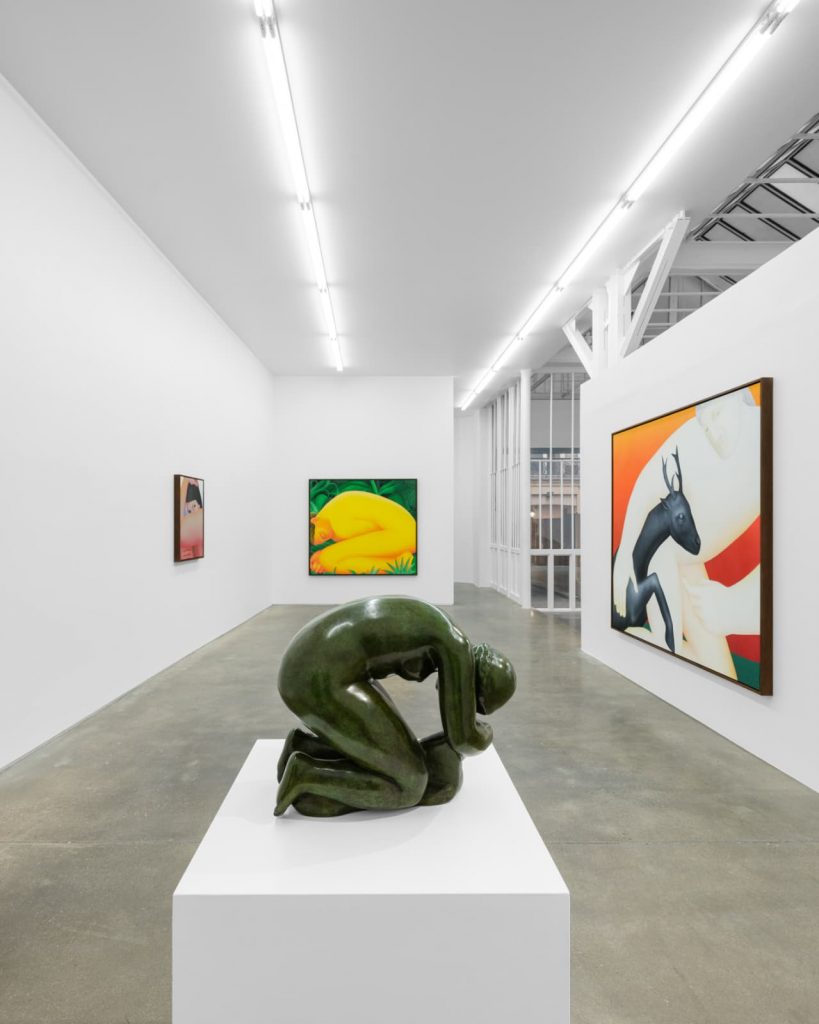
Born in 1993 in the Czech Republic, Kovařík grew up surrounded by another monumental tradition: the sculptures of Socialist Realism, those taut, glorious bodies that filled the public squares of Eastern Europe like so many exhortations to collective strength. His training as a sculptor has led him to constantly question the way in which a regime can confine a body to an ideological posture. Maillol offers him a historical and formal counter-example. In Soulscape, Kovařík’s painted figures take up this idea of massive bodies that do not overwhelm: they occupy the space with a gentle, almost melancholic gravity. The figures appear defeated, pensive, imbued with something that resembles meditation more than a pose. His marble sculpture featured in the exhibition—a medium rarely used in his practice—directly extends this lineage: his Laocoön does not confront the snakes, but embraces them.

View of the exhibition © Galerie Derouillon
Derouillon Gallery Vojtěch Kovařík in conversation with Aristide Maillol and Henri Rousseau → Soulscape From June 10 to July 25, 2026
To understand the choice of Maillol as a guiding influence, it is necessary to recall the context in which the Monument aux morts à Port-Vendres was created. After the First World War, France commissioned its sculptors to create war memorials. The one in Port-Vendres, commissioned in 1919 and unveiled in 1923 on the Place de l’Obélisque, perfectly embodies this quiet subversion. Whilst most other sculptors produced heroic bronzes – soldiers straining towards victory or allegorical representations of war – Maillol did something unusual yet courageous: he made an offering in the form of a large, reclining woman with a contemplative expression, holding olive branches in her right hand, without a helmet or sword. Today, this monument is classified as an official historical monument.
View of the exhibition © Galerie Derouillon The Galerie Derouillon is presenting a new exhibition dedicated to the work of Vojtěch Kovařík, set in dialogue with works by Aristide Maillol and Henri Rousseau. The exhibition will run from June 10 to July 25, 2026, and explores the connections between these historic artists and Kovařík’s contemporary approach.
There is something daring about bringing together the work of Aristide Maillol and Henri Rousseau in an exhibition of contemporary painting. The Catalan sculptor, born in Banyuls-sur-Mer in 1861, is not merely a name in art history: he represents a gesture, a stance, a way of resisting. This is precisely what Vojtěch Kovařík sought in Aristide Maillol. Conversely, Kovařík seeks his opposite in the naïve artist Henri Rousseau. When the setting stands alone, as in Le Moulin (1896), exhibited here, the entire plane becomes flattened. With Kovařík, it is the reverse: the imposing figures often create the illusion of real roundness, as if actual sculptures were carved into the canvas.
To understand the choice of Maillol as a guiding influence, it is necessary to recall the context in which the Monument aux morts à Port-Vendres was created. After the First World War, France commissioned its sculptors to create war memorials. The one in Port-Vendres, commissioned in 1919 and unveiled in 1923 on the Place de l’Obélisque, perfectly embodies this quiet subversion. Whilst most other sculptors produced heroic bronzes – soldiers straining towards victory or allegorical representations of war – Maillol did something unusual yet courageous: he made an offering in the form of a large, reclining woman with a contemplative expression, holding olive branches in her right hand, without a helmet or sword. Today, this monument is classified as an official historical monument.

View of the exhibition © Galerie Derouillon
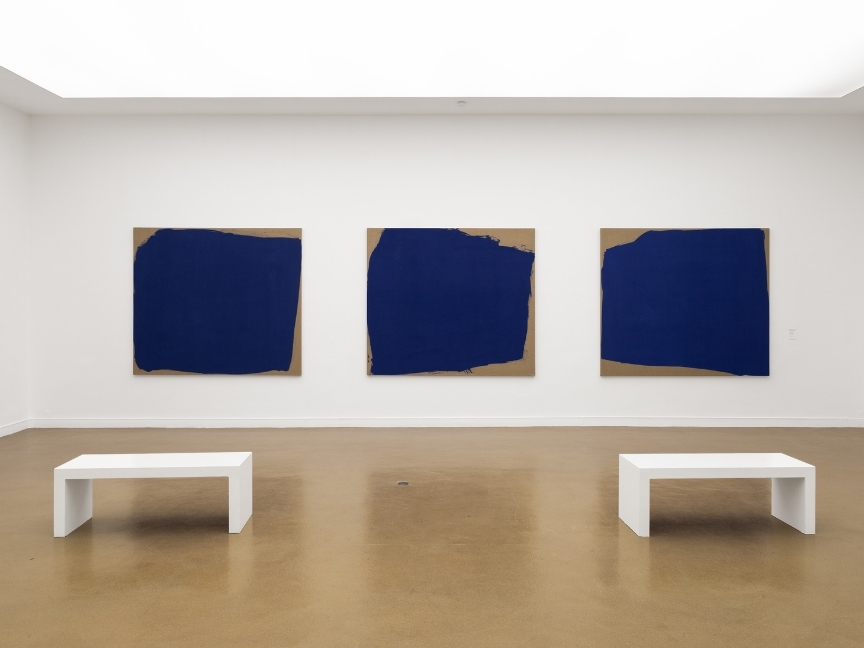
Maillol’s style became more austere, massive and monumental in the wake of the First World War. His works gained in power and presence, and were characterised by a refined classicism tinged with ancient influences. Yet this massiveness is never used to dominate. His rejection of the exaggerated dynamism that characterised much of late nineteenth-century sculpture—particularly the work of Rodin—marked a return to classical simplicity and purity, the influence of which was felt as far as Henry Moore. What Maillol invented was a monumentality of stillness. This is precisely what Vojtěch Kovařík seeks to convey in his painting.

View of the exhibition © Galerie Derouillon
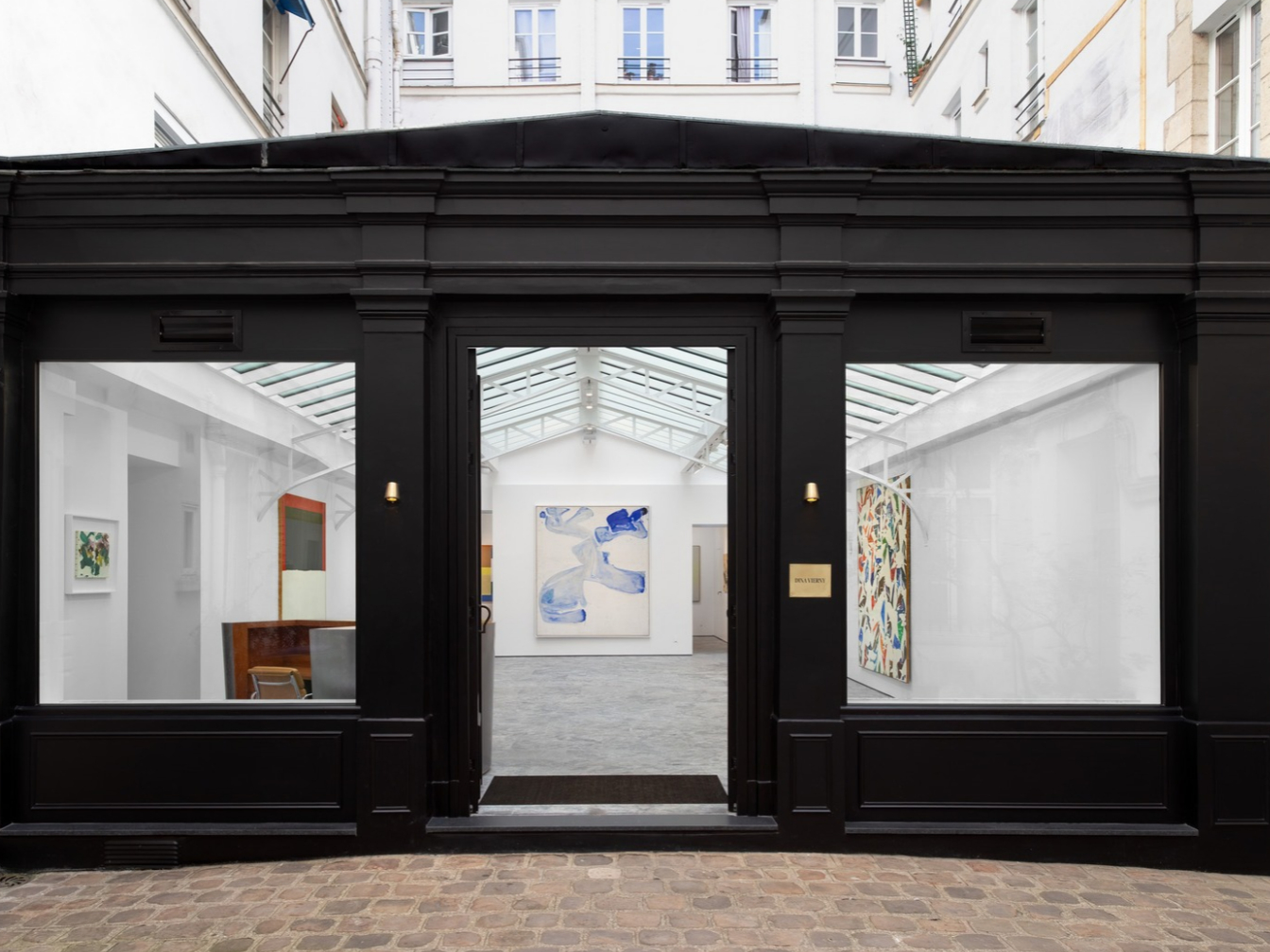
Born in 1993 in the Czech Republic, Kovařík grew up surrounded by another monumental tradition: the sculptures of Socialist Realism, those taut, glorious bodies that filled the public squares of Eastern Europe like so many exhortations to collective strength. His training as a sculptor has led him to constantly question the way in which a regime can confine a body to an ideological posture. Maillol offers him a historical and formal counter-example. In Soulscape, Kovařík’s painted figures take up this idea of massive bodies that do not overwhelm: they occupy the space with a gentle, almost melancholic gravity. The figures appear defeated, pensive, imbued with something that resembles meditation more than a pose. His marble sculpture featured in the exhibition—a medium rarely used in his practice—directly extends this lineage: his Laocoön does not confront the snakes, but embraces them.

View of the exhibition © Galerie Derouillon
Derouillon Gallery
Vojtěch Kovařík in conversation with Aristide Maillol and Henri Rousseau → Soulscape
From June 10 to July 25, 2026 Galerie Dina Vierny
36 rue Jacob 75006 Paris
53 Rue de Seine, 75006 Paris
Open from Tuesday to Saturday from 11 a.m. to 7 p.m.
Galerie Dina Vierny
36 rue Jacob 75006 Paris
53 Rue de Seine, 75006 Paris
Open from Tuesday to Saturday from 11 a.m. to 7 p.m.