
As part of the exhibition Histories of Landscape From Monet to Hockney (1890-2026), on display at the Marmottan Monet Museum, Charles Pollock’s work entitled Untitled (Post-Rome), green (1964) forms part of an exceptional programme of exhibitions.14.10.2026
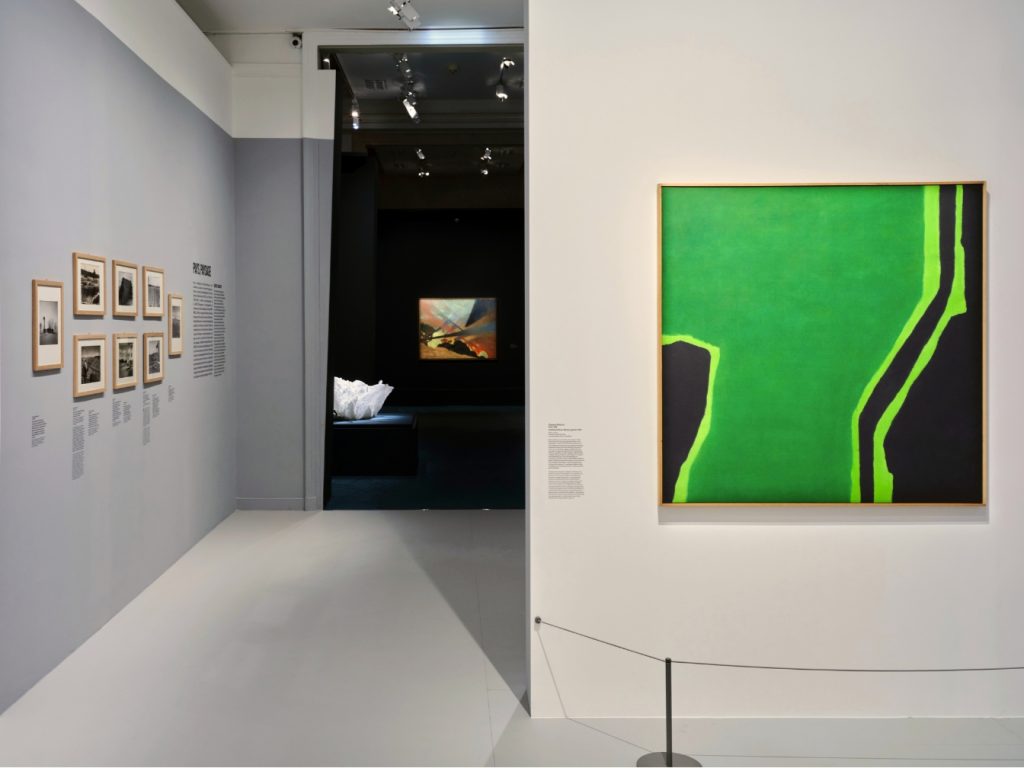
View of the exhibition Histories of Landscape, From Monet to Hockney at the Marmottan Monet Museum © Studio Christian Baraja SLB Bringing together leading figures in modern and contemporary art — from Claude Monet to David Hockney, via Piet Mondrian and Nicolas de Staël — this major project explores the transformations of the landscape motif and the way in which painting has moved beyond topographical representation to focus on structure, light and space. The inclusion of this oil on canvas in the Parisian institution’s exhibition highlights the significance of the American artist’s explorations at the turn of the 1960s.
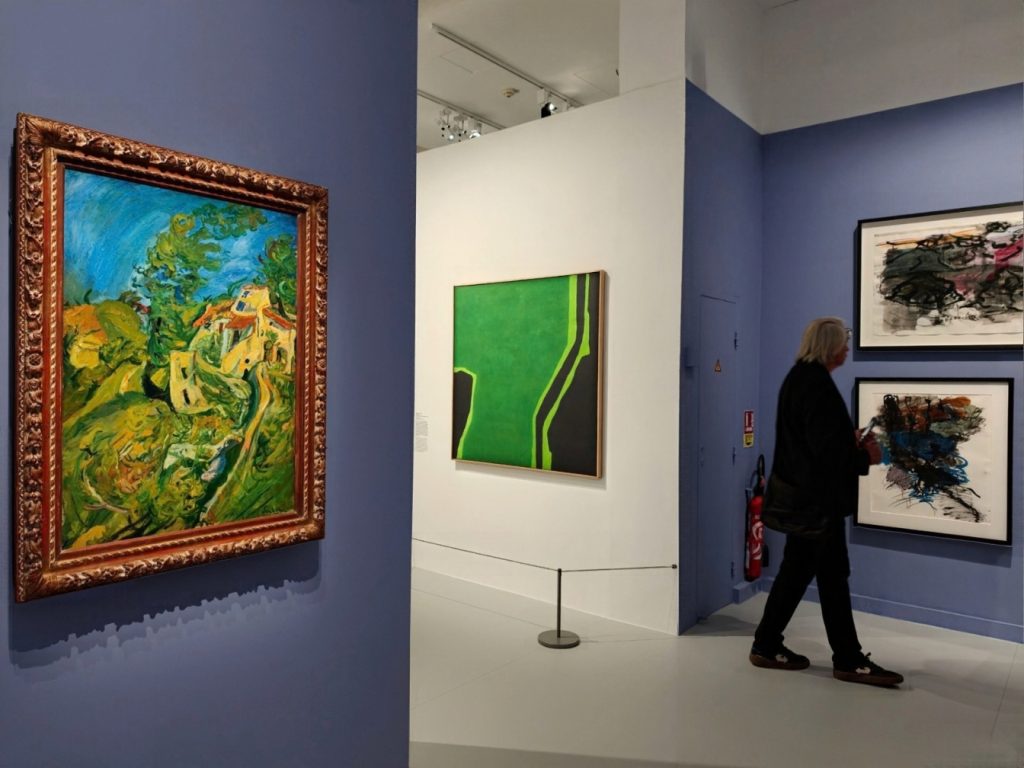

View of the exhibition Histories of Landscape, From Monet to Hockney at the Marmottan Monet Museum © DR
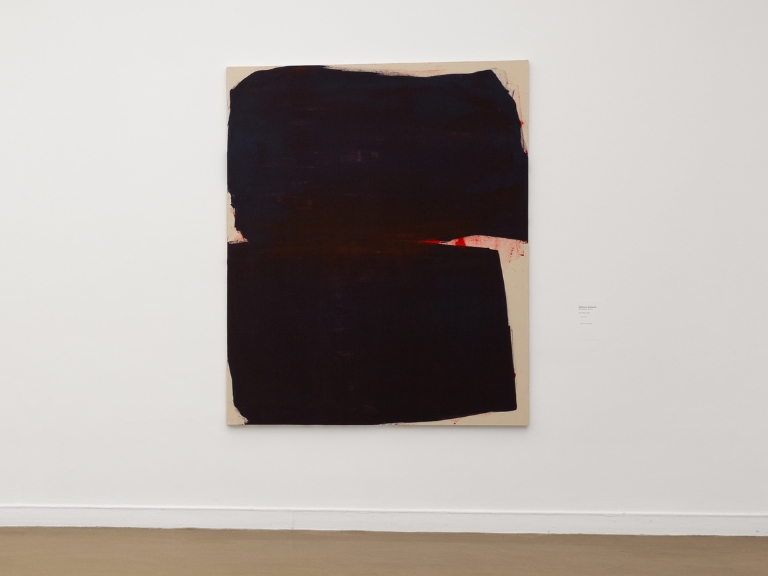
The work Untitled (Post-Rome), green forms part of a period of profound renewal for Charles Pollock, following his stay in Italy between 1962 and 1963. Whilst the Rome series introduced, for the first time, large areas of flat colour broken up by dark structures reminiscent of torn paper, the artist’s return to Michigan in 1964 marked the birth of the Post-Rome body of work. The geometric rigour and sharp edges of the hard-edge method are softened in favour of a more fluid visual vocabulary, characterised by rounded forms and measured movements. As he noted in 1965, ‘colour – the resonance of colour, the tensions and flows of that resonance – and luminosity are the means by which a dialogue is possible between the painter and the world around him’.

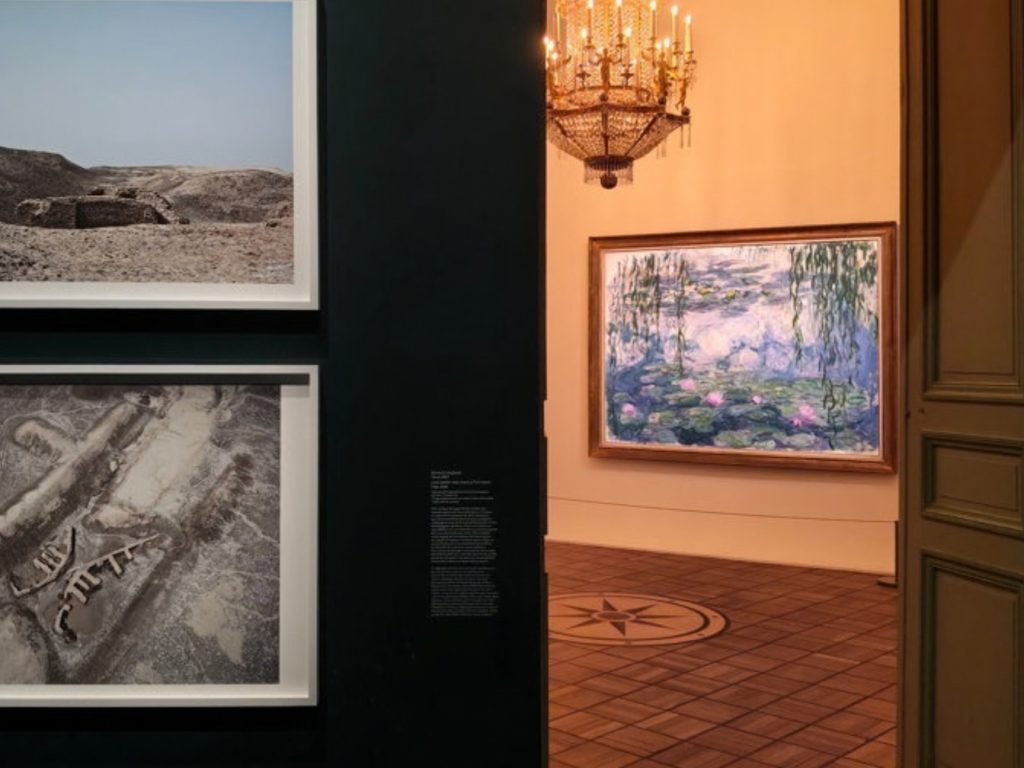
View of the exhibition Histories of Landscape, From Monet to Hockney at the Marmottan Monet Museum © Sylvain Silleran
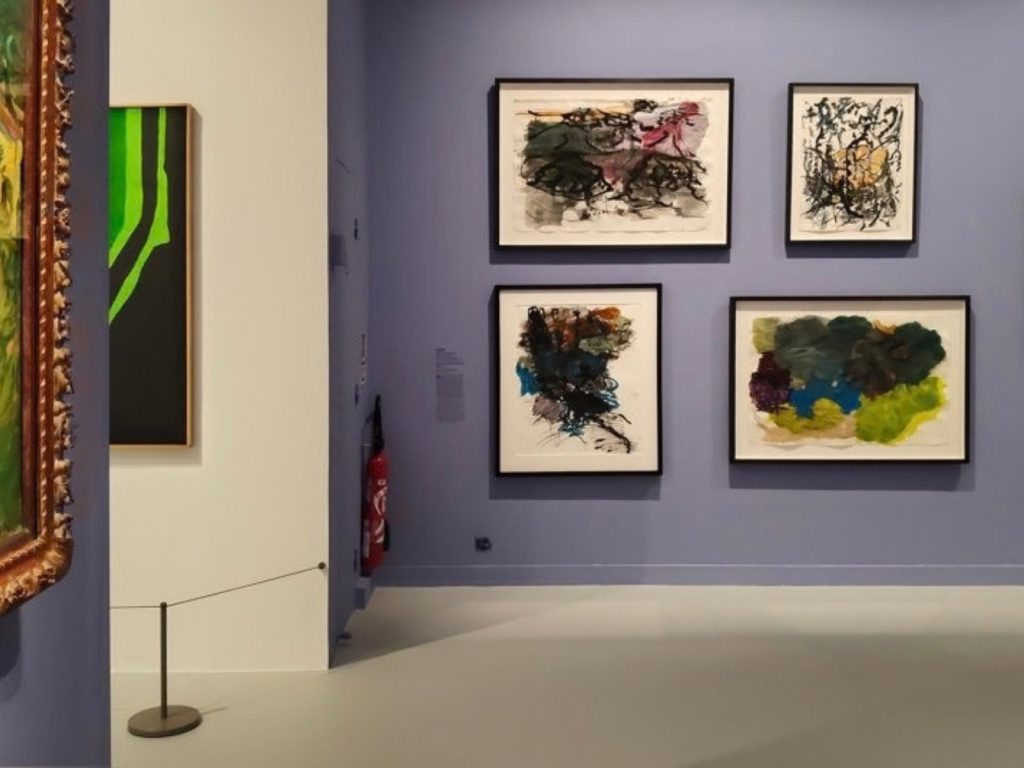
In this square canvas measuring 127 × 127 cm, the colour palette becomes lighter, and the green functions not as a mimetic depiction of a natural environment, but as an autonomous chromatic field. Like Ellsworth Kelly’s works on botanical structures, Pollock uses outline and surface to establish a link between the motif and space. The forms are surrounded by a halo of diffused light that causes the composition to radiate from within, illustrating the painter’s exploration of the resonance of colour and its capacity for expansion. By situating this work at the heart of a broader reflection on landscape, the exhibition at the Musée Marmottan Monet highlights this transition in which nature is internalised and then rendered as luminous vibrations. Here, Charles Pollock affirms his vision of an abstract art imbued with spirituality, where the visual form comes to life through subtle variations in intensity — echoing his writings from 1962, in which he stated that the nature of spiritual power lies within the object itself, capable of extending across an infinite variety of pulsations. The exhibition thus demonstrates how the fluid compositions of the Post-Rome period foreshadow the chromatic fulfilment the artist would achieve in the mid-1970s with the Trace series.

View of the exhibition Histories of Landscape, From Monet to Hockney at the Marmottan Monet Museum © Sylvain Silleran
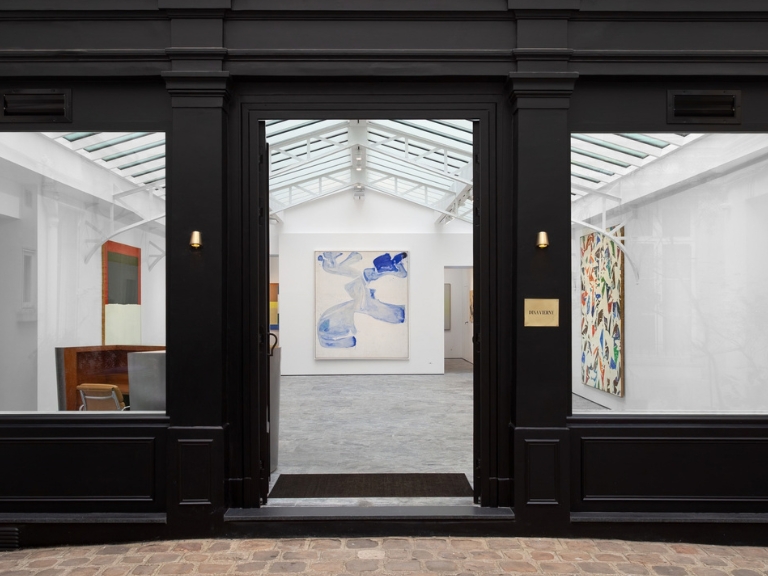
This museum exhibition forms part of the ongoing research and promotion of Charles Pollock’s work undertaken by the Galerie Dina Vierny. Seeing this piece engage in dialogue with the major milestones of modern art history at the Musée Marmottan Monet offers the public a unique opportunity to reconsider the artist’s singular trajectory within post-painterly abstraction. Exhibition: Histories of Landscape, From Monet to Hockney (1890-2026) September 24, 2026 – January 31, 2027 Musée Marmottan Monet, Paris 16th arrondissement
The work Untitled (Post-Rome), green forms part of a period of profound renewal for Charles Pollock, following his stay in Italy between 1962 and 1963. Whilst the Rome series introduced, for the first time, large areas of flat colour broken up by dark structures reminiscent of torn paper, the artist’s return to Michigan in 1964 marked the birth of the Post-Rome body of work. The geometric rigour and sharp edges of the hard-edge method are softened in favour of a more fluid visual vocabulary, characterised by rounded forms and measured movements. As he noted in 1965, ‘colour – the resonance of colour, the tensions and flows of that resonance – and luminosity are the means by which a dialogue is possible between the painter and the world around him’.
View of the exhibition Histories of Landscape, From Monet to Hockney at the Marmottan Monet Museum © Studio Christian Baraja SLB As part of the exhibition Histories of Landscape From Monet to Hockney (1890-2026), on display at the Marmottan Monet Museum, Charles Pollock’s work entitled Untitled (Post-Rome), green (1964) forms part of an exceptional programme of exhibitions.
Bringing together leading figures in modern and contemporary art — from Claude Monet to David Hockney, via Piet Mondrian and Nicolas de Staël — this major project explores the transformations of the landscape motif and the way in which painting has moved beyond topographical representation to focus on structure, light and space. The inclusion of this oil on canvas in the Parisian institution’s exhibition highlights the significance of the American artist’s explorations at the turn of the 1960s.
The work Untitled (Post-Rome), green forms part of a period of profound renewal for Charles Pollock, following his stay in Italy between 1962 and 1963. Whilst the Rome series introduced, for the first time, large areas of flat colour broken up by dark structures reminiscent of torn paper, the artist’s return to Michigan in 1964 marked the birth of the Post-Rome body of work. The geometric rigour and sharp edges of the hard-edge method are softened in favour of a more fluid visual vocabulary, characterised by rounded forms and measured movements. As he noted in 1965, ‘colour – the resonance of colour, the tensions and flows of that resonance – and luminosity are the means by which a dialogue is possible between the painter and the world around him’.

View of the exhibition Histories of Landscape, From Monet to Hockney at the Marmottan Monet Museum © Sylvain Silleran
In this square canvas measuring 127 × 127 cm, the colour palette becomes lighter, and the green functions not as a mimetic depiction of a natural environment, but as an autonomous chromatic field. Like Ellsworth Kelly’s works on botanical structures, Pollock uses outline and surface to establish a link between the motif and space. The forms are surrounded by a halo of diffused light that causes the composition to radiate from within, illustrating the painter’s exploration of the resonance of colour and its capacity for expansion. By situating this work at the heart of a broader reflection on landscape, the exhibition at the Musée Marmottan Monet highlights this transition in which nature is internalised and then rendered as luminous vibrations. Here, Charles Pollock affirms his vision of an abstract art imbued with spirituality, where the visual form comes to life through subtle variations in intensity — echoing his writings from 1962, in which he stated that the nature of spiritual power lies within the object itself, capable of extending across an infinite variety of pulsations. The exhibition thus demonstrates how the fluid compositions of the Post-Rome period foreshadow the chromatic fulfilment the artist would achieve in the mid-1970s with the Trace series.

View of the exhibition Histories of Landscape, From Monet to Hockney at the Marmottan Monet Museum © Sylvain Silleran
This museum exhibition forms part of the ongoing research and promotion of Charles Pollock’s work undertaken by the Galerie Dina Vierny. Seeing this piece engage in dialogue with the major milestones of modern art history at the Musée Marmottan Monet offers the public a unique opportunity to reconsider the artist’s singular trajectory within post-painterly abstraction. Exhibition: Histories of Landscape, From Monet to Hockney (1890-2026) September 24, 2026 – January 31, 2027 Musée Marmottan Monet, Paris 16th arrondissement
Galerie Dina Vierny
36 rue Jacob, 75006 Paris
53 rue de Seine, 75006 Paris
Open from Tuesday to Saturday from 11 a.m. to 7 p.m.
Galerie Dina Vierny
36 rue Jacob, 75006 Paris
53 rue de Seine, 75006 Paris
Open from Tuesday to Saturday from 11 a.m. to 7 p.m.