
Jean Fournier: a Tribute

 
 To mark the exhibition Jean Fournier: a Tribute, on display from September 18, to December 19, at the Galerie Dina Vierny (53, rue de Seine), Molly Warnock, director of the Clyfford Still Catalogue Raisonné Project, invites you to explore the exhibition
03.10.2026
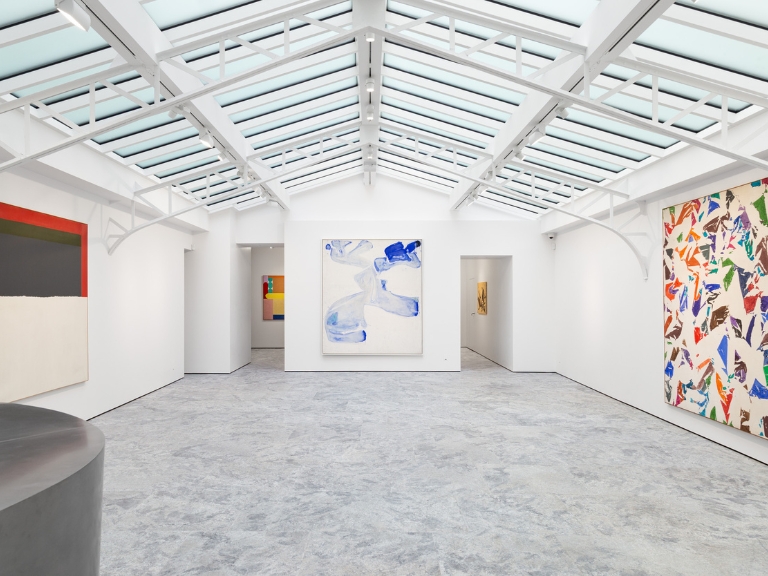
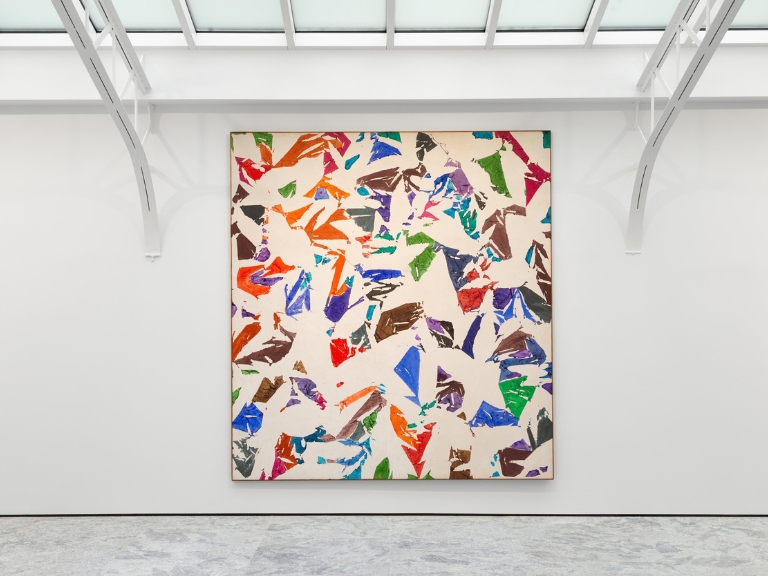
Dina Vierny View of the exhibition Jean Fournier: a Tribute, Galerie Dina Vierny, 2026. In the center: Sam Francis, Blue Figure (Blue IV), 1960 Photo : © Jean Vayssié ; Sam Francis, © Sam Francis Foundation, California / Adagp, Paris, 2026
"A bookdealer by training, Jean Fournier began staging exhibitions in the Librairie Kléber (soon to be known as the Galerie Kléber) in 1954, galvanized by direct encounters with specific artists and artworks. Over the next five decades, he developed a program distinctive in its devotion to painterly abstraction. Never did he entertain the notion that painting had come to an end, nor that there was a single way for it to go on. Rather, his eponymous gallery championed abstraction as a plural phenomenon, a continually evolving conversation.	
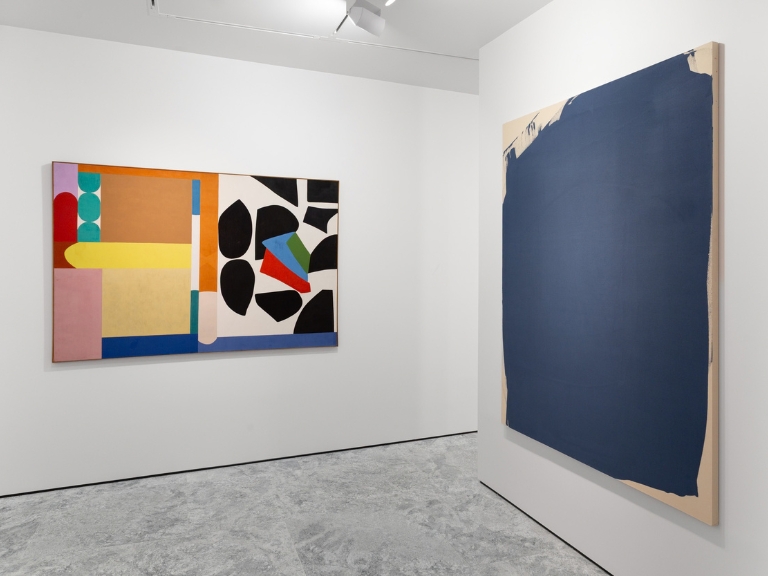
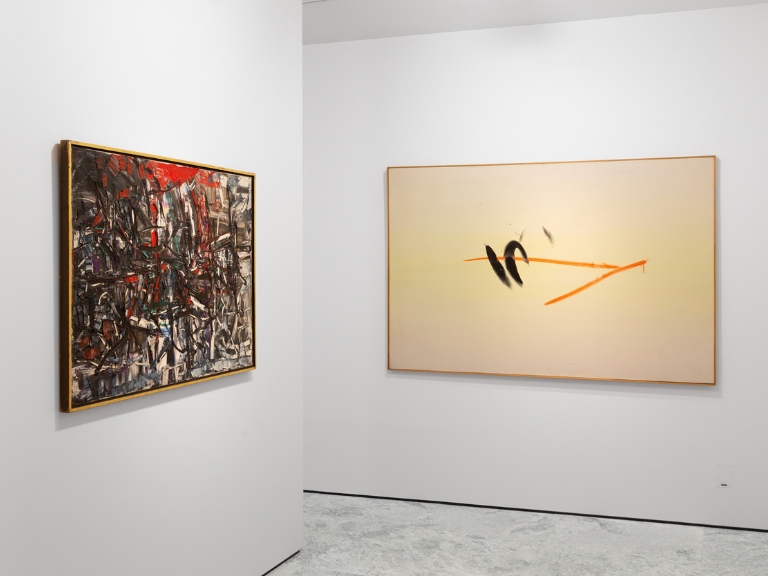
View of the exhibition Jean Fournier: a Tribute, Galerie Dina Vierny, 2026. Left: Shirley Jaffe, C 3-2-1, 1972 ; right : Stéphane Bordarier, 20.VI.2023, 2023. Photo : © Jean Vayssié ; Shirley Jaffe, © Adagp, Paris, 2026 (succession représentée par la galerie Nathalie Obadia) ; Stéphane Bordarier, © Stéphane Bordarier.

 Fournier’s genius as a gallerist was grounded in two closely related convictions. The first was that painting is a mode of thinking. Among Fournier’s artists of the first hour, Simon Hantaï, Jean Degottex, and Judit Reigl embraced formal innovation as an existential imperative: One changed tools, techniques, and materials to discover something one could not have known in advance, nor by other means. Over the course of the gallery’s history, this reinvention of painterly language took many forms, from Jean-Paul Riopelle’s knife-applied tesserae and Joan Mitchell’s extraordinarily differentiated brushwork to James Bishop’s layered veils of infinitely subtle color and Shirley Jaffe’s increasingly complex concatenations of buoyant shapes. Claude Viallat’s stained and stenciled imprints and Stéphane Bordarier’s variegated expanses of glue-bound pigment carry this questioning into the present.  

View of the exhibition Jean Fournier: a Tribute, Galerie Dina Vierny, 2026. Center : Jean Degottex, Et dix mille choses..., 1958; Left : Jean Paul Riopelle, À la plante des pieds, 1958 Photo : © Jean Vayssié ; Jean Degottex, © Adagp, Paris, 2026 ; Jean Paul Riopelle, © Jean Paul Riopelle / Adagp, Paris, 2026.

 The second conviction was that artistic practice is a lifelong adventure. Fournier gravitated toward singular figures with strong positions and gave them the space and support they needed to develop freely. His relationships with artists routinely extended over decades and the creative careers, in turn, are models of longevity and renewal, encompassing many different high points and achievements—but also periods of hesitation, dormancy, and doubt, as well as deliberate regressions, suspensions, and withdrawals. No single itinerary governed the others. Precisely for this reason, however, mutually illuminating dialogues developed within generations and across them.  

Simon Hantaï, Blancs, 1973. Photo : © Jean Vayssié ; © Archives Simon Hantaï / Adagp, Paris, 2026.
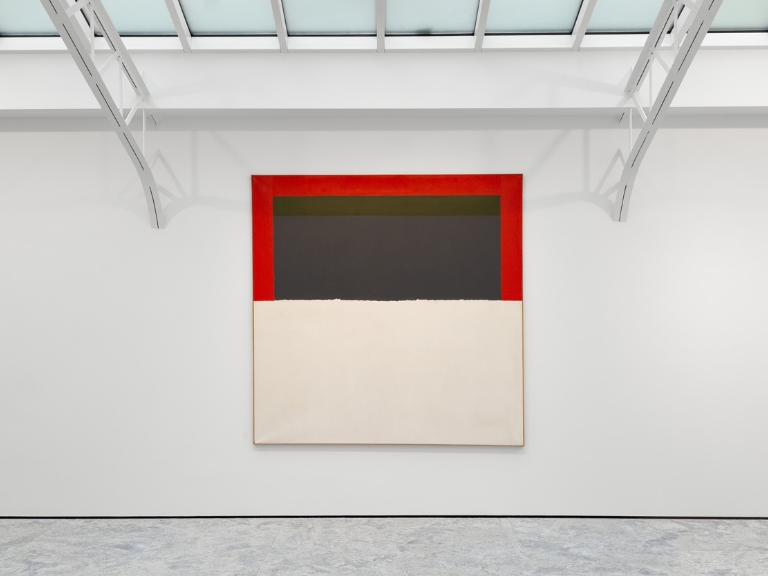
James Bishop, Reading, 1965. Photo : © Jean Vayssié ; © James Bishop
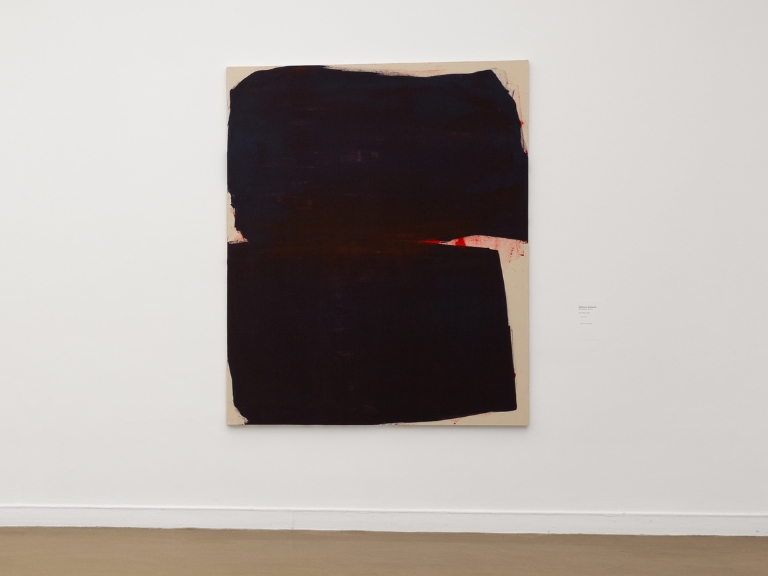
 Among the many outstanding works in this exhibition, two especially attest to the richness of the relays among individual practices at the Galerie Jean Fournier: Sam Francis’s Blue Figure (Blue IV), 1960, and Simon Hantaï’s Blancs, 1973. Both singly and together, these paintings gather up key threads in the gallery’s history, including the legacies of Abstract Expressionism and Henri Matisse; the generative role of new material procedures; the primacy of color; and the dynamic potential of blank canvas. Each is at once an independent statement and a vital excerpt from a larger, ongoing exchange about the continued possibilities of painting. Testaments to Fournier's unwavering faith in art and artists, they recall a gallery that was never simply a showroom but also, crucially, an enabling context. "

Molly Warnock, 
Arts writer, editor, and curator; Director of the Clyfford Still Catalogue Raisonné Project
 Fournier’s genius as a gallerist was grounded in two closely related convictions. The first was that painting is a mode of thinking. Among Fournier’s artists of the first hour, Simon Hantaï, Jean Degottex, and Judit Reigl embraced formal innovation as an existential imperative: One changed tools, techniques, and materials to discover something one could not have known in advance, nor by other means. Over the course of the gallery’s history, this reinvention of painterly language took many forms, from Jean-Paul Riopelle’s knife-applied tesserae and Joan Mitchell’s extraordinarily differentiated brushwork to James Bishop’s layered veils of infinitely subtle color and Shirley Jaffe’s increasingly complex concatenations of buoyant shapes. Claude Viallat’s stained and stenciled imprints and Stéphane Bordarier’s variegated expanses of glue-bound pigment carry this questioning into the present.  
Dina Vierny View of the exhibition Jean Fournier: a Tribute, Galerie Dina Vierny, 2026. In the center: Sam Francis, Blue Figure (Blue IV), 1960 Photo : © Jean Vayssié ; Sam Francis, © Sam Francis Foundation, California / Adagp, Paris, 2026

Jean Fournier: a Tribute

03.10.2026
 
 To mark the exhibition Jean Fournier: a Tribute, on display from September 18, to December 19, at the Galerie Dina Vierny (53, rue de Seine), Molly Warnock, director of the Clyfford Still Catalogue Raisonné Project, invites you to explore the exhibition
"A bookdealer by training, Jean Fournier began staging exhibitions in the Librairie Kléber (soon to be known as the Galerie Kléber) in 1954, galvanized by direct encounters with specific artists and artworks. Over the next five decades, he developed a program distinctive in its devotion to painterly abstraction. Never did he entertain the notion that painting had come to an end, nor that there was a single way for it to go on. Rather, his eponymous gallery championed abstraction as a plural phenomenon, a continually evolving conversation.	
 Fournier’s genius as a gallerist was grounded in two closely related convictions. The first was that painting is a mode of thinking. Among Fournier’s artists of the first hour, Simon Hantaï, Jean Degottex, and Judit Reigl embraced formal innovation as an existential imperative: One changed tools, techniques, and materials to discover something one could not have known in advance, nor by other means. Over the course of the gallery’s history, this reinvention of painterly language took many forms, from Jean-Paul Riopelle’s knife-applied tesserae and Joan Mitchell’s extraordinarily differentiated brushwork to James Bishop’s layered veils of infinitely subtle color and Shirley Jaffe’s increasingly complex concatenations of buoyant shapes. Claude Viallat’s stained and stenciled imprints and Stéphane Bordarier’s variegated expanses of glue-bound pigment carry this questioning into the present.  

View of the exhibition Jean Fournier: a Tribute, Galerie Dina Vierny, 2026. Center : Jean Degottex, Et dix mille choses..., 1958; Left : Jean Paul Riopelle, À la plante des pieds, 1958 Photo : © Jean Vayssié ; Jean Degottex, © Adagp, Paris, 2026 ; Jean Paul Riopelle, © Jean Paul Riopelle / Adagp, Paris, 2026.

 The second conviction was that artistic practice is a lifelong adventure. Fournier gravitated toward singular figures with strong positions and gave them the space and support they needed to develop freely. His relationships with artists routinely extended over decades and the creative careers, in turn, are models of longevity and renewal, encompassing many different high points and achievements—but also periods of hesitation, dormancy, and doubt, as well as deliberate regressions, suspensions, and withdrawals. No single itinerary governed the others. Precisely for this reason, however, mutually illuminating dialogues developed within generations and across them.  

Simon Hantaï, Blancs, 1973. Photo : © Jean Vayssié ; © Archives Simon Hantaï / Adagp, Paris, 2026.

James Bishop, Reading, 1965. Photo : © Jean Vayssié ; © James Bishop

 Among the many outstanding works in this exhibition, two especially attest to the richness of the relays among individual practices at the Galerie Jean Fournier: Sam Francis’s Blue Figure (Blue IV), 1960, and Simon Hantaï’s Blancs, 1973. Both singly and together, these paintings gather up key threads in the gallery’s history, including the legacies of Abstract Expressionism and Henri Matisse; the generative role of new material procedures; the primacy of color; and the dynamic potential of blank canvas. Each is at once an independent statement and a vital excerpt from a larger, ongoing exchange about the continued possibilities of painting. Testaments to Fournier's unwavering faith in art and artists, they recall a gallery that was never simply a showroom but also, crucially, an enabling context. "

Molly Warnock, 
Arts writer, editor, and curator; Director of the Clyfford Still Catalogue Raisonné Project

Don't miss any of our news, subscribe to our newsletter!


    Don't miss any of our news, subscribe to our newsletter


      Subscribe to our newsletter