
All Exhibitions here

Matisse at the Grand Palais

 
 In the radiant light of his final years, Henri Matisse invented a new artistic language: one of cut-out forms and pure color. The exhibition Matisse, 1941–1954, on view at the Grand Palais, traces the journey of a free-spirited artist in constant motion through more than 300 exceptional works.
26.05.2026
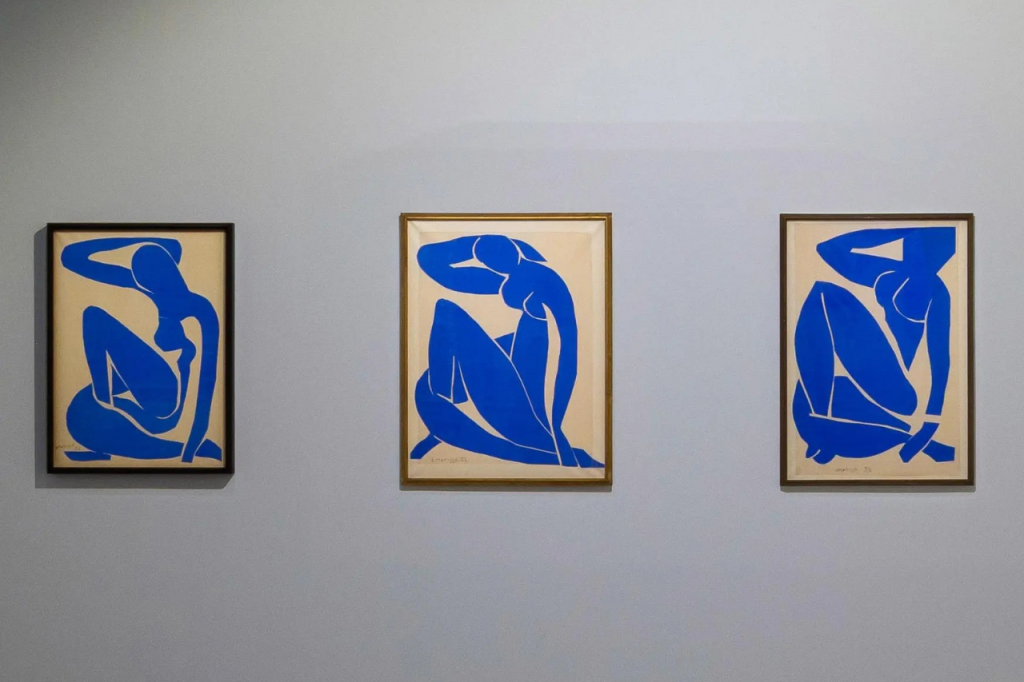
Dina Vierny View of the exhibition Matisse, 1941–1954, featuring the Blue Nudes © Luc Castel
The year 1941 marked a decisive turning point in Henri Matisse ’s life. Seriously ill, he underwent major surgery that left him weakened but transformed. Paradoxically, this ordeal became the starting point for a creative rebirth. Aware of the fragility of existence, the artist embarked on what he called his “second life,” driven by a new sense of urgency.

Far from holding him back, his physical limitations stimulated his inventiveness and paved the way for a period of unprecedented artistic productivity. It is in this context that Matisse develops the technique of cut-out gouache, which he transforms into a visual language in its own right. This medium, seemingly simple, proves to be remarkably expressive and lends itself equally well to intimate projects and monumental compositions. It perfectly embodies the decorative dimension that the artist has always sought to express.

Drawing occupies a central place in this evolution. For Matisse, it is never merely a preparatory sketch, but an autonomous form of expression that reveals the full extent of his sensibility. Each stroke explores the very essence of forms and the human body, eliminating the superfluous to retain only the essential. This quest for purity, characterized by the fluidity and elegance of his line, culminates in the cut-out gouaches, where the artist “draws with scissors in vivid color.”

Far from abandoning painting, Matisse continued to explore it with renewed intensity. The exhibition reveals this multidisciplinary richness, in which paintings, drawings, cut-out gouaches, illustrated books, textiles, and stained-glass windows form a coherent and vibrant whole, bearing witness to a creativity that was constantly expanding.
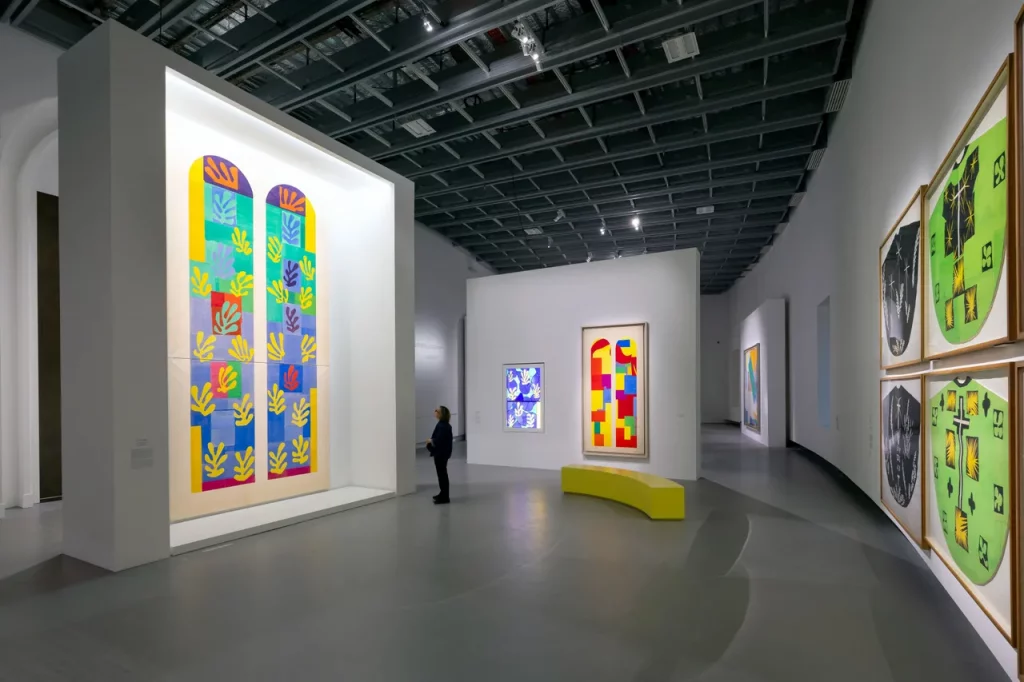
	

View of the exhibition Matisse, 1941–1954 © Luc Castel
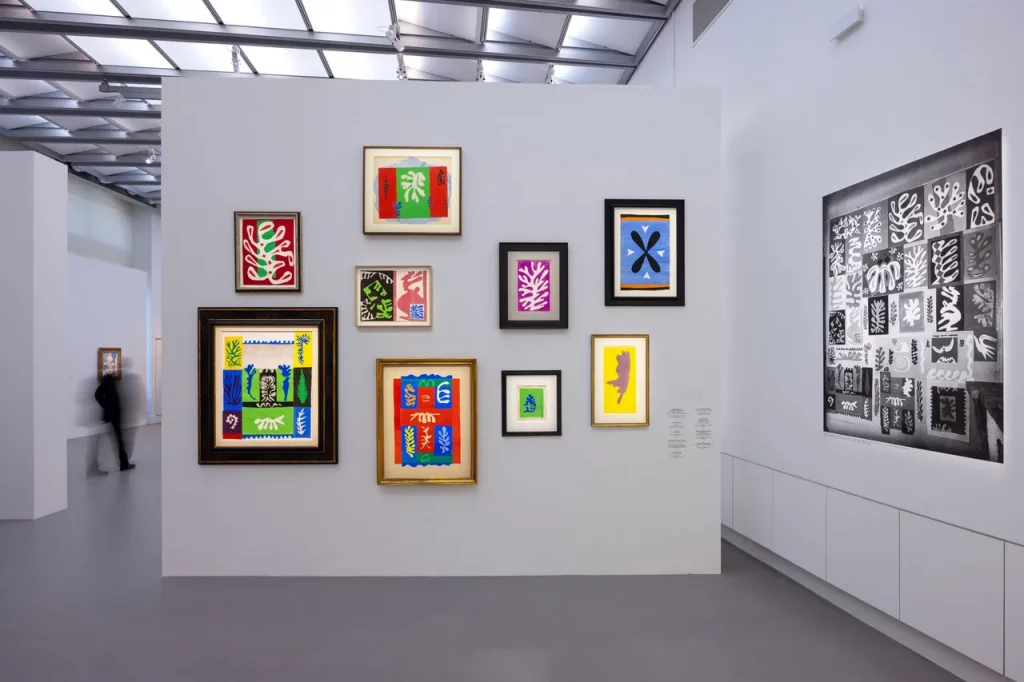
View of the exhibition Matisse, 1941–1954 © Luc Castel
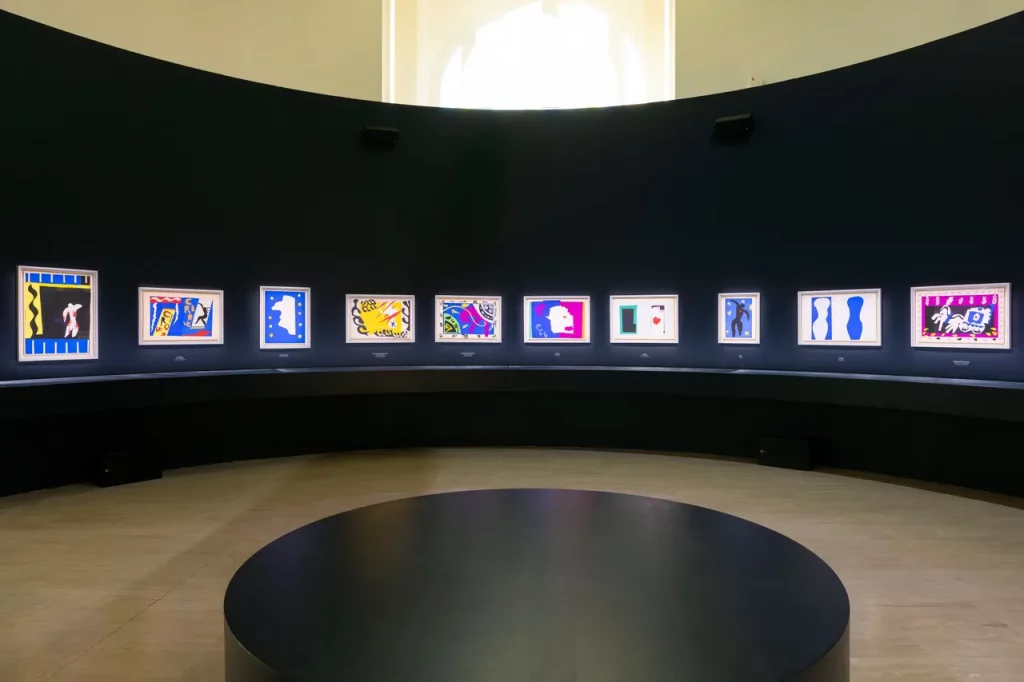
 Conceived as a journey through the painter’s world, the exhibition recreates the vibrant atmosphere of his ever-changing studio. Visitors are invited to wander through this flourishing garden, discovering, room by room, the key works of this period: the masterful series Intérieurs de Vence (1946–1948), the Jazz album and its sketchbook, the Thèmes et Variations series, the brush-ink drawings, as well as the main elements of the Vence Chapel project.

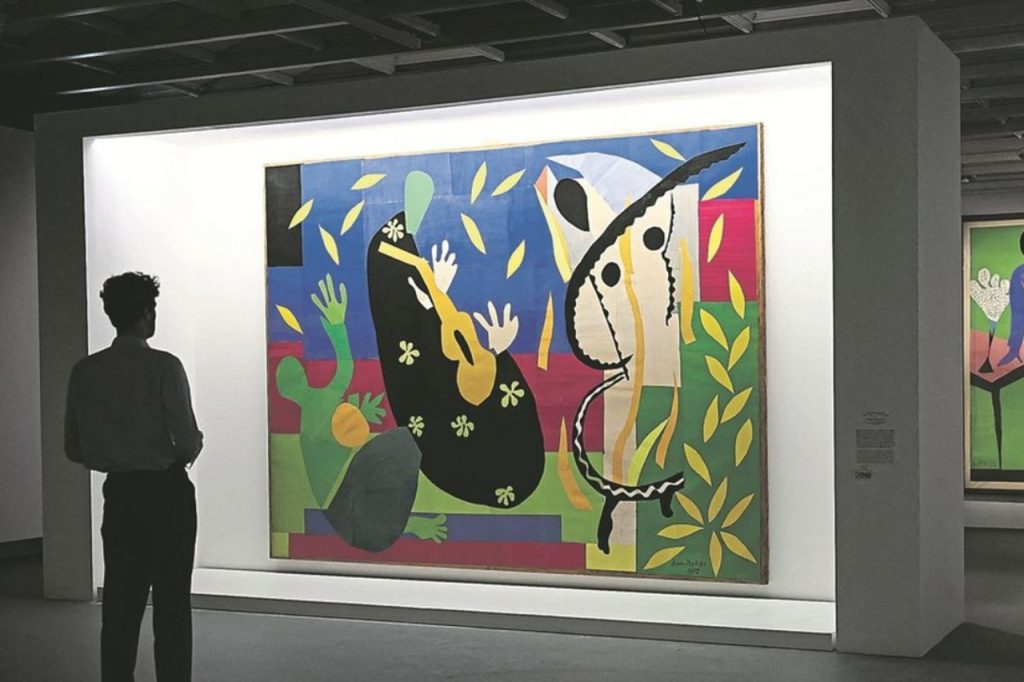
As a grand finale, the exhibition brings together, in an exceptional display, the major compositions that have become iconic: La Gerbe, Acanthes, L'Escargot, Mémoire d'Océanie, as well as the large cut-out gouache figures—La Tristesse du roi, Zulma, La Danseuse créole, and the famous series of Nus bleus.

View of the exhibition Matisse, 1941–1954 © Luc Castel

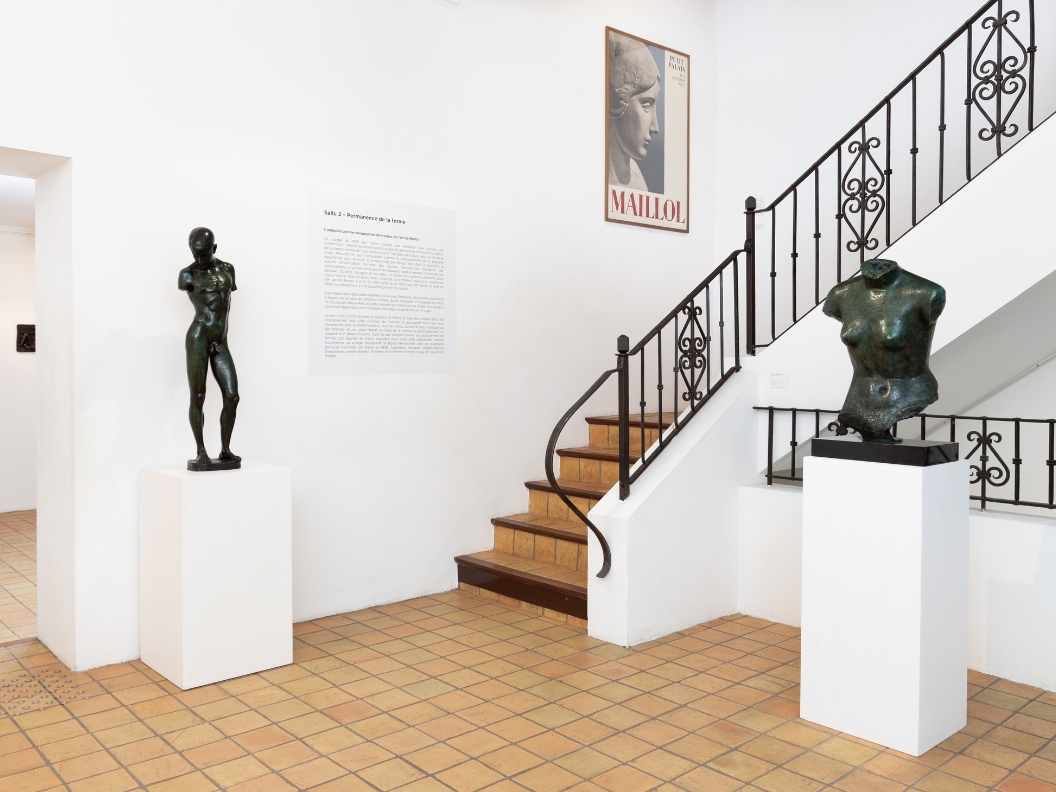
 Dina Vierny, who modeled for Matisse in her youth, shared a special relationship with him. After Maillol’s death in 1944, it was Matisse, along with Jeanne Bucher, who encouraged and supported Dina in opening her gallery on Rue Jacob in 1947. She dedicated four exhibitions to him between 1966 and 1982.

In 2025, marking the seventieth anniversary of the master’s death, the Dina Vierny Gallery presented an exhibition Matisse - Drawings (October 15, 2024 – February 2, 2025), a unique selection highlighting his distinctive line work. For Matisse, drawing was not merely a preparatory tool, but an art form in its own right, where every line conveys the full sensitivity and depth of his artistic approach. It is a means of exploring the essence of forms and the human figure, of getting to the heart of the matter without being distracted by the superfluous. 

A visitor viewing La Tristesse du Roi, a 1952 work by Matisse © Photo by Anne-Christine Poujoulat, AFP
 Co-produced by the Centre Pompidou and GrandPalaisRmn, this exhibition draws on the exceptional richness of the collection at the Musée National d’Art Moderne, which houses one of the world’s most significant collections of works by Matisse. These masterpieces are complemented by major international loans. This collaboration between two leading institutions of the French cultural scene thus offers a unique opportunity to rediscover the late work of the “King of the Fauves.”

Matisse, 1941–1954 at the Grand Palais
March 24 to July 26, 2026
Co-production by the Centre Pompidou and GrandPalaisRmn  Matisse, 1952 © Photo Anne-Christine Poujoulat AFP
 Conceived as a journey through the painter’s world, the exhibition recreates the vibrant atmosphere of his ever-changing studio. Visitors are invited to wander through this flourishing garden, discovering, room by room, the key works of this period: the masterful series Intérieurs de Vence (1946–1948), the Jazz album and its sketchbook, the Thèmes et Variations series, the brush-ink drawings, as well as the main elements of the Vence Chapel project.

As a grand finale, the exhibition brings together, in an exceptional display, the major compositions that have become iconic: La Gerbe, Acanthes, L'Escargot, Mémoire d'Océanie, as well as the large cut-out gouache figures—La Tristesse du roi, Zulma, La Danseuse créole, and the famous series of Nus bleus.
Dina Vierny View of the exhibition Matisse, 1941–1954, featuring the Blue Nudes © Luc Castel

Matisse at the Grand Palais

26.05.2026
 
 In the radiant light of his final years, Henri Matisse invented a new artistic language: one of cut-out forms and pure color. The exhibition Matisse, 1941–1954, on view at the Grand Palais, traces the journey of a free-spirited artist in constant motion through more than 300 exceptional works.
The year 1941 marked a decisive turning point in Henri Matisse ’s life. Seriously ill, he underwent major surgery that left him weakened but transformed. Paradoxically, this ordeal became the starting point for a creative rebirth. Aware of the fragility of existence, the artist embarked on what he called his “second life,” driven by a new sense of urgency.

Far from holding him back, his physical limitations stimulated his inventiveness and paved the way for a period of unprecedented artistic productivity. It is in this context that Matisse develops the technique of cut-out gouache, which he transforms into a visual language in its own right. This medium, seemingly simple, proves to be remarkably expressive and lends itself equally well to intimate projects and monumental compositions. It perfectly embodies the decorative dimension that the artist has always sought to express.

Drawing occupies a central place in this evolution. For Matisse, it is never merely a preparatory sketch, but an autonomous form of expression that reveals the full extent of his sensibility. Each stroke explores the very essence of forms and the human body, eliminating the superfluous to retain only the essential. This quest for purity, characterized by the fluidity and elegance of his line, culminates in the cut-out gouaches, where the artist “draws with scissors in vivid color.”

Far from abandoning painting, Matisse continued to explore it with renewed intensity. The exhibition reveals this multidisciplinary richness, in which paintings, drawings, cut-out gouaches, illustrated books, textiles, and stained-glass windows form a coherent and vibrant whole, bearing witness to a creativity that was constantly expanding.
	
 Conceived as a journey through the painter’s world, the exhibition recreates the vibrant atmosphere of his ever-changing studio. Visitors are invited to wander through this flourishing garden, discovering, room by room, the key works of this period: the masterful series Intérieurs de Vence (1946–1948), the Jazz album and its sketchbook, the Thèmes et Variations series, the brush-ink drawings, as well as the main elements of the Vence Chapel project.

As a grand finale, the exhibition brings together, in an exceptional display, the major compositions that have become iconic: La Gerbe, Acanthes, L'Escargot, Mémoire d'Océanie, as well as the large cut-out gouache figures—La Tristesse du roi, Zulma, La Danseuse créole, and the famous series of Nus bleus.

View of the exhibition Matisse, 1941–1954 © Luc Castel

 Dina Vierny, who modeled for Matisse in her youth, shared a special relationship with him. After Maillol’s death in 1944, it was Matisse, along with Jeanne Bucher, who encouraged and supported Dina in opening her gallery on Rue Jacob in 1947. She dedicated four exhibitions to him between 1966 and 1982.

In 2025, marking the seventieth anniversary of the master’s death, the Dina Vierny Gallery presented an exhibition Matisse - Drawings (October 15, 2024 – February 2, 2025), a unique selection highlighting his distinctive line work. For Matisse, drawing was not merely a preparatory tool, but an art form in its own right, where every line conveys the full sensitivity and depth of his artistic approach. It is a means of exploring the essence of forms and the human figure, of getting to the heart of the matter without being distracted by the superfluous. 

A visitor viewing La Tristesse du Roi, a 1952 work by Matisse © Photo by Anne-Christine Poujoulat, AFP
 Co-produced by the Centre Pompidou and GrandPalaisRmn, this exhibition draws on the exceptional richness of the collection at the Musée National d’Art Moderne, which houses one of the world’s most significant collections of works by Matisse. These masterpieces are complemented by major international loans. This collaboration between two leading institutions of the French cultural scene thus offers a unique opportunity to rediscover the late work of the “King of the Fauves.”

Matisse, 1941–1954 at the Grand Palais
March 24 to July 26, 2026
Co-production by the Centre Pompidou and GrandPalaisRmn  Matisse, 1952 © Photo Anne-Christine Poujoulat AFP

Don't miss any of our news, subscribe to our newsletter!

    Ne ratez rien de nos actualités, abonnez-vous à notre newsletter !