

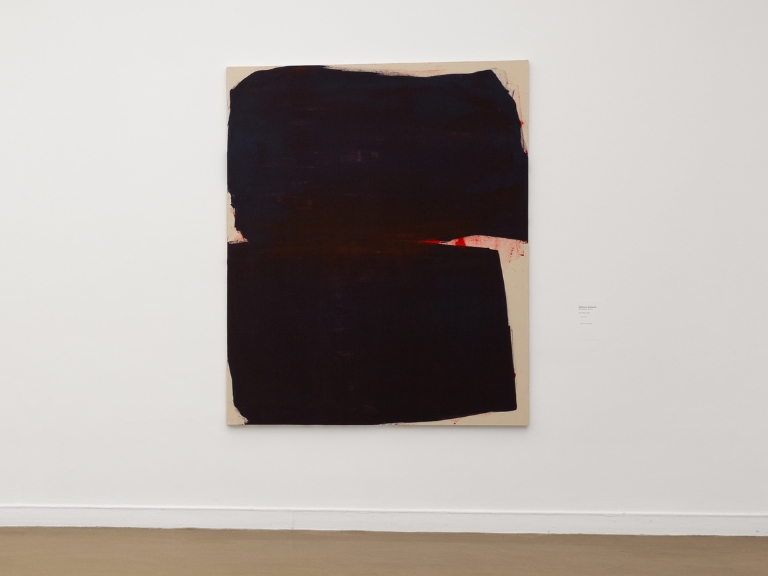
Stéphane Bordarier : « Die Farbe hat mich »

 
 In 2000, I took part in the exhibition Die Farbe hat mich (“Colour has taken hold of me”) at the Karl Ernst Osthaus Museum in Hagen, Germany, which continued in 2003 in New York under the title Seeing Red. Klee’s statement sums up perfectly what colour means to a painter. 
For me, the only thing that ultimately makes a painting work is its colour—and that is always very mysterious. 
10.09.2026
Dina Vierny Vue de l'exposition Stéphane Bordarier au Musée d'Art Moderne de Paris, 2026-27, © Jean Vayssié
The quality of the colour (its surface quality) means that you paint “after” Piero della Francesca, after Picasso, after Hans Hofmann, and “after,” in this context, means “with.” For me, the link with these painters is colour. Colour is what captivates me, regardless of the “subject” of the painting.

I’ve always been drawn to sparse colour— the sort found in Matisse (some of his finest paintings are little more than skin and bones), James Bishop and Miró: this sparse ness often allows the colour to be illumi nated from beneath, by the texture of the canvas that supports it. I am fascinated to see how Matisse brings a surface of colour to life by scraping away in places to reveal the canvas (or a coloured underlayer). This attention to the treatment of colour some times leads people to compare Carroll Dun ham with Picasso’s later works, whilst Baselitz, in his most recent paintings, treats colour in much the same way as De Kooning did in the 1970s. The surface is the depth. 	
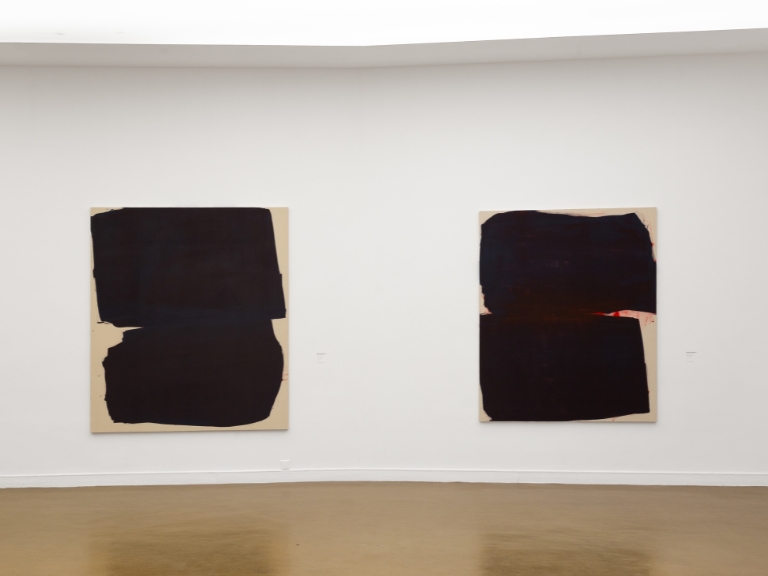
View of the Stéphane Bordarier exhibition at Musée d'Art Moderne de Paris, 2026-27, © Jean Vayssié

«

Les coloristes dessinent comme la nature ; leurs figures sont naturellement délimitées par la lutte harmonieuse des masses colorées

»

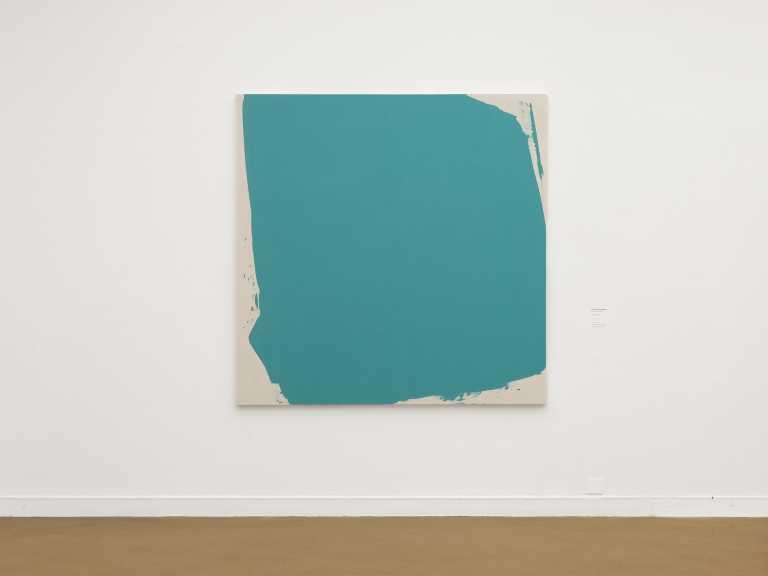
 Consequently, I find no interest in “effects” in colour, or in colourful materialities: for me, the most active colour is also the simplest, the most pared-back, legible in its own right.
Nothing interferes with its inherent power.

My colours arise from the chemistry of the mixtures on the studio table; then, once applied to the canvas, they surprise me and capture my attention through the possibilities for further work they open up. As I work with them, they sometimes encounter a colour from my lived experience. My memory is coloured by: vivid memories of Italian art from the Quattrocento, and of all the works admired in museums—Velázquez’s buttery yellows, Cosmè Tura’s ubiquitous purples— mingle there with the deeply buried memory of the colours of childhood, which painting brings to light, those of the Rhône, the hillside, the pine forest. When memory is linked to a colour, it adds an extra layer of richness. For my part, I have shared certain colours with other painters: the “Violet of March” with Rosso Fiorentino, light cobalt violet with Picasso and Miró, a particular inter play of blue and red with Enguerrand Quarton and Fernand Léger, and so on; yet each colour, in its specific use within a painting, is unique. 

View of the Stéphane Bordarier exhibition at Musée d'Art Moderne de Paris, 2026-27, © Jean Vayssié

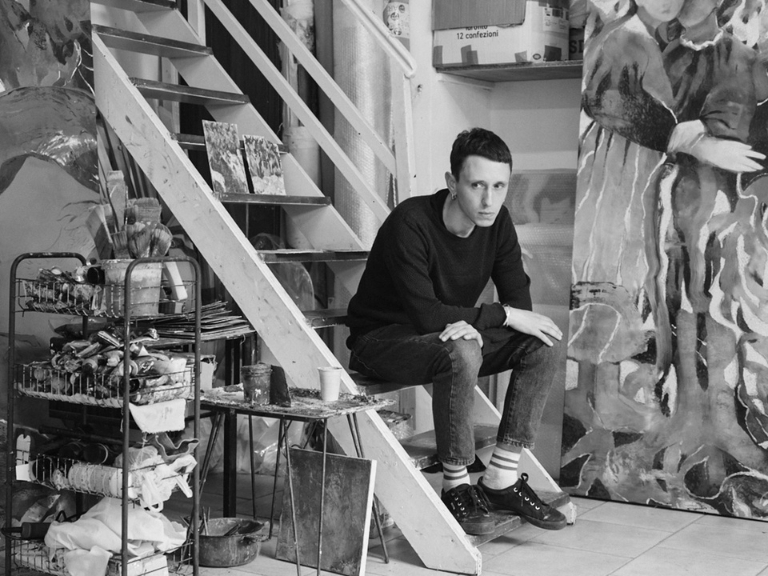
 Colour is a constant pitfall I come up against: one colour may lead me into sentimentality, another into verbosity. When painting, I must steer clear of “beautiful colour”—distrusting it as I would the plague—just as much as I must avoid colour that is too deliberately unappealing, the colour of an old grumbler… The rejection of seduction is violent; seduction itself is violent too. Ultimately, the colour of a painting must be nothing more than the colour of the painting itself.

Colour is what allows one to be lyrical with - out any intention of being so.

Colour, as I use it, dictates its own form: “The draughtsmanship of colourists is like that of nature; their figures are naturally bounded by a harmonious collision of coloured masses (1).” The fact that colour plays a central role for me means that, whilst I am working on the canvas, it is colour that does the drawing.

Taking a stance, being part of a process of discovery, and a desire to open up new possibilities for painting are the driving forces behind the painter’s work, compelling them to continue; and then there is the sudden emergence of a colour, which can turn every - thing upside down, leading to its own catastrophe. 

Stéphane Bordarier, June 2026
For Artpress, N°546, september 2026
 Consequently, I find no interest in “effects” in colour, or in colourful materialities: for me, the most active colour is also the simplest, the most pared-back, legible in its own right.
Nothing interferes with its inherent power.

My colours arise from the chemistry of the mixtures on the studio table; then, once applied to the canvas, they surprise me and capture my attention through the possibilities for further work they open up. As I work with them, they sometimes encounter a colour from my lived experience. My memory is coloured by: vivid memories of Italian art from the Quattrocento, and of all the works admired in museums—Velázquez’s buttery yellows, Cosmè Tura’s ubiquitous purples— mingle there with the deeply buried memory of the colours of childhood, which painting brings to light, those of the Rhône, the hillside, the pine forest. When memory is linked to a colour, it adds an extra layer of richness. For my part, I have shared certain colours with other painters: the “Violet of March” with Rosso Fiorentino, light cobalt violet with Picasso and Miró, a particular inter play of blue and red with Enguerrand Quarton and Fernand Léger, and so on; yet each colour, in its specific use within a painting, is unique. 
Dina Vierny Vue de l'exposition Stéphane Bordarier au Musée d'Art Moderne de Paris, 2026-27, © Jean Vayssié

Stéphane Bordarier : « Die Farbe hat mich »

10.09.2026
 
 In 2000, I took part in the exhibition Die Farbe hat mich (“Colour has taken hold of me”) at the Karl Ernst Osthaus Museum in Hagen, Germany, which continued in 2003 in New York under the title Seeing Red. Klee’s statement sums up perfectly what colour means to a painter. 
For me, the only thing that ultimately makes a painting work is its colour—and that is always very mysterious. 
The quality of the colour (its surface quality) means that you paint “after” Piero della Francesca, after Picasso, after Hans Hofmann, and “after,” in this context, means “with.” For me, the link with these painters is colour. Colour is what captivates me, regardless of the “subject” of the painting.

I’ve always been drawn to sparse colour— the sort found in Matisse (some of his finest paintings are little more than skin and bones), James Bishop and Miró: this sparse ness often allows the colour to be illumi nated from beneath, by the texture of the canvas that supports it. I am fascinated to see how Matisse brings a surface of colour to life by scraping away in places to reveal the canvas (or a coloured underlayer). This attention to the treatment of colour some times leads people to compare Carroll Dun ham with Picasso’s later works, whilst Baselitz, in his most recent paintings, treats colour in much the same way as De Kooning did in the 1970s. The surface is the depth. 	

«

Les coloristes dessinent comme la nature ; leurs figures sont naturellement délimitées par la lutte harmonieuse des masses colorées

»

 Consequently, I find no interest in “effects” in colour, or in colourful materialities: for me, the most active colour is also the simplest, the most pared-back, legible in its own right.
Nothing interferes with its inherent power.

My colours arise from the chemistry of the mixtures on the studio table; then, once applied to the canvas, they surprise me and capture my attention through the possibilities for further work they open up. As I work with them, they sometimes encounter a colour from my lived experience. My memory is coloured by: vivid memories of Italian art from the Quattrocento, and of all the works admired in museums—Velázquez’s buttery yellows, Cosmè Tura’s ubiquitous purples— mingle there with the deeply buried memory of the colours of childhood, which painting brings to light, those of the Rhône, the hillside, the pine forest. When memory is linked to a colour, it adds an extra layer of richness. For my part, I have shared certain colours with other painters: the “Violet of March” with Rosso Fiorentino, light cobalt violet with Picasso and Miró, a particular inter play of blue and red with Enguerrand Quarton and Fernand Léger, and so on; yet each colour, in its specific use within a painting, is unique. 

View of the Stéphane Bordarier exhibition at Musée d'Art Moderne de Paris, 2026-27, © Jean Vayssié
 Colour is a constant pitfall I come up against: one colour may lead me into sentimentality, another into verbosity. When painting, I must steer clear of “beautiful colour”—distrusting it as I would the plague—just as much as I must avoid colour that is too deliberately unappealing, the colour of an old grumbler… The rejection of seduction is violent; seduction itself is violent too. Ultimately, the colour of a painting must be nothing more than the colour of the painting itself.

Colour is what allows one to be lyrical with - out any intention of being so.

Colour, as I use it, dictates its own form: “The draughtsmanship of colourists is like that of nature; their figures are naturally bounded by a harmonious collision of coloured masses (1).” The fact that colour plays a central role for me means that, whilst I am working on the canvas, it is colour that does the drawing.

Taking a stance, being part of a process of discovery, and a desire to open up new possibilities for painting are the driving forces behind the painter’s work, compelling them to continue; and then there is the sudden emergence of a colour, which can turn every - thing upside down, leading to its own catastrophe. 

Stéphane Bordarier, June 2026
For Artpress, N°546, september 2026

Don't miss any of our news, subscribe to our newsletter!


    Don't miss any of our news, subscribe to our newsletter


      Subscribe to our newsletter