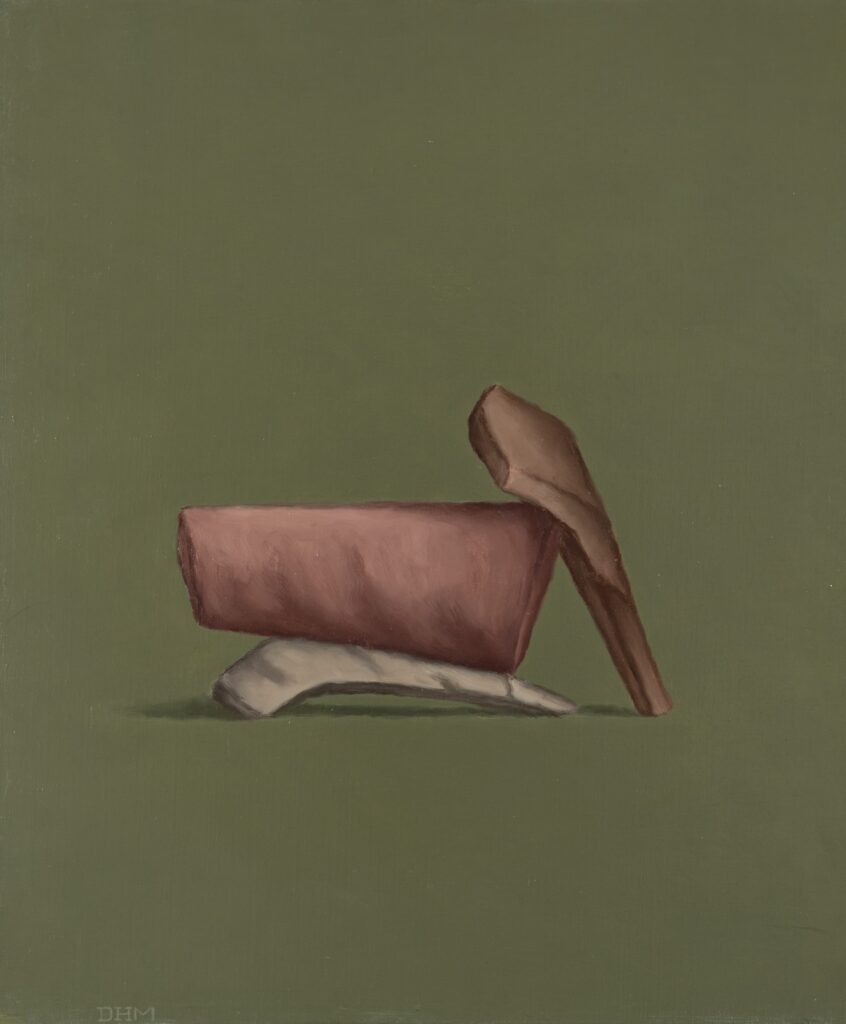
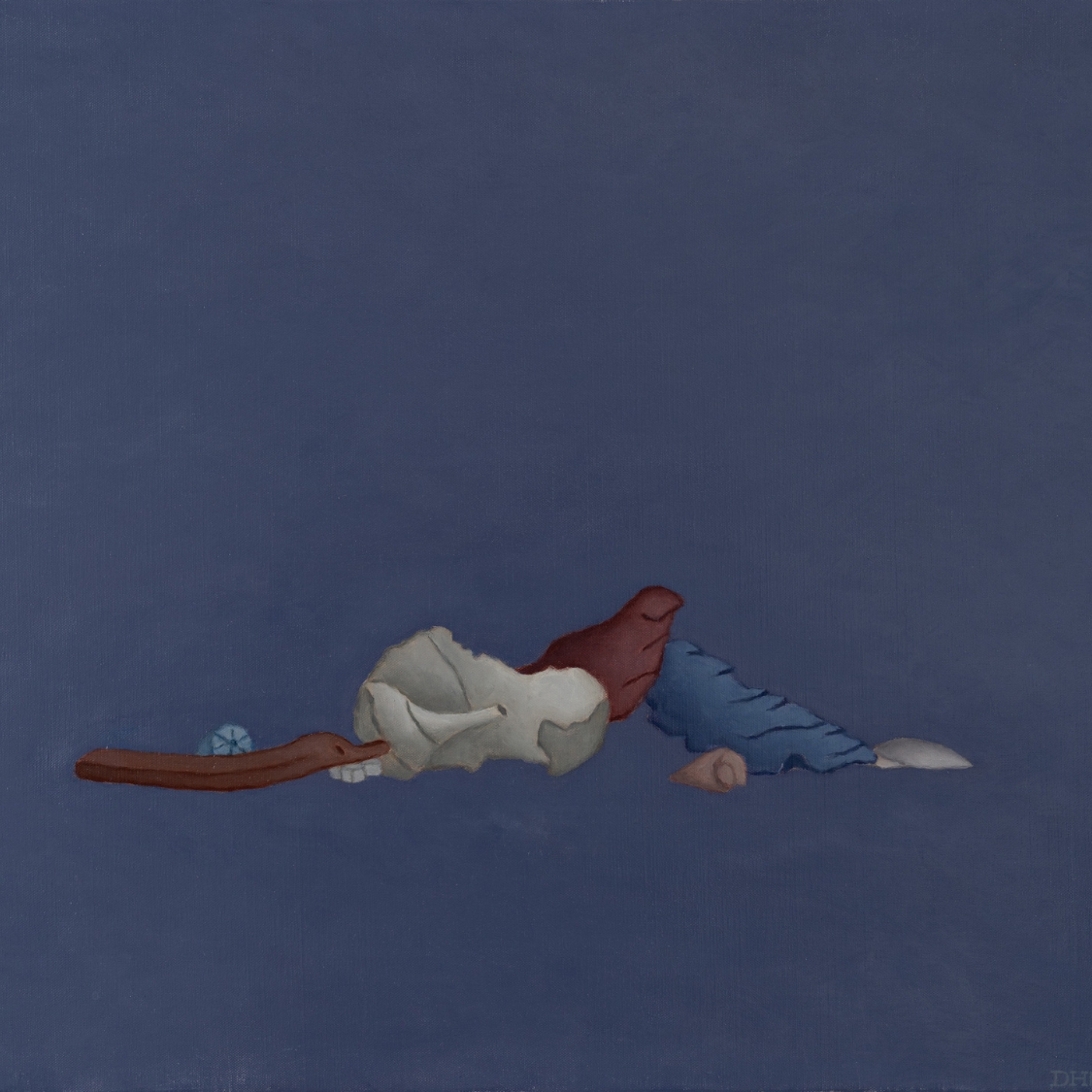
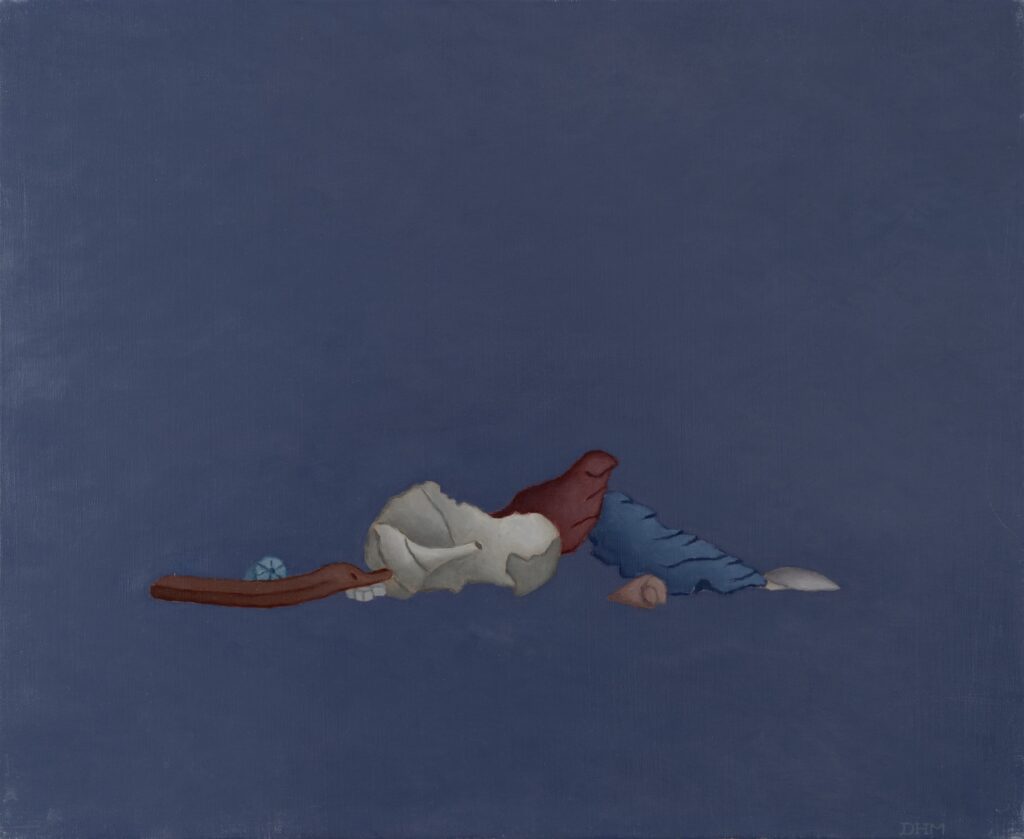
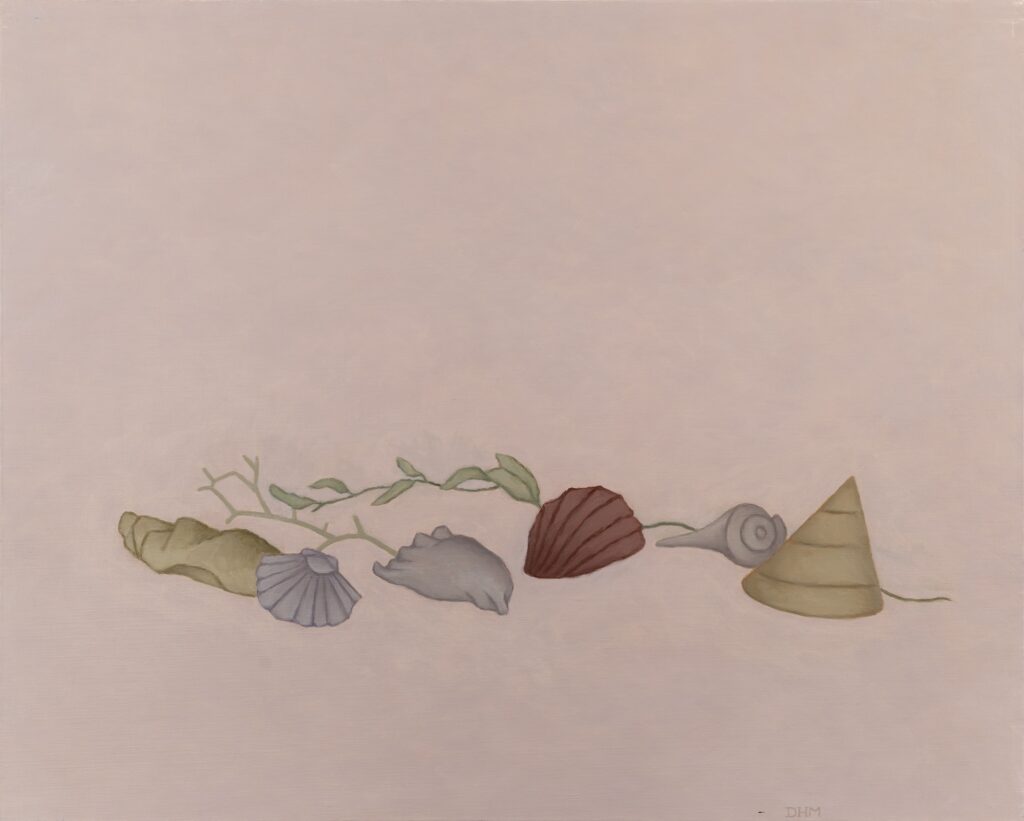
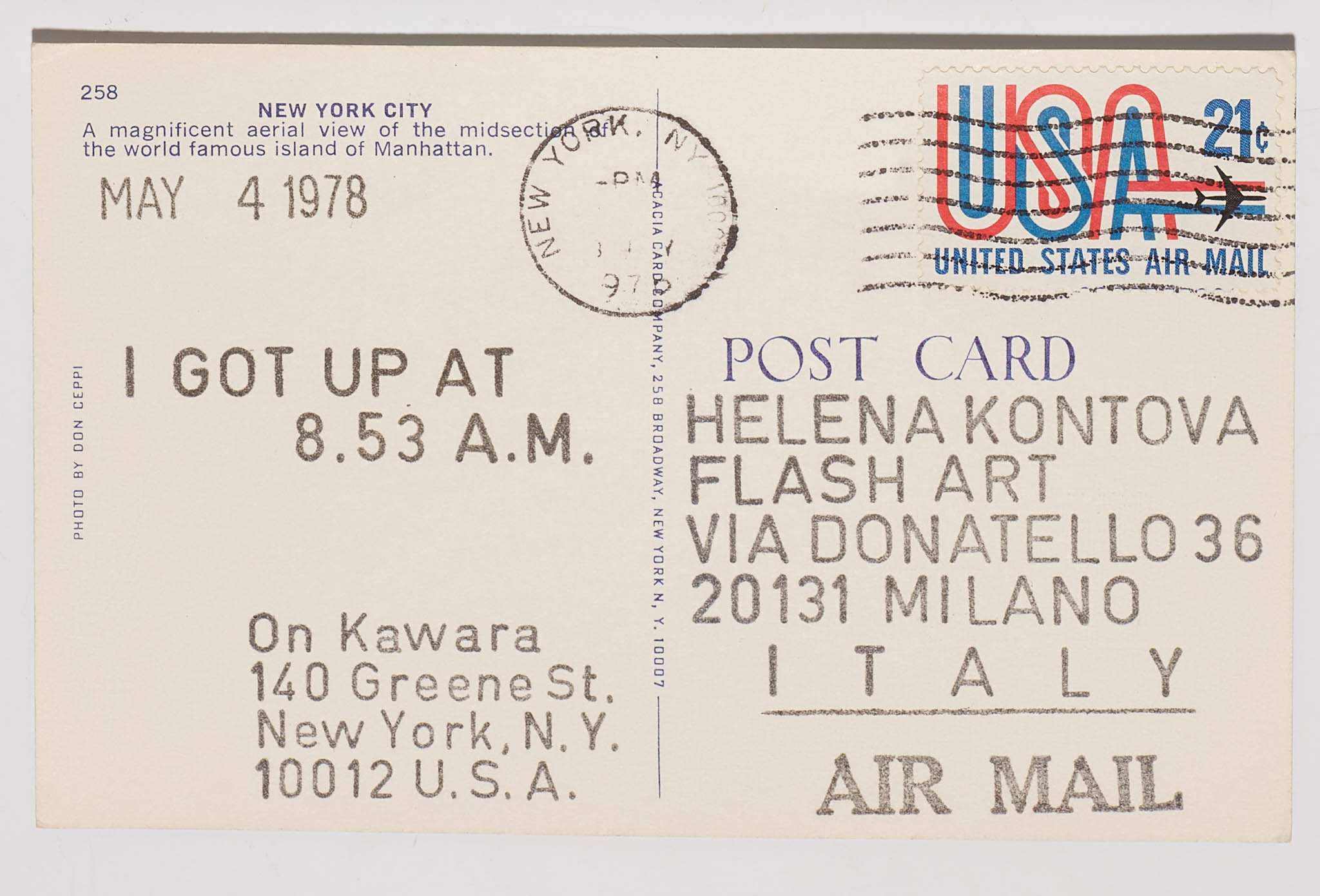
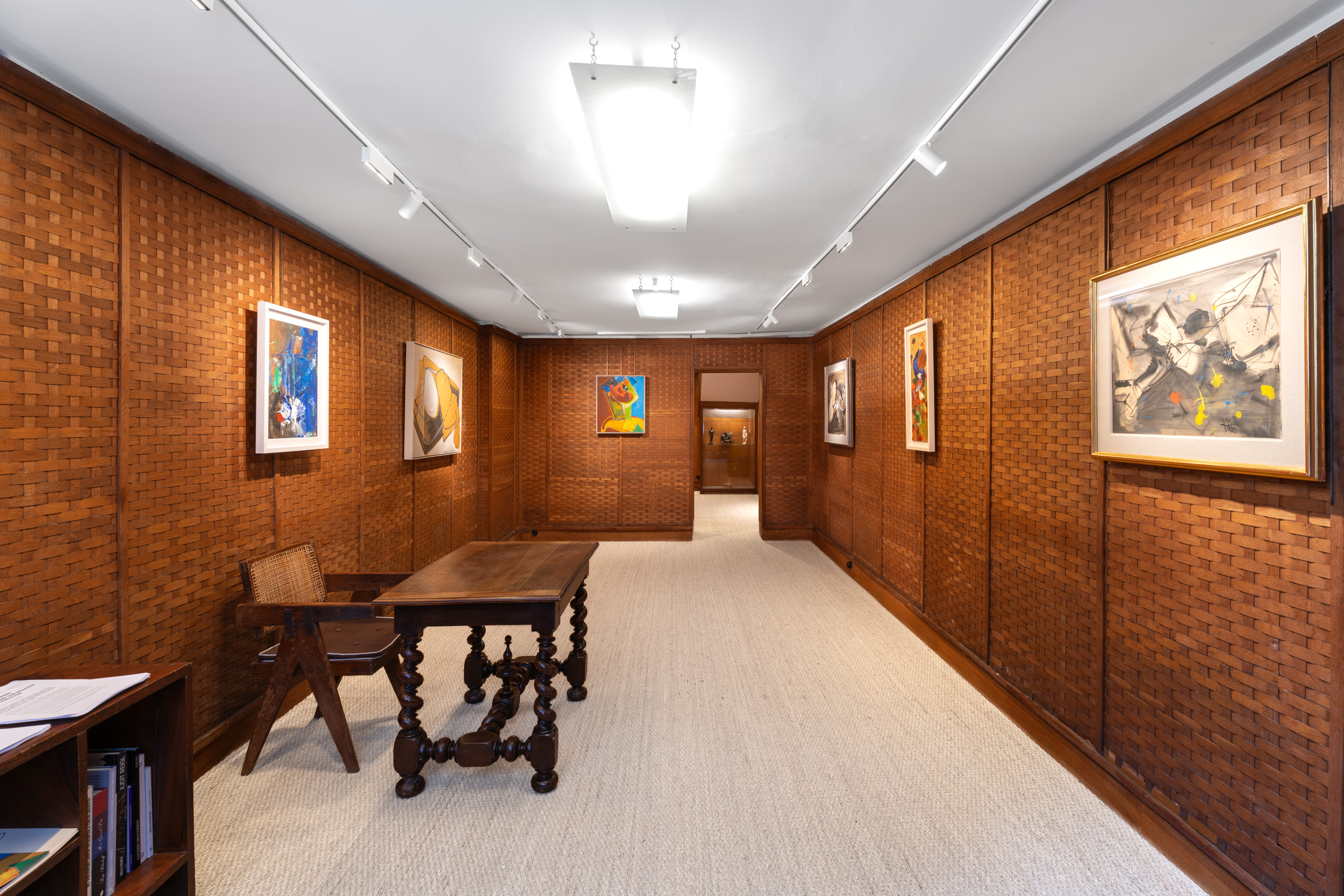
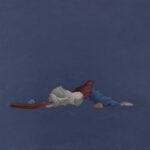
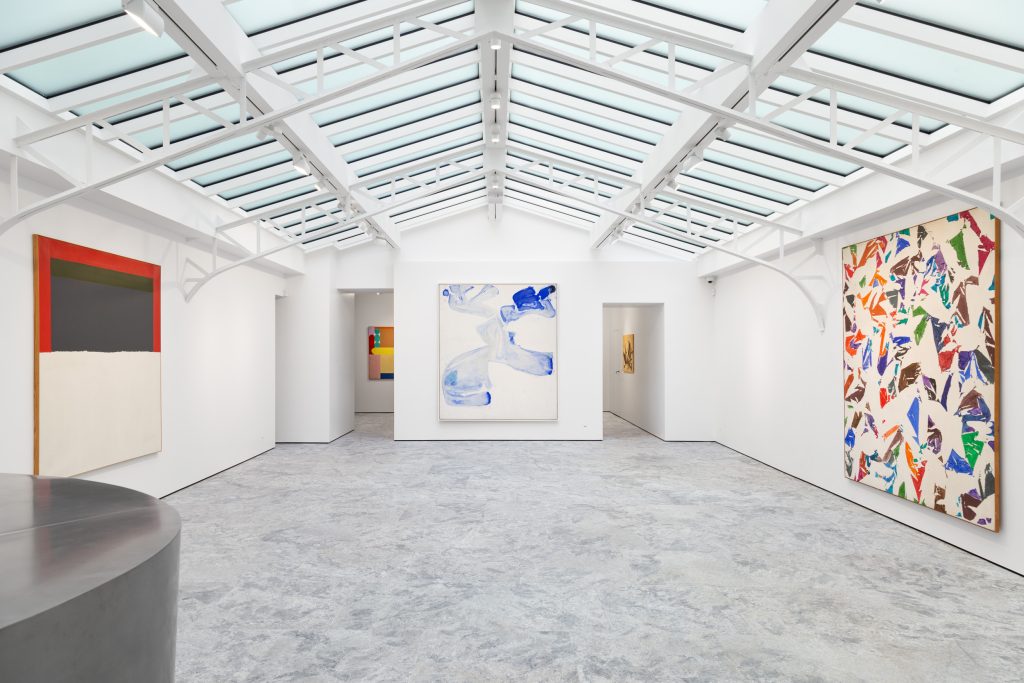
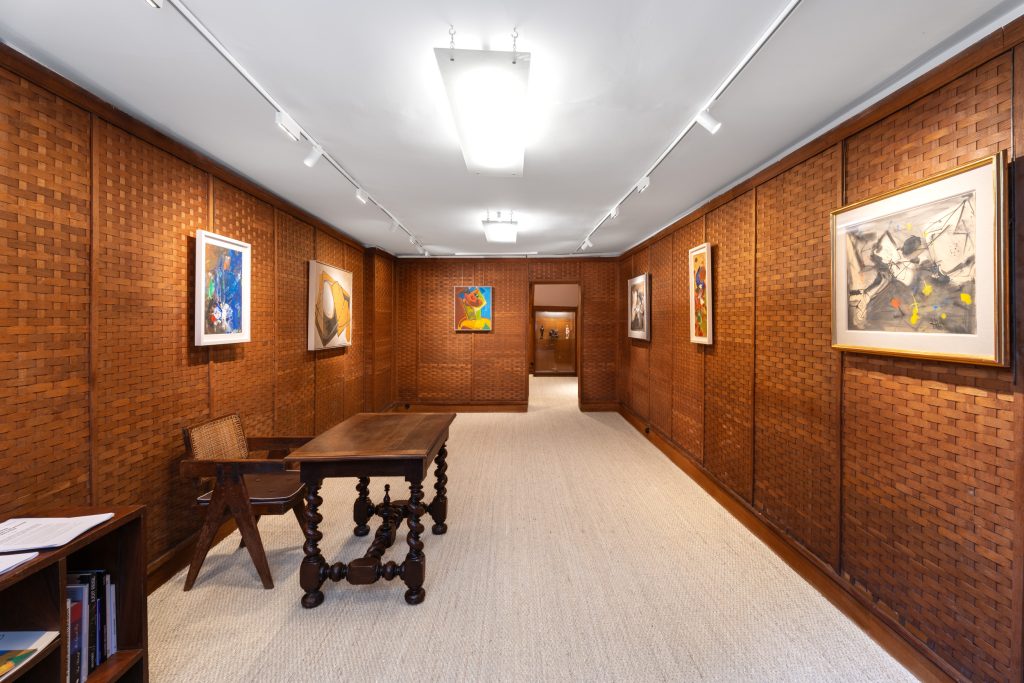
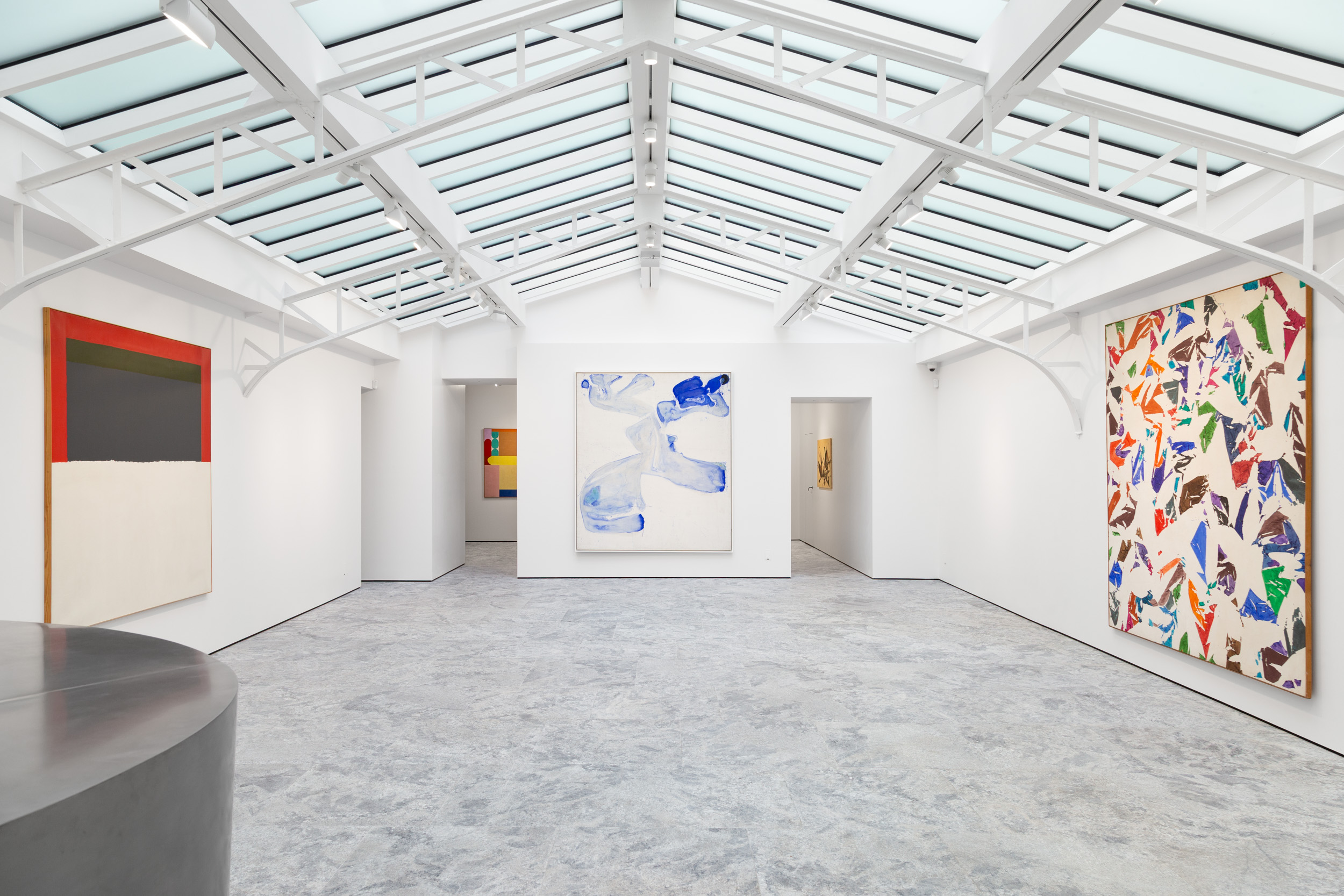
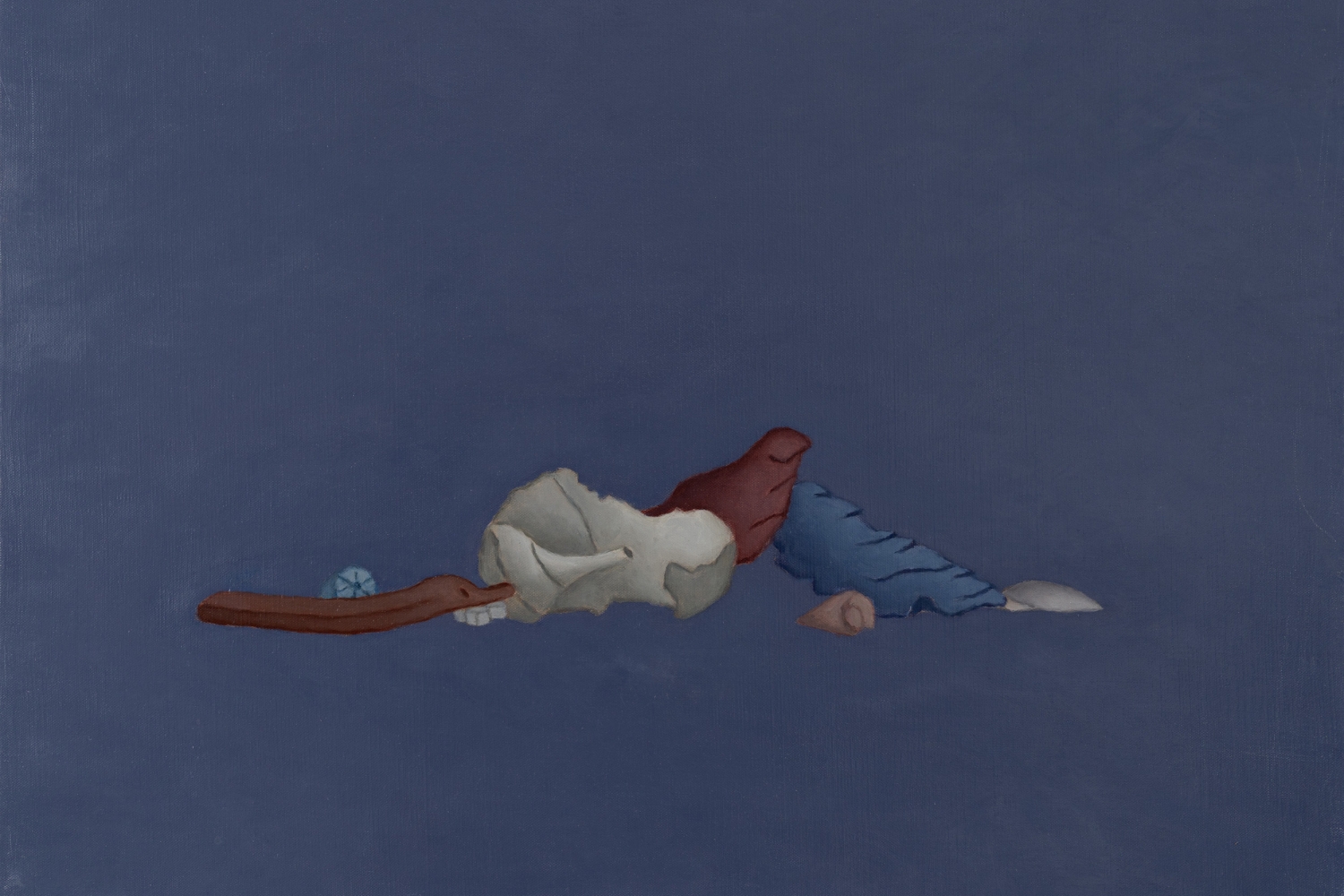
From November 20, 2026 to January 16, 2027, Galerie Dina Vierny is pleased to present, in its historic space at 36 rue Jacob, an exhibition bringing together the American painter Deborah Hanson-Murphy (1931–2018), whose work is shown at the gallery for the first time, and the conceptual artist On Kawara (1933–2014). Thirteen oil paintings from Hanson-Murphy's Variations series are placed in dialogue with a group of postcards from On Kawara's I GOT UP AT series. One practice rests on the daily repetition of a single gesture, the other on the slow elaboration of a distilled and silent body of work; together, they reveal a singular experience of time. Having settled in Paris in 1968, Deborah Hanson-Murphy developed a body of painting grounded in the study of objects and their presence in space, gradually freeing herself from the conventions of their traditional depiction. In the mid-1960s, her compositions were still rooted in a domestic setting: fruit, flowers and fragments of antique sculpture arranged on a mantelpiece. Little by little, the objects broke away from their surroundings. A decisive moment came with the chance discovery of their reflection in the mirror above the mantelpiece, in which they seemed to hang suspended in space. From this experience emerged, in 1974, the
Variations — a series the artist would pursue for more than four decades.
The
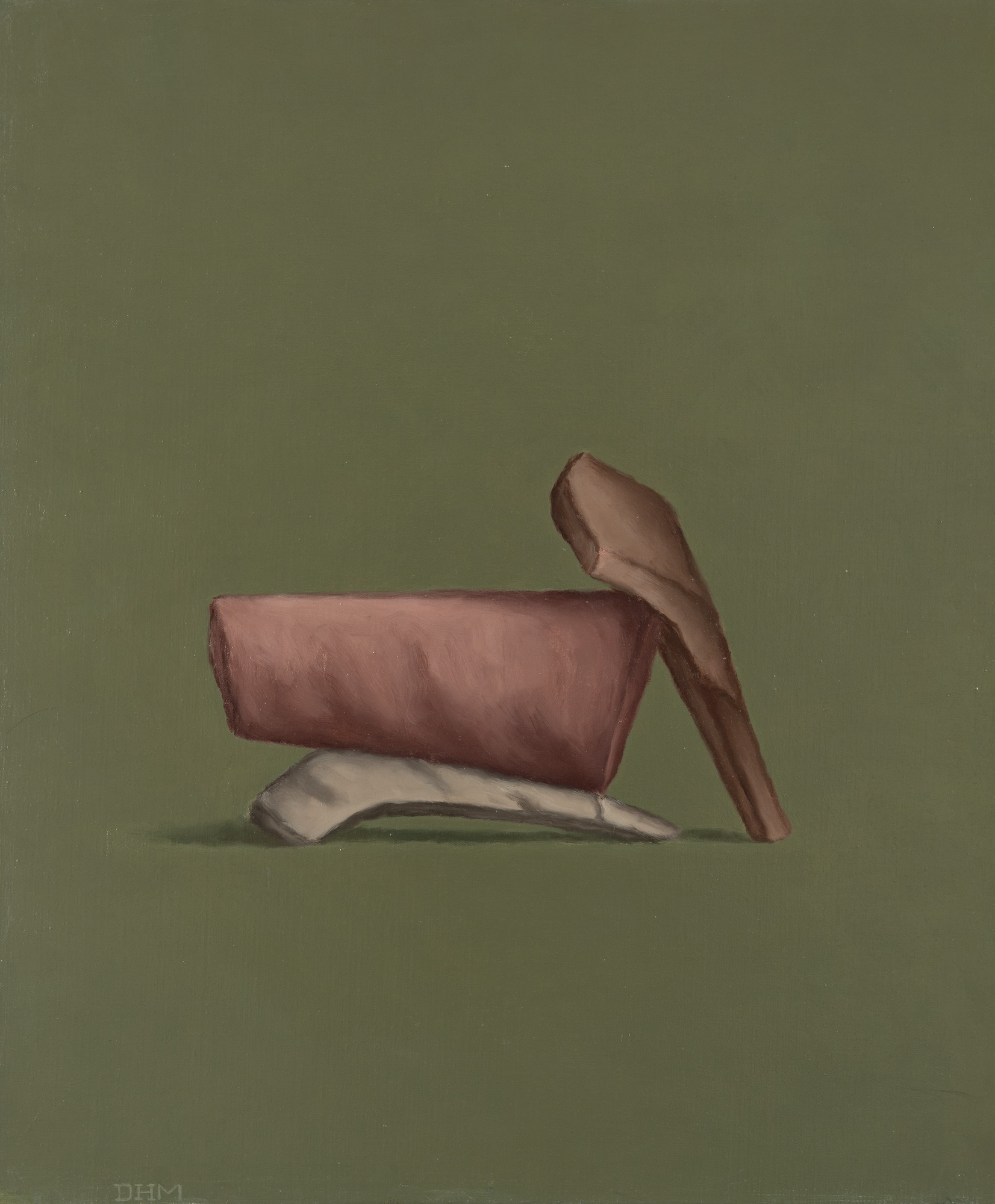
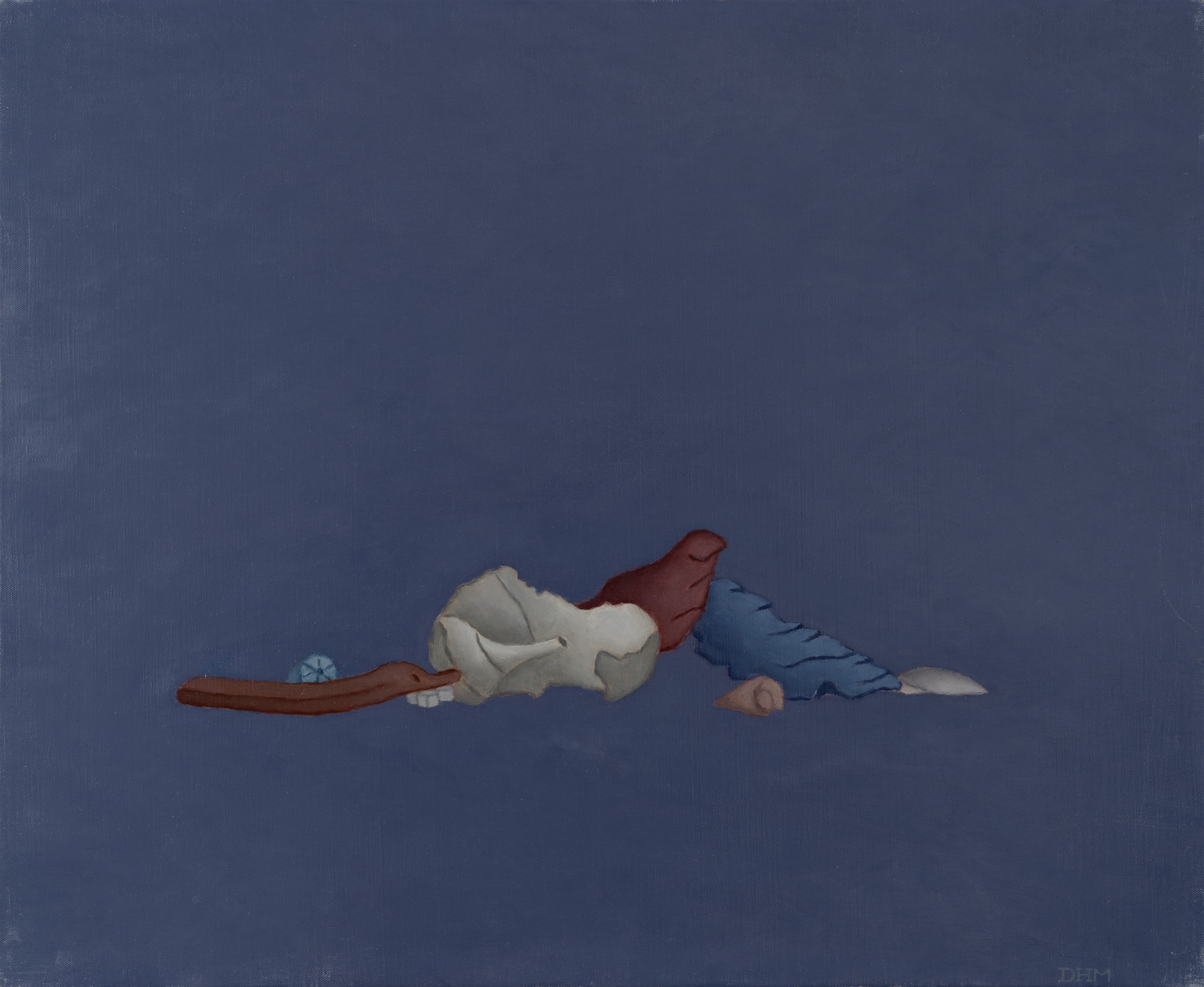
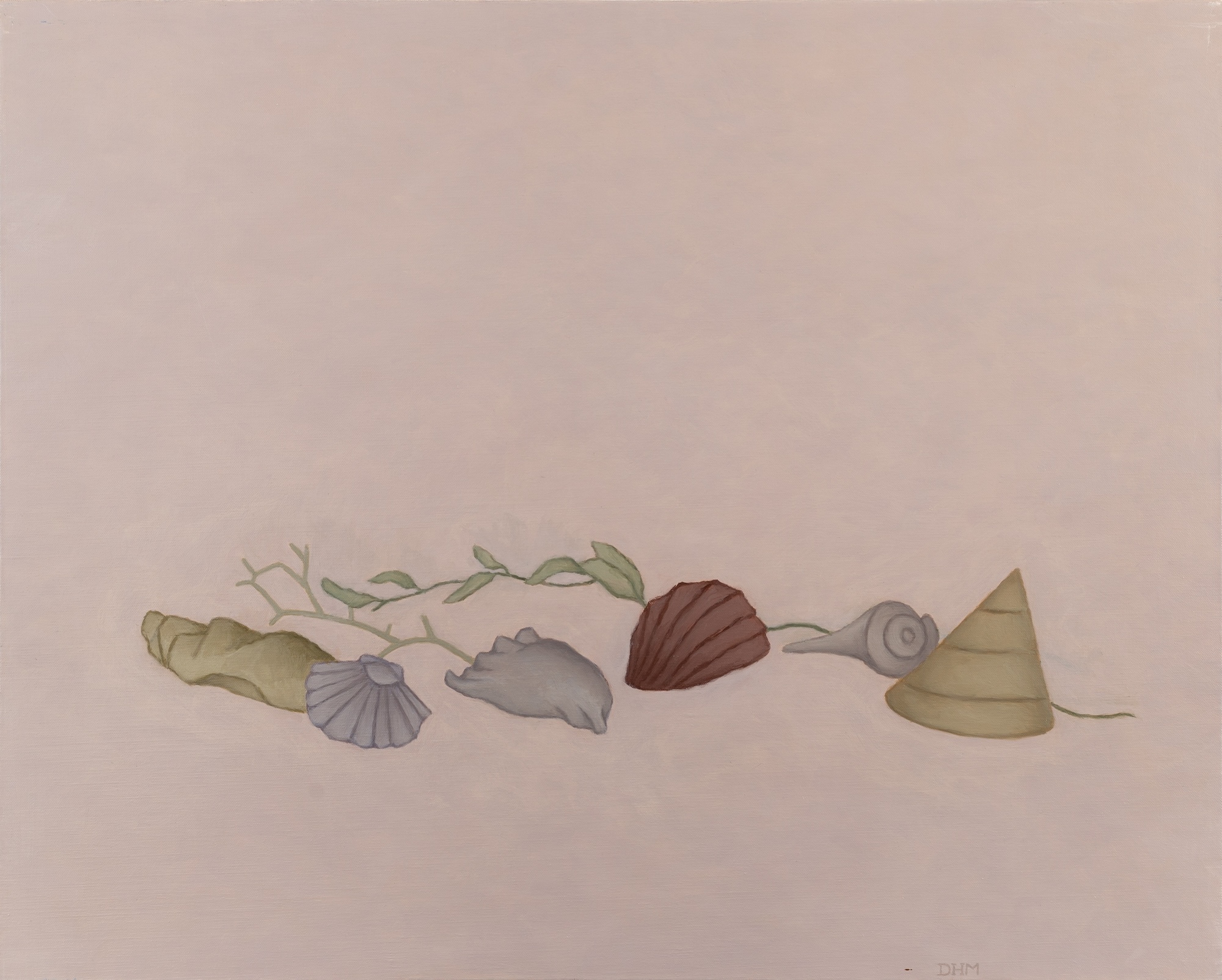
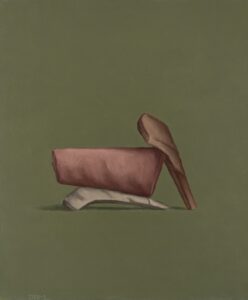
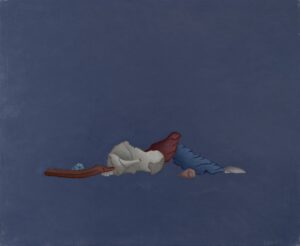
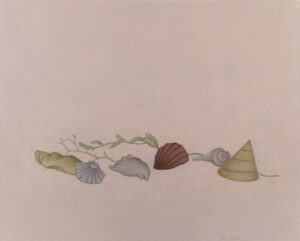
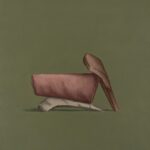
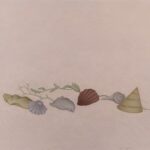
Variations draw on a deliberately limited repertoire: oyster shells, sea-urchin tests, fragments of coral, carob pods, shards of pottery and marble. These elements are brought together less for what they are than for their formal qualities — their curves, hollows and textures, and the proportions they hold to one another. A devoted lover of music, Hanson-Murphy borrowed from musical composition the principle of the variation: a form that took shape in the sixteenth century, found some of its most accomplished expressions in Bach and Schubert, and was later transposed to painting by Giorgio Morandi in his quiet meditations on a small group of objects. From one canvas to the next, Hanson-Murphy takes up and reorders the same elements, making minute adjustments to scale, interval and arrangement. The process could extend over several years, during which she would return to a composition, turn it on its axis and rework its formal relationships until an overall equilibrium was reached.
What sets these paintings apart, above all, is the treatment of the ground. No horizon line defines the space: while modelling and shadow lend the objects their volume, broad fields of colour — ochre, pink, mauve or blue — deprive them of any spatial bearing. Thus isolated, a shell may call to mind a mountain range; an assemblage of fragments may assume the scale of architecture. By releasing objects from their customary context and scale, Hanson-Murphy foregrounds the formal relationships that bind them, to the point where they become difficult to identify. The thirteen
Variations gathered at rue Jacob, the earliest of which dates from 1973, bear witness to an enquiry sustained over several decades.
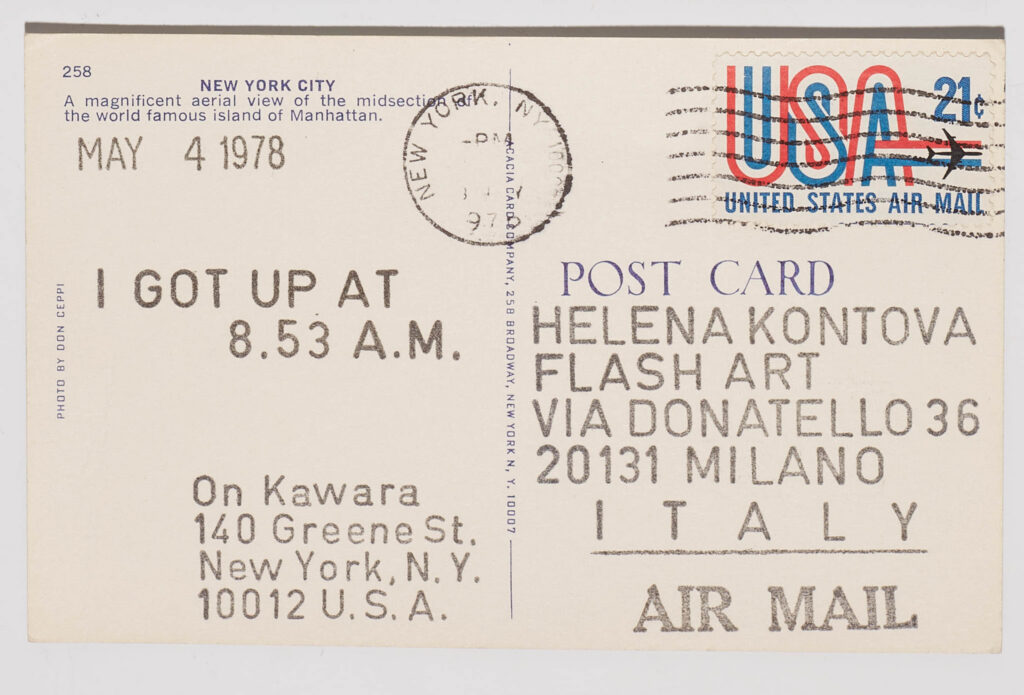
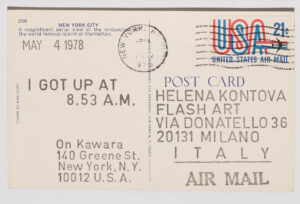
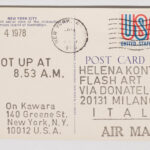
On Kawara's work, too, unfolds over time, though by radically different means. Between 1968 and 1979, the artist sent two postcards each day to friends and acquaintances, stamped with the date, the addresses and the words 'I GOT UP AT', followed by the exact time he had risen. Almost bureaucratic in their neutrality, these cards are nonetheless among his most intimate works: each one simply attests that another day has been lived. Taken together, they form an archive of the present, in which time is not depicted but recorded, and variation is reduced to a single objective datum — the hour. Where Kawara logs the moment to the minute, Hanson-Murphy allows time to settle into the very layers of the painting, through successive revisions and adjustments. For all their differences, the two practices share an economy of means, an ascetic discipline of repetition and a withdrawal of personal expression in favour of close attention to the slightest variation. Like a
koan, their works say very little, yet open up an almost meditative space in which the passage of time can be felt.
BIOGRAPHIES Deborah Hanson-Murphy was born in 1931 in Stockton, California. After graduating from Stanford University in 1953, she trained at the Art Students League of New York in 1957–58, before settling in Paris in 1968. It was there that she produced the greater part of her work, and there that she died in 2018. From the mid-1970s onwards she devoted herself to the
Variations, a cycle she pursued until the end of her life. She exhibited regularly at the Salon des Femmes (1978–1992) and the Salon des Réalités Nouvelles (1988–2009), and was the subject of solo exhibitions in Paris at Galerie Valmay (1981), Galerie Darial (1987, 1991) and Galerie Emeric Hahn (2011), as well as at the Espace culturel de Sully-sur-Loire (2011–12). Her work has been the subject of writings by Henri Raynal and Lydia Harambourg. Rediscovered following her exhibition at Galerie Balice Hertling in 2023, she has since been shown in London (Kate MacGarry, with Chris Sharp Gallery, 2026) and Mexico City (Travesía Cuatro, 2026). Her work is held in the collections of the Museum of Fine Arts, Boston, and the Fonds national d'art contemporain.
On Kawara was born on January 2, 1933 in Kariya, Japan, and died in New York in 2014. His earliest works, made in Tokyo in the 1950s, bear the imprint of the atomic bombings of Hiroshima and Nagasaki. Having settled in New York in the 1960s, he thereafter devoted his practice to recording time and his own existence. On January 4, 1966 he painted the first of his
Date Paintings (the Today series), which he would continue until 2013. From 1968 he embarked on the trilogy
I GOT UP,
I WENT and
I MET, followed by the
I AM STILL ALIVE telegrams and
One Million Years. His work is held in major public collections, among them the Centre Pompidou, the Metropolitan Museum of Art and M+ in Hong Kong.