

Hans Hofmann, at last by Catherine Millet

 
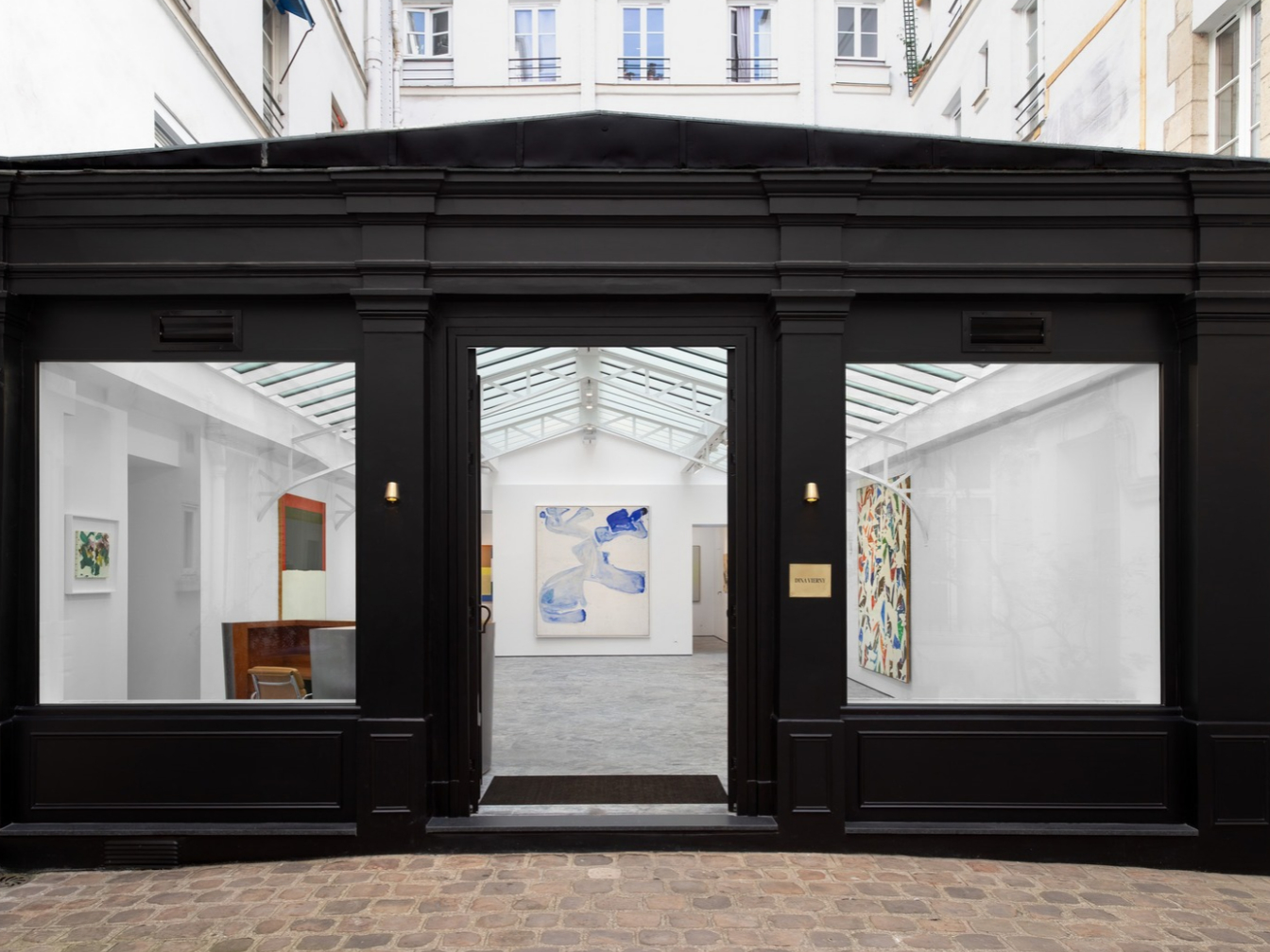
 From October 14 to November 14, 2026, the Galerie Dina Vierny will host the exhibition Hans Hofmann – Munich, Paris, and the Routes to Abstraction at its gallery at 36 Rue Jacob. Catherine Millet, editor-in-chief of artpress, offers her insights and guides us through this exhibition.
16.10.2026
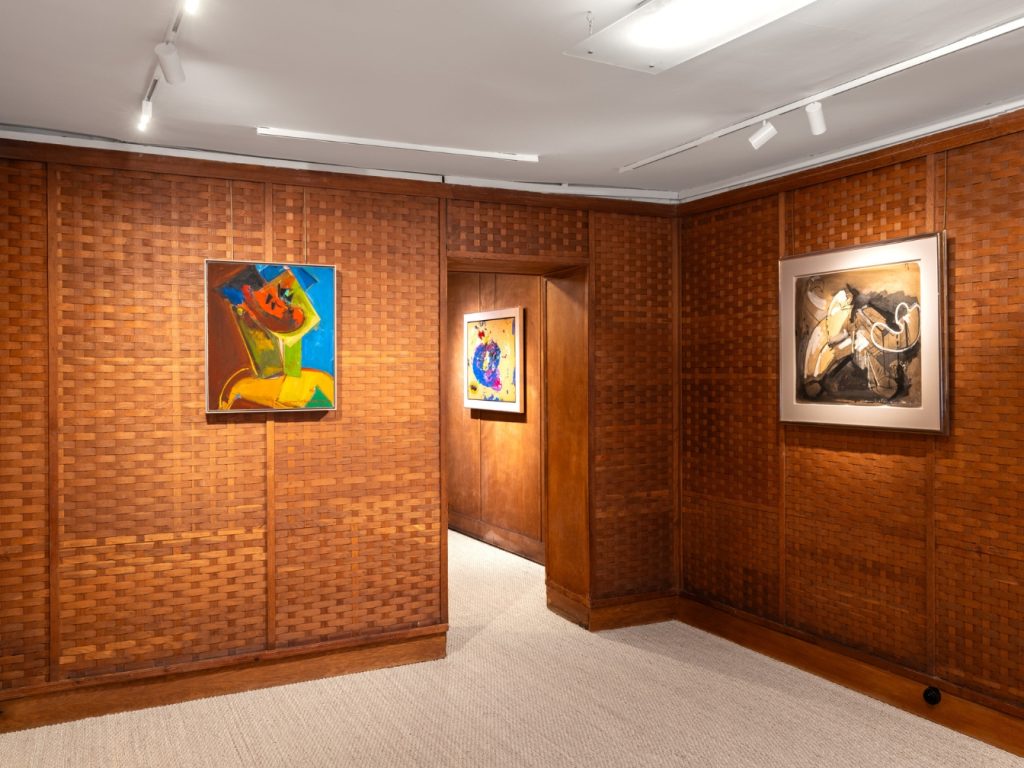
Dina Vierny View of the exhibition Hans Hofmann – Munich, Paris, and the Routes of Abstraction
Seventy-seven years after his exhibition of 1949 at Galerie Maeght, sixty-three years after a second Parisian exhibition in 1963, at a short-lived gallery, Anderson Mayer, rue de L’Échaudé, Hans Hofmann, born in Munich in 1880, returns to a city where he had chosen to live between 1904 and 1914, at the height of the avant-gardes, Cubism and Fauvism. He was close to Pascin and to the Delaunays, collaborating indeed with Robert on designs for Sonia’s fabrics. Yet every lover of modern painting, and of abstraction in particular, knows, more or less vaguely, and without often having had the chance to contemplate his works, that the name of Hans Hofmann is that of an almost legendary figure in the history of painting.  

Was it his reputation as an extraordinary teacher in New York that, seen from Europe, concealed the painter? Was it the myth of Jackson Pollock that eclipsed the aura of the man who was the inseminator of the New York School? Was it his unceasing taste for formal experiment that made him irreducible to Abstract Expressionism alone, in which he is usually placed? Perhaps we have not sufficiently understood here the singular position he occupied as a go-between between two worlds, a pivot between two eras, yet who, in his own work, achieved a magnificent synthesis.  	
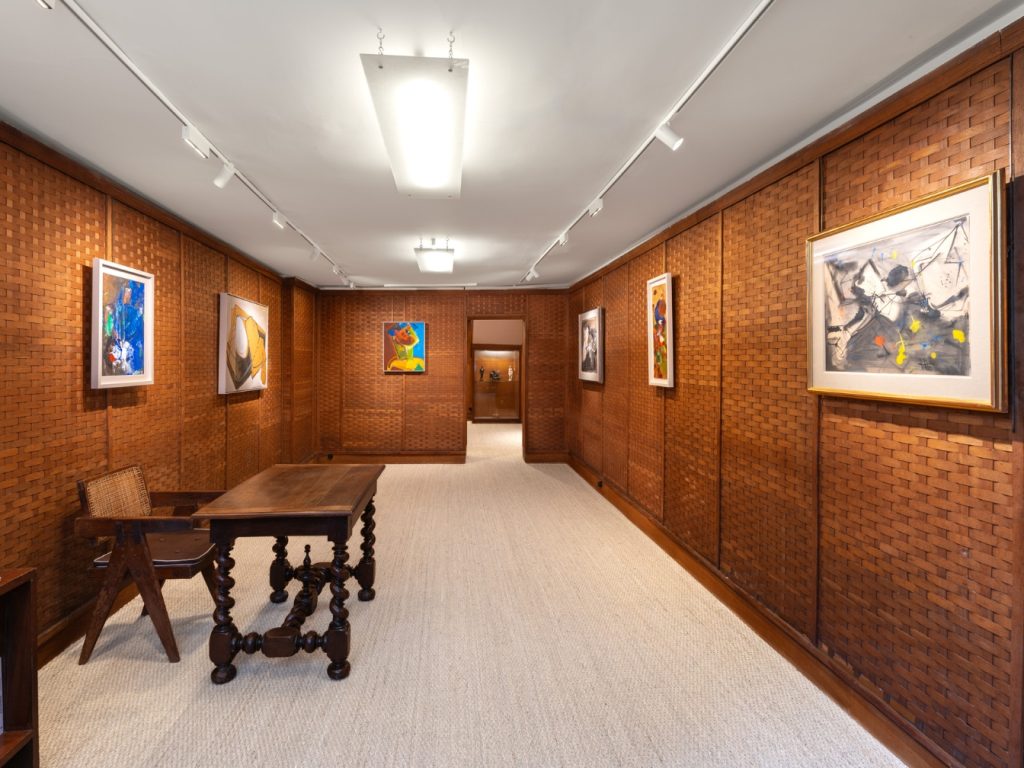

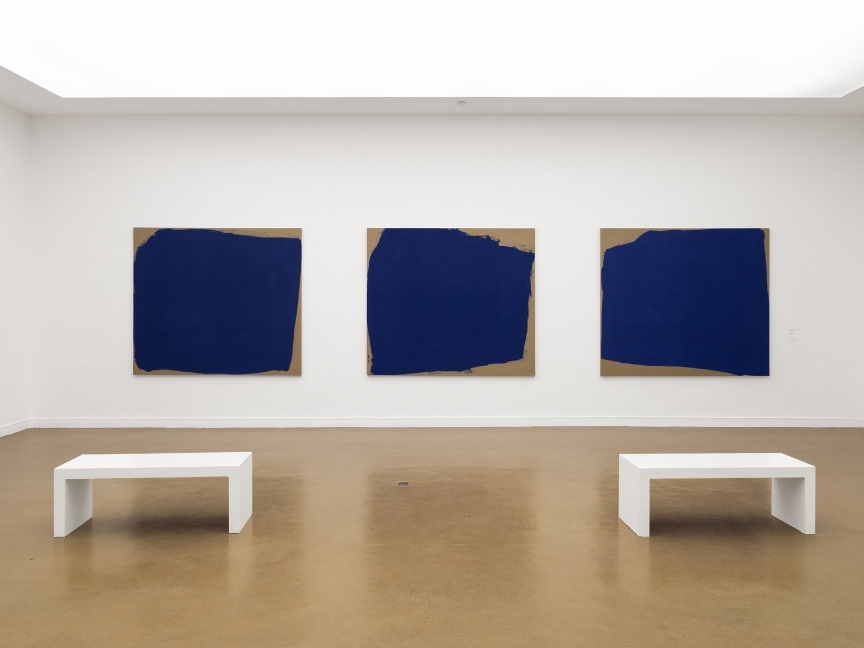
View of the exhibition Hans Hofmann – Munich, Paris, and the Routes of Abstraction
«

For me, a work is finished when all the parts composing it express themselves on their own, so that they no longer need me

»

 Prevented from returning to Paris by the declaration of the First World War, Hofmann founded a school in Munich whose reputation crossed the Atlantic — he had Louise Nevelson among his pupils — and it was at the instigation of another of his former students, Worth Ryder, that he was called to teach, first at Berkeley, in California, before settling permanently, in 1932, in New York, where he opened a new school and where he gave classes and lectures until 1958. One might say that he carried into the Munich of the Blaue Reiter something of the Cubism and Fauvism he had brushed against in Paris, and that he brought to the young New Yorkers named Michael Goldberg, Arshile Gorky, Helen Frankenthaler, Allan Kaprow, Lee Krasner, Larry Rivers, and Clement Greenberg…, a first-hand account of the European avant-gardes. Let us add that for long periods the teacher’s activity kept the painter away not so much from his studio as from his easel; for a long time Hofmann worked out of doors, but his palette would always remain closer to the intense one of the painters of Die Brücke than to that of the Fauves. When he resumed his practice continuously, he was a mature man, capable of delivering a very free interpretation of both Cubism and Surrealist automatism, before taking full part in a New York School that sought to be “a resurrection of the plastic arts1”. 

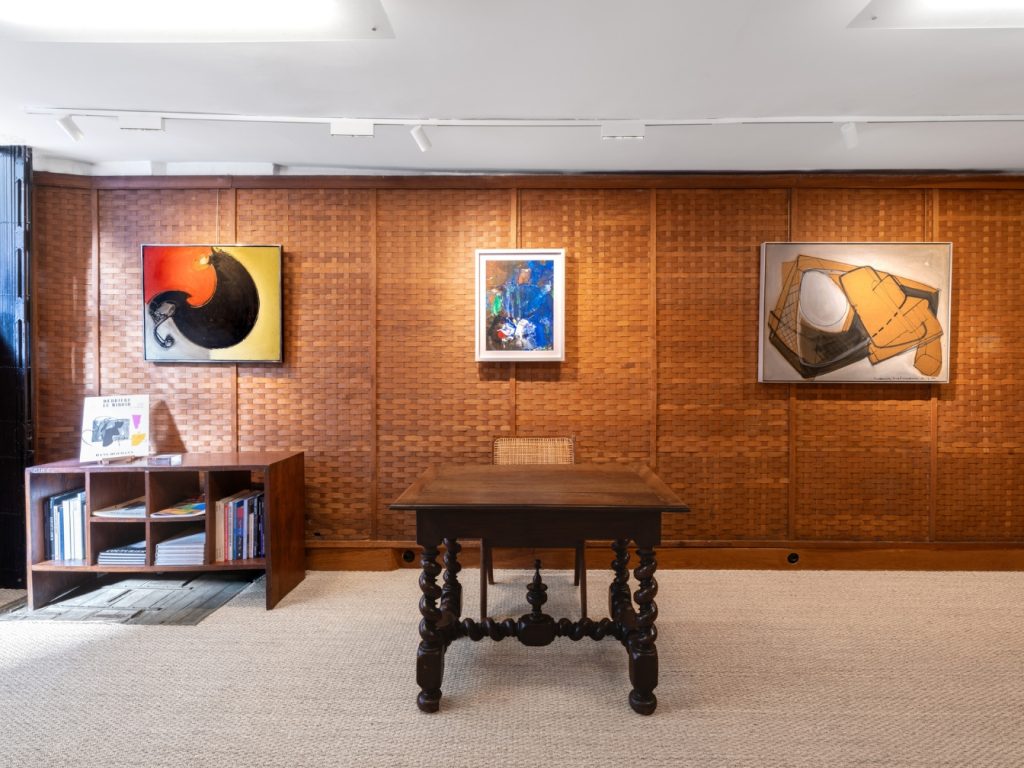
View of the exhibition Hans Hofmann – Munich, Paris, and the Routes of Abstraction

 The era was ambitious. Hofmann did not beat about the bush; the resurrection in question meant a radical break with the tradition inherited from the Renaissance. He wrote: “The Renaissance perspective has only one direction into the depth. Depth does not answer back pictorially. This produces a sterile space, which is the exact opposite of “pictorial” space […] Pictorial space is an aesthetic space and is, as such, as real as nature2.” This “pictorial space” Hofmann obtains through his famous procedure of the so-called Push and Pull, that is to say an arrangement of coloured planes capable, through contrast, of energizing the canvas surface by themselves, of receding or projecting toward the viewer. “For me,” he declared, a work is finished when all the parts composing it express themselves on their own, so that they no longer need me3.” 

In the works of the mid-1940s, one sees clearly how assemblages of post-Cubist (or rather post-Cezannian) forms vie, as it were, for the plane: while cones and bars hollow out the space or, on the contrary, seem to want to escape it, lines, dotted lines and grids maintain that plane. One also sees how patches, splashes and streamers, licensed by automatism, inscribe themselves as if on another plane, a virtual one, above the first. Faced with these works, it is hard not to think of the transposition Frank Stella would make of them, literally but on another scale, for instance in the series of the Cones and Pillars, where cones in relief rise from planes that are “daubed”. It is not far from Push and Pull to Working Space4. 

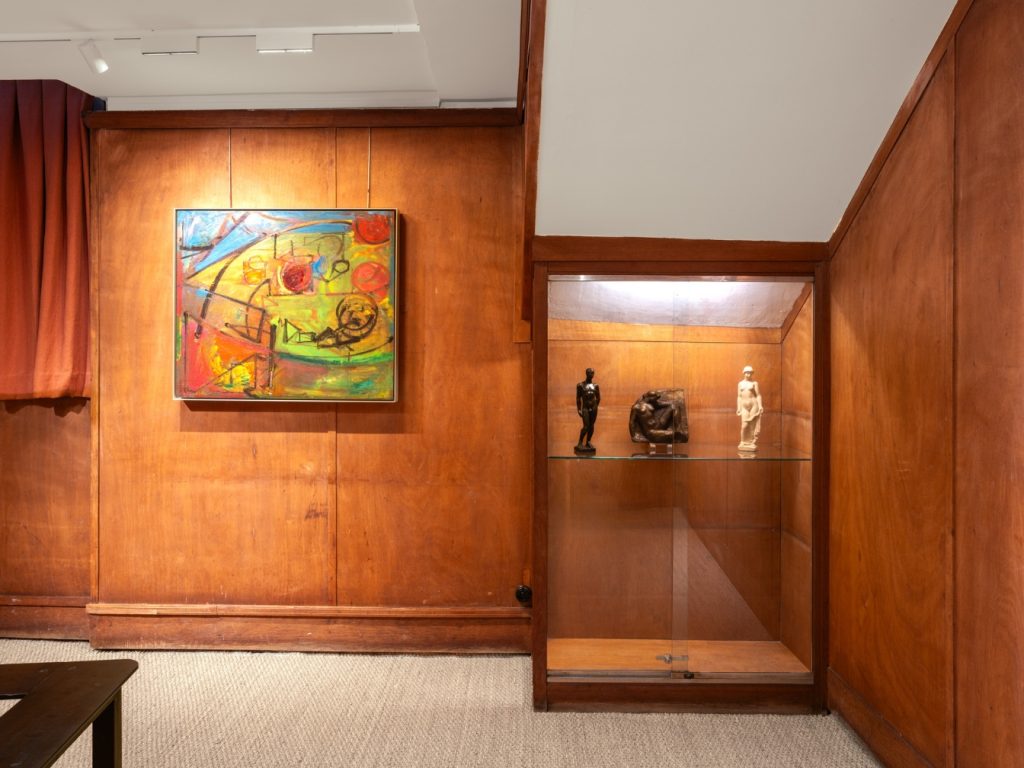
View of the exhibition Hans Hofmann – Munich, Paris, and the Routes of Abstraction
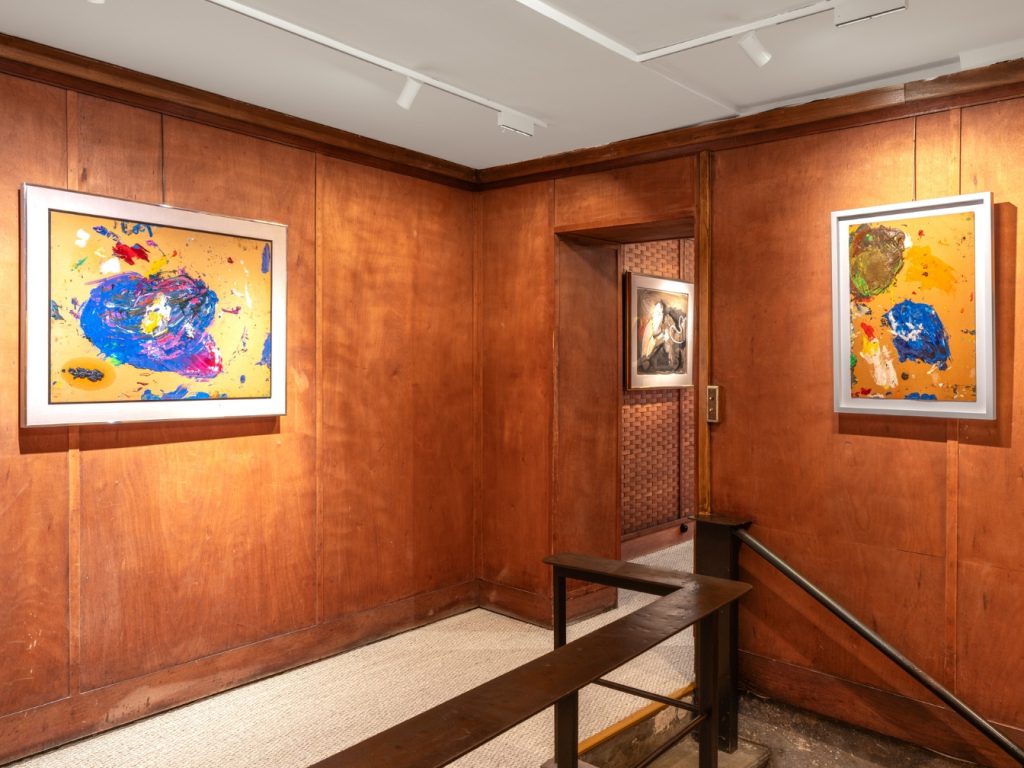
 Between the two came the formidable liberation of the gesture. As Cynthia Goodman recounts in her monograph devoted to Hofmann, the chronology would be as follows: in 1940, Hofmann is stopped in his tracks by paintings by Wolfgang Paalen (who had been his own student in Munich), executed by the “fumage” technique, that is, by letting soot fall from a lighted candle above the canvas. Probably around 1943–44, Hofmann makes paintings by letting paint or India ink flow over a surface already covered with colours; a major example is entitled Spring, 1944–45. At that time, Lee Krasner and Jackson Pollock visit Hofmann. The discussions are sometimes heated, but, Goodman notes, “The dripped paintings Pollock saw during his visits to Hofmann’s studio were undoubtedly among the catalysts for his own later explorations of thrown and poured paint.” For the sake of balance, the author also points out what Hofmann’s5 1944 Idolatress owes to Pollock’s impressive Moon Woman of 1942… 

View of the exhibition Hans Hofmann – Munich, Paris, and the Routes of Abstraction

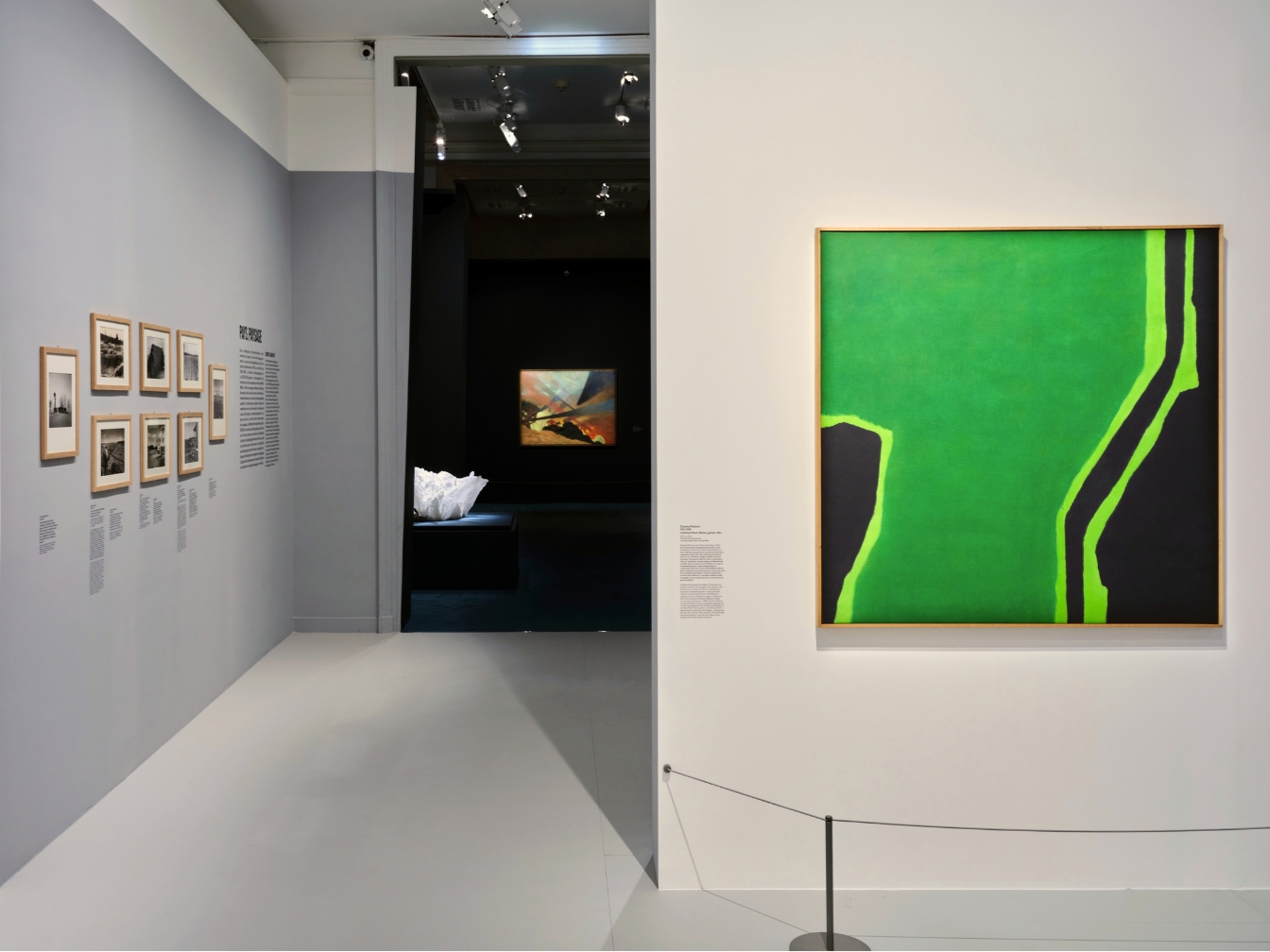
 A photograph of the artist at work (no doubt somewhat posed, all the same!) shows him holding the brush right down by the bristles and attacking the canvas as if he were about to run it through. As Robert Motherwell so aptly put it, the Abstract Expressionists resorted to automatism not so much for what the technique implied of a relation to the unconscious as for its being as “a plastic weapon6”. Gradually, however, the dynamic would no longer be that of the arm alone but above all that of the colours, laid down or, I should say, swept, scrubbed, crushed across ever broader zones, so that the struggle was no longer so much that of the painter with the canvas as that of the colours among themselves. And so on until the works of the final years (Hofmann died in 1966), where “hard edge” rectangles lead the dance, seemingly in front of a zone of brushed, gesturalised colour. 

I have mentioned Jackson Pollock and Frank Stella. In 1963, MoMA organised a travelling exhibition entitled Hans Hofmann and His Students. For the occasion Allan Kaprow devised a happening entitled Push and Pull - A Furniture Comedy for Hans Hofmann. In a warehouse on 49th Street in New York, he filled two rooms with furniture and assorted objects that visitors were invited to move around so as to create what “a meaningful composition” might be. In 1968, the same museum organised another travelling exhibition, Art of the Real, which presented the new Minimalist abstraction, from Agnes Martin to Donald Judd by way of Ellsworth Kelly. From the very first lines of his preface, its curator, Eugene C. Goossen, referred to Hans Hofmann’s essay Search for the Real, published in 1948. As can be seen, very different and very well-known aesthetics issued from the work of Hans Hofmann; it is high time for us, in Europe, to admire it for itself.  

___________
1 The Resurrection of the Plastics arts, texte de H. Hofmann dans le catalogue de son exposition à la Galerie Kootz, 1954. Repris dans Sam Hunter, Hans Hofmann, Abrams, New York. 

2 The Renaissance perspective has only one direction into the depth. Depth doesn't answer back pictorialy. This produces a sterile space which is the exact opposite of "pictorial" space" […] Pictorial space is an aesthetically space and is such as real as nature. » 

3 Propos tenus lors d’une session au Studio 35 en 1950, publiés sous le titre Modern Artists in America, Wittenborn Schultz, New York, 1951. 

4 Titre de l’ouvrage de Frank Stella, Harvard University Press, 1986, traduit en français sous le titre Champs d’œuvres, Hermann, 1988. Une œuvre de H. Hofmann est présentée en référence dans l’exposition Frank Stella au Musée d’art moderne et contemporain de Saint-Étienne, June 27, 2026 – January 3, 2027.

5 « The dripped paintings that Pollock saw on visits to Hofmann's studio were undoubtedly among the catalysts for his own later explorations with dripped and poured paint », Cynthia Goodman, Hofmann, Abbeville Press, New York, 1986. 

6 Quoted by Goodman.
 Prevented from returning to Paris by the declaration of the First World War, Hofmann founded a school in Munich whose reputation crossed the Atlantic — he had Louise Nevelson among his pupils — and it was at the instigation of another of his former students, Worth Ryder, that he was called to teach, first at Berkeley, in California, before settling permanently, in 1932, in New York, where he opened a new school and where he gave classes and lectures until 1958. One might say that he carried into the Munich of the Blaue Reiter something of the Cubism and Fauvism he had brushed against in Paris, and that he brought to the young New Yorkers named Michael Goldberg, Arshile Gorky, Helen Frankenthaler, Allan Kaprow, Lee Krasner, Larry Rivers, and Clement Greenberg…, a first-hand account of the European avant-gardes. Let us add that for long periods the teacher’s activity kept the painter away not so much from his studio as from his easel; for a long time Hofmann worked out of doors, but his palette would always remain closer to the intense one of the painters of Die Brücke than to that of the Fauves. When he resumed his practice continuously, he was a mature man, capable of delivering a very free interpretation of both Cubism and Surrealist automatism, before taking full part in a New York School that sought to be “a resurrection of the plastic arts1”. 
Dina Vierny View of the exhibition Hans Hofmann – Munich, Paris, and the Routes of Abstraction

Hans Hofmann, at last by Catherine Millet

16.10.2026
 
 From October 14 to November 14, 2026, the Galerie Dina Vierny will host the exhibition Hans Hofmann – Munich, Paris, and the Routes to Abstraction at its gallery at 36 Rue Jacob. Catherine Millet, editor-in-chief of artpress, offers her insights and guides us through this exhibition.
Seventy-seven years after his exhibition of 1949 at Galerie Maeght, sixty-three years after a second Parisian exhibition in 1963, at a short-lived gallery, Anderson Mayer, rue de L’Échaudé, Hans Hofmann, born in Munich in 1880, returns to a city where he had chosen to live between 1904 and 1914, at the height of the avant-gardes, Cubism and Fauvism. He was close to Pascin and to the Delaunays, collaborating indeed with Robert on designs for Sonia’s fabrics. Yet every lover of modern painting, and of abstraction in particular, knows, more or less vaguely, and without often having had the chance to contemplate his works, that the name of Hans Hofmann is that of an almost legendary figure in the history of painting.  

Was it his reputation as an extraordinary teacher in New York that, seen from Europe, concealed the painter? Was it the myth of Jackson Pollock that eclipsed the aura of the man who was the inseminator of the New York School? Was it his unceasing taste for formal experiment that made him irreducible to Abstract Expressionism alone, in which he is usually placed? Perhaps we have not sufficiently understood here the singular position he occupied as a go-between between two worlds, a pivot between two eras, yet who, in his own work, achieved a magnificent synthesis.  	

«

For me, a work is finished when all the parts composing it express themselves on their own, so that they no longer need me

»

 Prevented from returning to Paris by the declaration of the First World War, Hofmann founded a school in Munich whose reputation crossed the Atlantic — he had Louise Nevelson among his pupils — and it was at the instigation of another of his former students, Worth Ryder, that he was called to teach, first at Berkeley, in California, before settling permanently, in 1932, in New York, where he opened a new school and where he gave classes and lectures until 1958. One might say that he carried into the Munich of the Blaue Reiter something of the Cubism and Fauvism he had brushed against in Paris, and that he brought to the young New Yorkers named Michael Goldberg, Arshile Gorky, Helen Frankenthaler, Allan Kaprow, Lee Krasner, Larry Rivers, and Clement Greenberg…, a first-hand account of the European avant-gardes. Let us add that for long periods the teacher’s activity kept the painter away not so much from his studio as from his easel; for a long time Hofmann worked out of doors, but his palette would always remain closer to the intense one of the painters of Die Brücke than to that of the Fauves. When he resumed his practice continuously, he was a mature man, capable of delivering a very free interpretation of both Cubism and Surrealist automatism, before taking full part in a New York School that sought to be “a resurrection of the plastic arts1”. 

View of the exhibition Hans Hofmann – Munich, Paris, and the Routes of Abstraction
 The era was ambitious. Hofmann did not beat about the bush; the resurrection in question meant a radical break with the tradition inherited from the Renaissance. He wrote: “The Renaissance perspective has only one direction into the depth. Depth does not answer back pictorially. This produces a sterile space, which is the exact opposite of “pictorial” space […] Pictorial space is an aesthetic space and is, as such, as real as nature2.” This “pictorial space” Hofmann obtains through his famous procedure of the so-called Push and Pull, that is to say an arrangement of coloured planes capable, through contrast, of energizing the canvas surface by themselves, of receding or projecting toward the viewer. “For me,” he declared, a work is finished when all the parts composing it express themselves on their own, so that they no longer need me3.” 

In the works of the mid-1940s, one sees clearly how assemblages of post-Cubist (or rather post-Cezannian) forms vie, as it were, for the plane: while cones and bars hollow out the space or, on the contrary, seem to want to escape it, lines, dotted lines and grids maintain that plane. One also sees how patches, splashes and streamers, licensed by automatism, inscribe themselves as if on another plane, a virtual one, above the first. Faced with these works, it is hard not to think of the transposition Frank Stella would make of them, literally but on another scale, for instance in the series of the Cones and Pillars, where cones in relief rise from planes that are “daubed”. It is not far from Push and Pull to Working Space4. 

View of the exhibition Hans Hofmann – Munich, Paris, and the Routes of Abstraction
 Between the two came the formidable liberation of the gesture. As Cynthia Goodman recounts in her monograph devoted to Hofmann, the chronology would be as follows: in 1940, Hofmann is stopped in his tracks by paintings by Wolfgang Paalen (who had been his own student in Munich), executed by the “fumage” technique, that is, by letting soot fall from a lighted candle above the canvas. Probably around 1943–44, Hofmann makes paintings by letting paint or India ink flow over a surface already covered with colours; a major example is entitled Spring, 1944–45. At that time, Lee Krasner and Jackson Pollock visit Hofmann. The discussions are sometimes heated, but, Goodman notes, “The dripped paintings Pollock saw during his visits to Hofmann’s studio were undoubtedly among the catalysts for his own later explorations of thrown and poured paint.” For the sake of balance, the author also points out what Hofmann’s5 1944 Idolatress owes to Pollock’s impressive Moon Woman of 1942… 

View of the exhibition Hans Hofmann – Munich, Paris, and the Routes of Abstraction

                A photograph of the artist at work (no doubt somewhat posed, all the same!) shows him holding the brush right down by the bristles and attacking the canvas as if he were about to run it through. As Robert Motherwell so aptly put it, the Abstract Expressionists resorted to automatism not so much for what the technique implied of a relation to the unconscious as for its being as “a plastic weapon6”. Gradually, however, the dynamic would no longer be that of the arm alone but above all that of the colours, laid down or, I should say, swept, scrubbed, crushed across ever broader zones, so that the struggle was no longer so much that of the painter with the canvas as that of the colours among themselves. And so on until the works of the final years (Hofmann died in 1966), where “hard edge” rectangles lead the dance, seemingly in front of a zone of brushed, gesturalised colour. 

I have mentioned Jackson Pollock and Frank Stella. In 1963, MoMA organised a travelling exhibition entitled Hans Hofmann and His Students. For the occasion Allan Kaprow devised a happening entitled Push and Pull - A Furniture Comedy for Hans Hofmann. In a warehouse on 49th Street in New York, he filled two rooms with furniture and assorted objects that visitors were invited to move around so as to create what “a meaningful composition” might be. In 1968, the same museum organised another travelling exhibition, Art of the Real, which presented the new Minimalist abstraction, from Agnes Martin to Donald Judd by way of Ellsworth Kelly. From the very first lines of his preface, its curator, Eugene C. Goossen, referred to Hans Hofmann’s essay Search for the Real, published in 1948. As can be seen, very different and very well-known aesthetics issued from the work of Hans Hofmann; it is high time for us, in Europe, to admire it for itself.  

___________
1 The Resurrection of the Plastics arts, texte de H. Hofmann dans le catalogue de son exposition à la Galerie Kootz, 1954. Repris dans Sam Hunter, Hans Hofmann, Abrams, New York. 

2 The Renaissance perspective has only one direction into the depth. Depth doesn't answer back pictorialy. This produces a sterile space which is the exact opposite of "pictorial" space" […] Pictorial space is an aesthetically space and is such as real as nature. » 

3 Propos tenus lors d’une session au Studio 35 en 1950, publiés sous le titre Modern Artists in America, Wittenborn Schultz, New York, 1951. 

4 Titre de l’ouvrage de Frank Stella, Harvard University Press, 1986, traduit en français sous le titre Champs d’œuvres, Hermann, 1988. Une œuvre de H. Hofmann est présentée en référence dans l’exposition Frank Stella au Musée d’art moderne et contemporain de Saint-Étienne, June 27, 2026 – January 3, 2027.

5 « The dripped paintings that Pollock saw on visits to Hofmann's studio were undoubtedly among the catalysts for his own later explorations with dripped and poured paint », Cynthia Goodman, Hofmann, Abbeville Press, New York, 1986. 

6 Quoted by Goodman.            

Don't miss any of our news, subscribe to our newsletter!


    Don't miss any of our news, subscribe to our newsletter


      Subscribe to our newsletter