

All Exhibitions here

André Bauchant / Le Corbusier: Autodidacts of the Avant-Garde

 
 Some artistic encounters seem predestined; others are the result of pure chance and yet have a lasting impact. The encounter between André Bauchant and Le Corbusier falls into the latter category. Everything seemed to set them apart: on one hand, the self-taught painter from Touraine, a former gardener who became a singular figure in so-called “naïve” painting; on the other, the architect-theorist who would turn modern rigor and purism into a universal language. And yet, their dialogue would span more than three decades.
01.07.2026
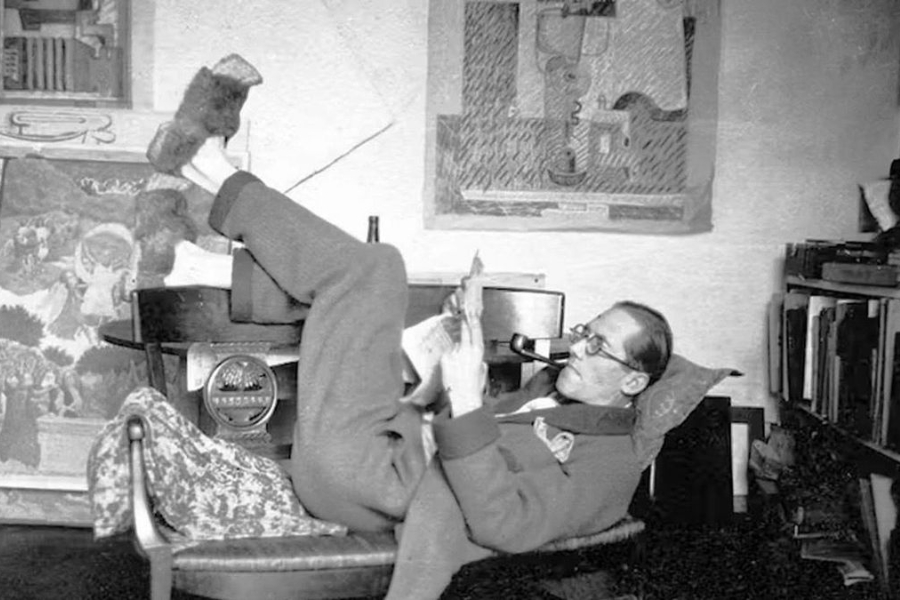
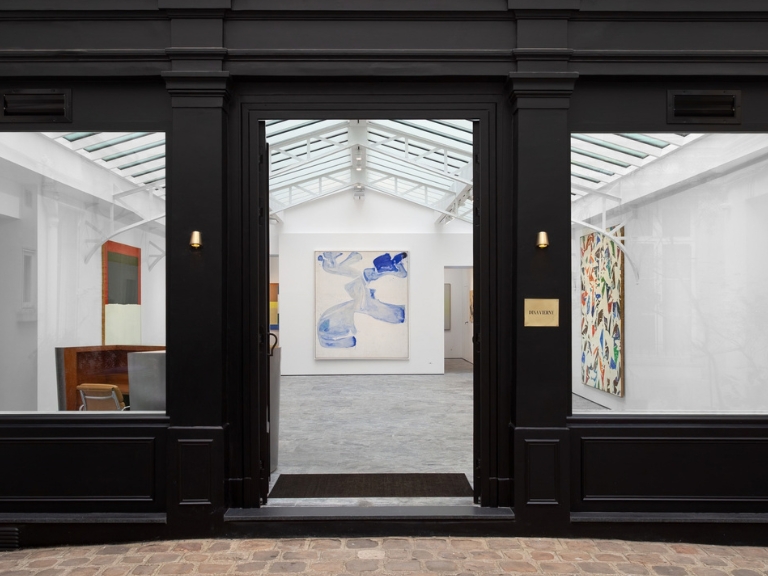
Dina Vierny Le Corbusier in his apartment in front of L’Assomption de la Vierge by André Bauchant (1924) in 1928
The exhibition on view at the Sammlung Zander in January 2026 explores this unexpected relationship, which began in the early 1920s and was fueled by mutual admiration, intellectual exchanges, and an extensive correspondence that has now been made available to the public. Through works, archives, and exceptional loans from the Le Corbusier Foundation, it sheds light not so much on a direct influence as on a mutual recognition between two worldviews.

The story begins at the 1921 Salon d’Automne. Le Corbusier discovered the paintings of André Bauchant. The impact was instantaneous. Faced with these scenes populated by mythological figures, timeless landscapes, and narratives hovering between memory and imagination, the architect paused before what appeared to be the exact opposite of his own aesthetic explorations.	
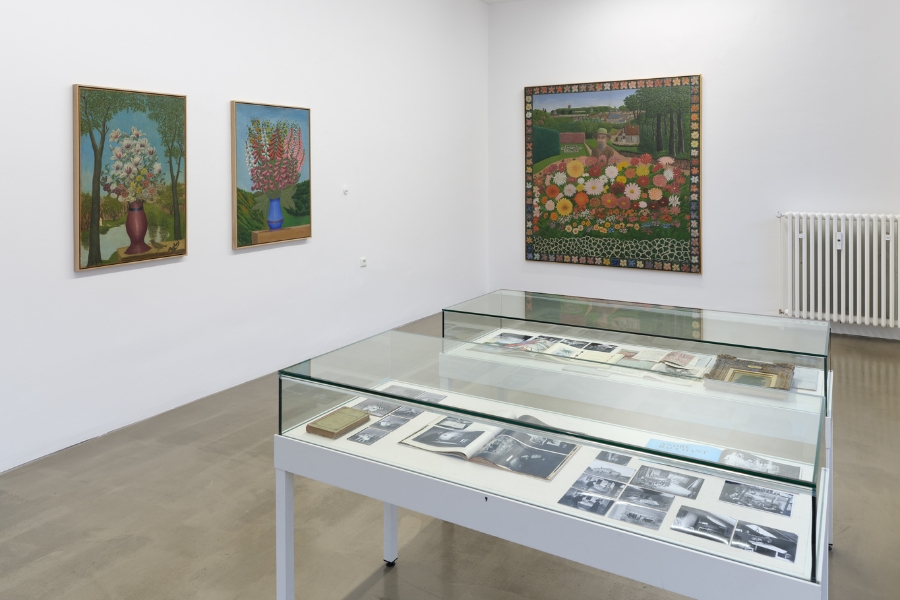
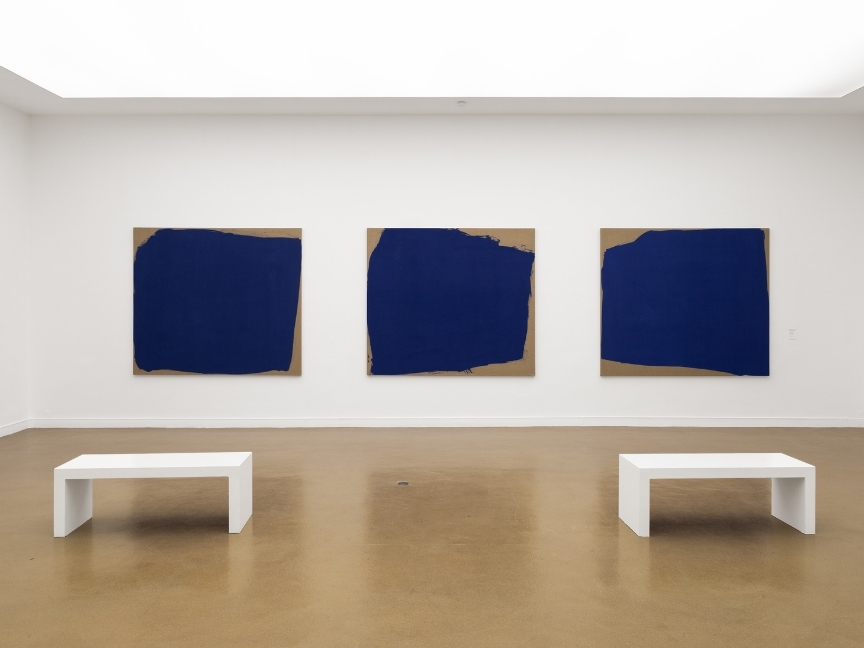
View of the exhibition André Bauchant / Le Corbusier: Autodidacts of the Avant-Garde at the Sammlung Zander © Simon Vogel
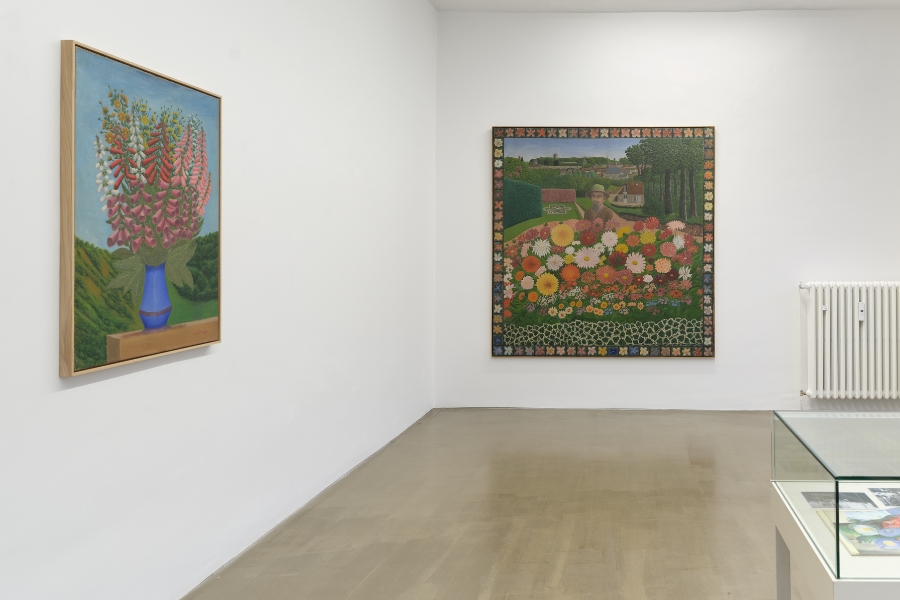
View of the exhibition André Bauchant / Le Corbusier: Autodidacts of the Avant-Garde at the Sammlung Zander © Simon Vogel
«

Bauchant, a painter-poet, because he has no aesthetic concerns, no scruples, and that naivety that allows him to dare anything, pulls it off wonderfully, with a craftsman’s skill that is all too often lacking in artists from intellectual circles.

»

 Bauchant was neither an academic nor an avant-gardist. Born in Château-Renault in 1873, he left school at the age of fourteen to work as a gardener before running his own greenhouse. His professional travels fueled a growing interest in ancient history and historic landscapes. But it was World War I that marked a turning point. Drafted at over forty years of age and sent to the Dardanelles campaign, he discovered the mythical places he had previously known only through books. Later, he would describe this experience as a revelation: Greece, Mount Olympus, and Homer became tangible realities for him.

View of the exhibition André Bauchant / Le Corbusier: Autodidacts of the Avant-Garde at the Sammlung Zander © Simon Vogel
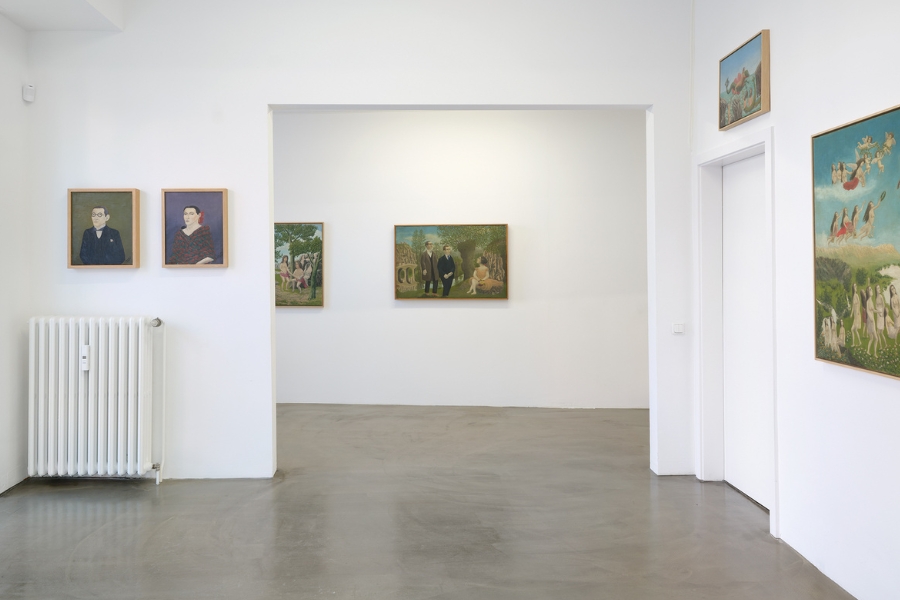
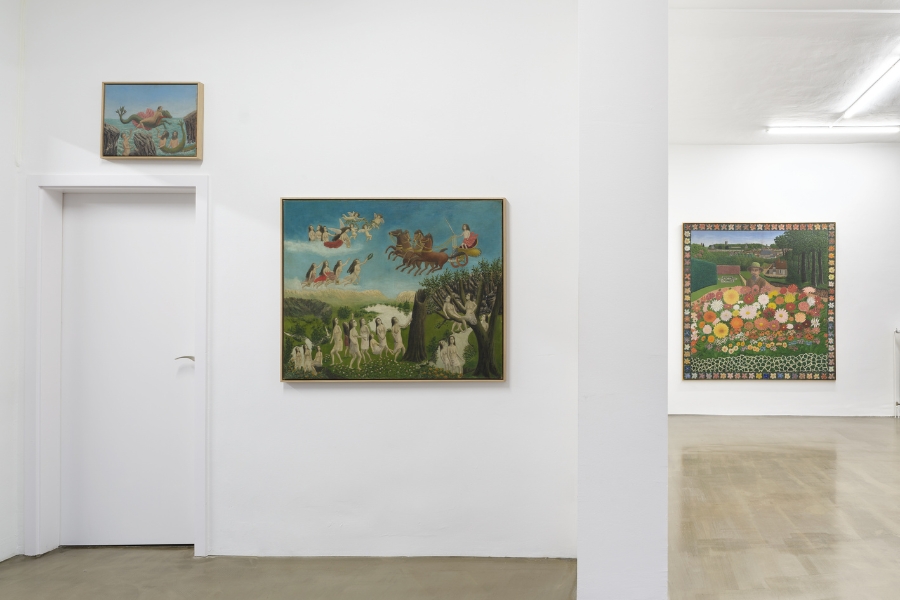
View of the exhibition André Bauchant / Le Corbusier: Autodidacts of the Avant-Garde at the Sammlung Zander © Simon Vogel
 Back in Touraine, he gradually gave up his horticultural work to devote himself to painting. His body of work then took shape outside the Parisian schools and circles: historical scenes, mythological narratives, religious visions, portraits, flowers, birds, and landscapes make up a world where everyday life rubs shoulders with antiquity with disarming freedom.

This freedom fascinated Le Corbusier. In L’Esprit nouveau, a journal he founded in 1920 with Amédée Ozenfant and Paul Dermée, he became one of the first to publicly defend Bauchant. He wrote this now-famous quote about him: “Bauchant, a painter-poet, because he has no aesthetic concerns, no scruples, and that naivety that allows him to dare anything—he pulls it off wonderfully, with a craftsman’s skill that is all too often lacking in artists from intellectual circles.”


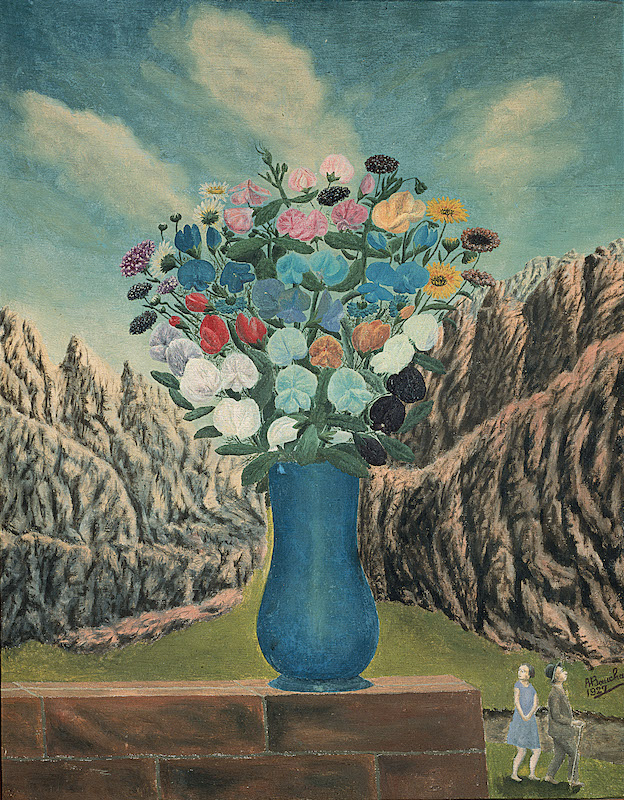
André Bauchant, Bouquet Le Corbusier, 1927, oil on canvas, 79 x 63 cm, private collection, Paris © Galerie Dina Vierny
 The word “naivety” should not be understood here as a weakness. For Le Corbusier, on the contrary, it represents a form of resistance to aesthetic conventions. In Bauchant, he sees a creative vision that remains unspoiled, free from academic codes and prevailing tastes.

The exhibition subtly demonstrates how this admiration goes beyond mere curiosity about naïve art. Le Corbusier visited Bauchant several times at “La Blutière,” his retreat in Tours. He purchased his works, recommended the painter to collectors, and helped promote his work in artistic circles. Their relationship was part of a deeper exchange: a shared reflection on the authenticity of the creative act.

What emerges here is also an unexpected portrait of Le Corbusier himself. Behind the theorist of the modern city emerges a man who readily embraced a marginal position, presenting himself as a “peasant of Paris” and seeking in certain self-taught practices an energy that official culture had lost.

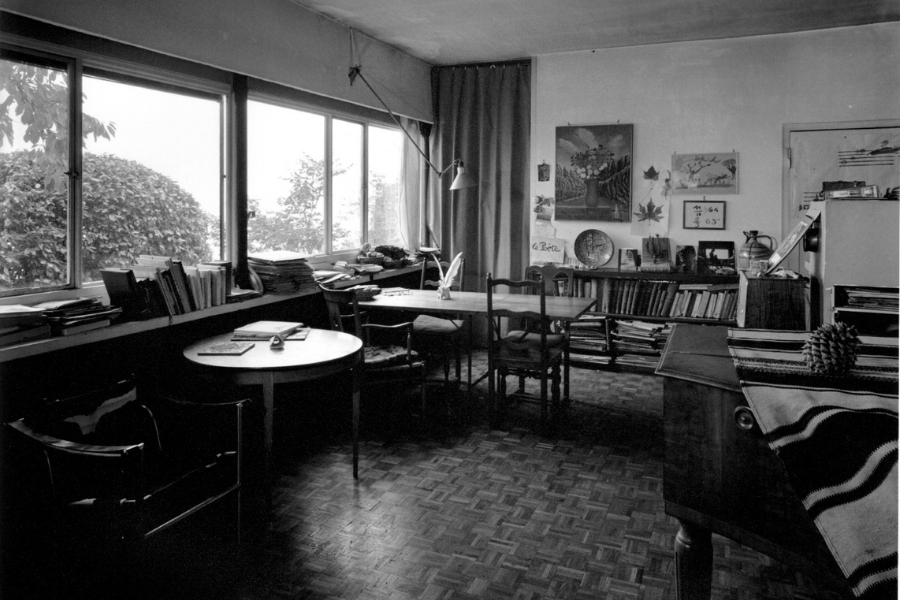
Bouquet Le Corbusier (1927) by André Bauchant, at Villa Le Lac, photographed by Erling Mandelmann in 1964 © FLC/ADAGP

 Viewed through this lens, Bauchant becomes more than just an admired artist: he embodies the potential for artistic renewal. He is a figure of the free creator, closely aligned with what we would today call “bricolage” or “intuitive thinking”—that ability to work with whatever is available rather than applying a preestablished system.

The exhibition also highlights the essential role Charlotte Zander later played in the rediscovery of Bauchant. Beginning in the 1970s, she regularly exhibited his work in Germany and built one of the most significant collections dedicated to the painter. Today, the Sammlung Zander holds more than 140 paintings and drawings, including some works from Le Corbusier’s personal collection.

Alexandra Ianc
 Bauchant was neither an academic nor an avant-gardist. Born in Château-Renault in 1873, he left school at the age of fourteen to work as a gardener before running his own greenhouse. His professional travels fueled a growing interest in ancient history and historic landscapes. But it was World War I that marked a turning point. Drafted at over forty years of age and sent to the Dardanelles campaign, he discovered the mythical places he had previously known only through books. Later, he would describe this experience as a revelation: Greece, Mount Olympus, and Homer became tangible realities for him.
Dina Vierny Le Corbusier in his apartment in front of L’Assomption de la Vierge by André Bauchant (1924) in 1928

André Bauchant / Le Corbusier: Autodidacts of the Avant-Garde

01.07.2026
 
 Some artistic encounters seem predestined; others are the result of pure chance and yet have a lasting impact. The encounter between André Bauchant and Le Corbusier falls into the latter category. Everything seemed to set them apart: on one hand, the self-taught painter from Touraine, a former gardener who became a singular figure in so-called “naïve” painting; on the other, the architect-theorist who would turn modern rigor and purism into a universal language. And yet, their dialogue would span more than three decades.
The exhibition on view at the Sammlung Zander in January 2026 explores this unexpected relationship, which began in the early 1920s and was fueled by mutual admiration, intellectual exchanges, and an extensive correspondence that has now been made available to the public. Through works, archives, and exceptional loans from the Le Corbusier Foundation, it sheds light not so much on a direct influence as on a mutual recognition between two worldviews.

The story begins at the 1921 Salon d’Automne. Le Corbusier discovered the paintings of André Bauchant. The impact was instantaneous. Faced with these scenes populated by mythological figures, timeless landscapes, and narratives hovering between memory and imagination, the architect paused before what appeared to be the exact opposite of his own aesthetic explorations.	

«

Bauchant, a painter-poet, because he has no aesthetic concerns, no scruples, and that naivety that allows him to dare anything, pulls it off wonderfully, with a craftsman’s skill that is all too often lacking in artists from intellectual circles.

»

 Bauchant was neither an academic nor an avant-gardist. Born in Château-Renault in 1873, he left school at the age of fourteen to work as a gardener before running his own greenhouse. His professional travels fueled a growing interest in ancient history and historic landscapes. But it was World War I that marked a turning point. Drafted at over forty years of age and sent to the Dardanelles campaign, he discovered the mythical places he had previously known only through books. Later, he would describe this experience as a revelation: Greece, Mount Olympus, and Homer became tangible realities for him.

View of the exhibition André Bauchant / Le Corbusier: Autodidacts of the Avant-Garde at the Sammlung Zander © Simon Vogel

View of the exhibition André Bauchant / Le Corbusier: Autodidacts of the Avant-Garde at the Sammlung Zander © Simon Vogel

 Back in Touraine, he gradually gave up his horticultural work to devote himself to painting. His body of work then took shape outside the Parisian schools and circles: historical scenes, mythological narratives, religious visions, portraits, flowers, birds, and landscapes make up a world where everyday life rubs shoulders with antiquity with disarming freedom.

This freedom fascinated Le Corbusier. In L’Esprit nouveau, a journal he founded in 1920 with Amédée Ozenfant and Paul Dermée, he became one of the first to publicly defend Bauchant. He wrote this now-famous quote about him: “Bauchant, a painter-poet, because he has no aesthetic concerns, no scruples, and that naivety that allows him to dare anything—he pulls it off wonderfully, with a craftsman’s skill that is all too often lacking in artists from intellectual circles.”

André Bauchant, Bouquet Le Corbusier, 1927, oil on canvas, 79 x 63 cm, private collection, Paris © Galerie Dina Vierny

 The word “naivety” should not be understood here as a weakness. For Le Corbusier, on the contrary, it represents a form of resistance to aesthetic conventions. In Bauchant, he sees a creative vision that remains unspoiled, free from academic codes and prevailing tastes.

The exhibition subtly demonstrates how this admiration goes beyond mere curiosity about naïve art. Le Corbusier visited Bauchant several times at “La Blutière,” his retreat in Tours. He purchased his works, recommended the painter to collectors, and helped promote his work in artistic circles. Their relationship was part of a deeper exchange: a shared reflection on the authenticity of the creative act.

What emerges here is also an unexpected portrait of Le Corbusier himself. Behind the theorist of the modern city emerges a man who readily embraced a marginal position, presenting himself as a “peasant of Paris” and seeking in certain self-taught practices an energy that official culture had lost.

Bouquet Le Corbusier (1927) by André Bauchant, at Villa Le Lac, photographed by Erling Mandelmann in 1964 © FLC/ADAGP
                Viewed through this lens, Bauchant becomes more than just an admired artist: he embodies the potential for artistic renewal. He is a figure of the free creator, closely aligned with what we would today call “bricolage” or “intuitive thinking”—that ability to work with whatever is available rather than applying a preestablished system.

The exhibition also highlights the essential role Charlotte Zander later played in the rediscovery of Bauchant. Beginning in the 1970s, she regularly exhibited his work in Germany and built one of the most significant collections dedicated to the painter. Today, the Sammlung Zander holds more than 140 paintings and drawings, including some works from Le Corbusier’s personal collection.

Alexandra Ianc            

Don't miss any of our news, subscribe to our newsletter!

    Ne ratez rien de nos actualités, abonnez-vous à notre newsletter !