
All Exhibitions here

Marcel Duchamp at the MoMA

 
 Since April 12, 2026, the Museum of Modern Art in New York has been hosting the first North American retrospective dedicated to Marcel Duchamp in over fifty years.
22.05.2026
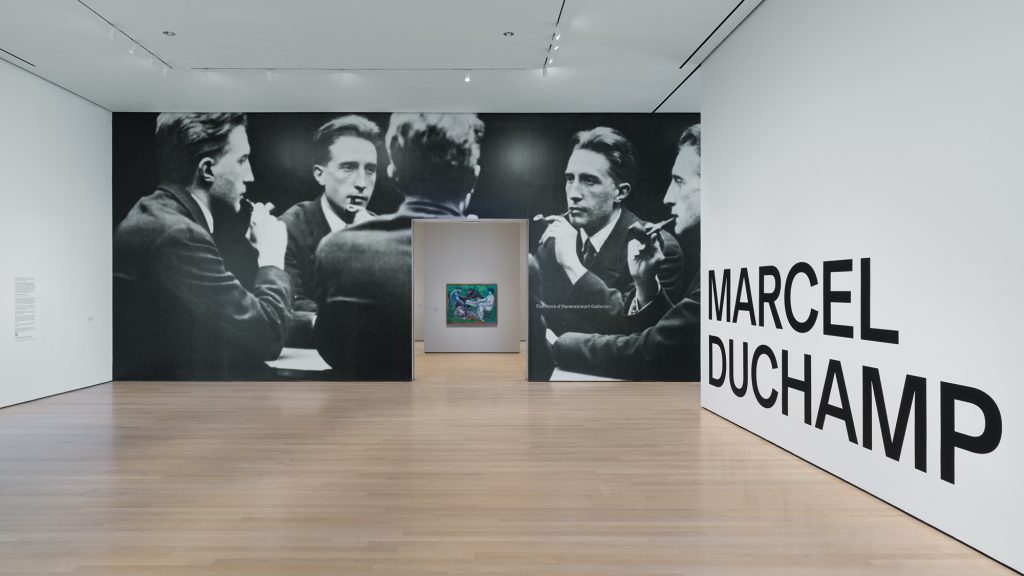
Dina Vierny Vue de l'exposition Marcel Duchamp au MoMA © Jonathan Dorado
This monumental exhibition, featuring some 300 works, does more than simply celebrate one of the most influential artists of the 20th century: it fundamentally questions our relationship to art, to the museum, and to the very notion of a work of art.

Redefining the Rules

Marcel Duchamp (1887–1968) spent six decades challenging the very definition of the artwork, ushering in a new era of creative freedom whose repercussions are still felt today. As Ann Temkin, the exhibition’s curator, points out, “it is virtually impossible to answer the question ‘Why is this art?’ without referring to Duchamp’s work.”

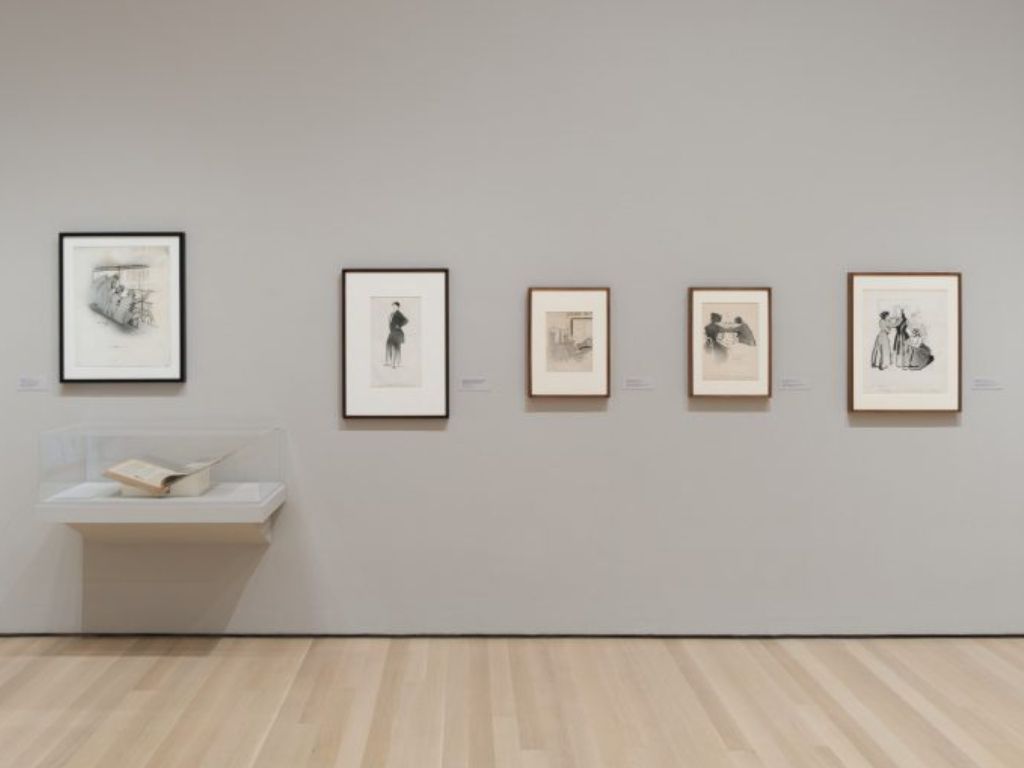
The exhibition, organized chronologically, begins with Duchamp’s early works, notably his satirical drawings, which already reveal a critical eye toward social conventions. The drawing Couple au salon, for example, depicts a subtle reversal of gender roles through an active woman and a passive man, foreshadowing the questioning of norms that would characterize his entire career. The use of the airbrush creates a diffuse atmosphere, distancing the work from traditional caricature in favor of psychological suggestion.	
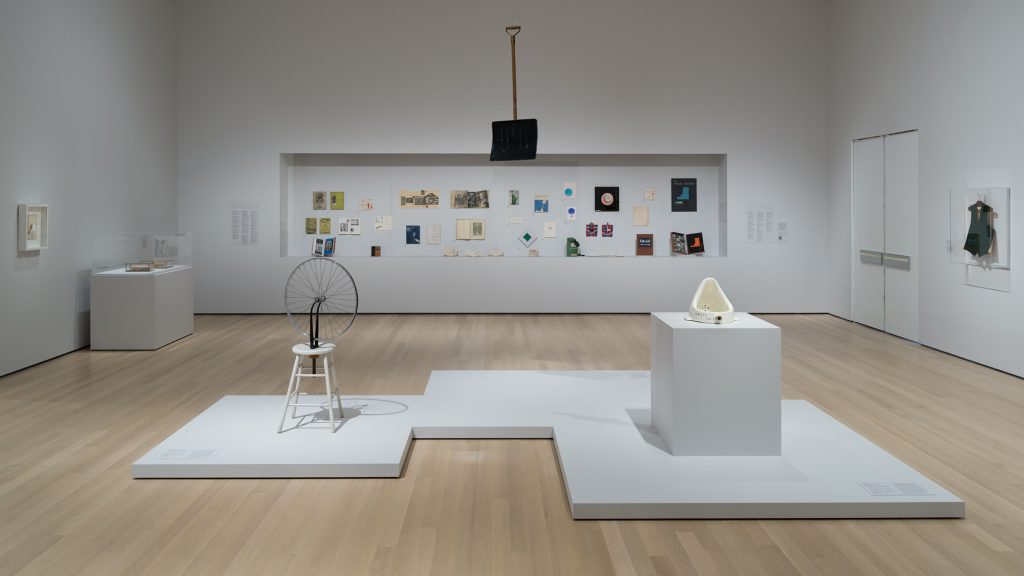

View of the exhibition Marcel Duchamp at MoMA © Jonathan Dorado
«

It is practically impossible to answer the question “Why is this art?” without referring to Duchamp's work.

»

 The Foundational Shocks

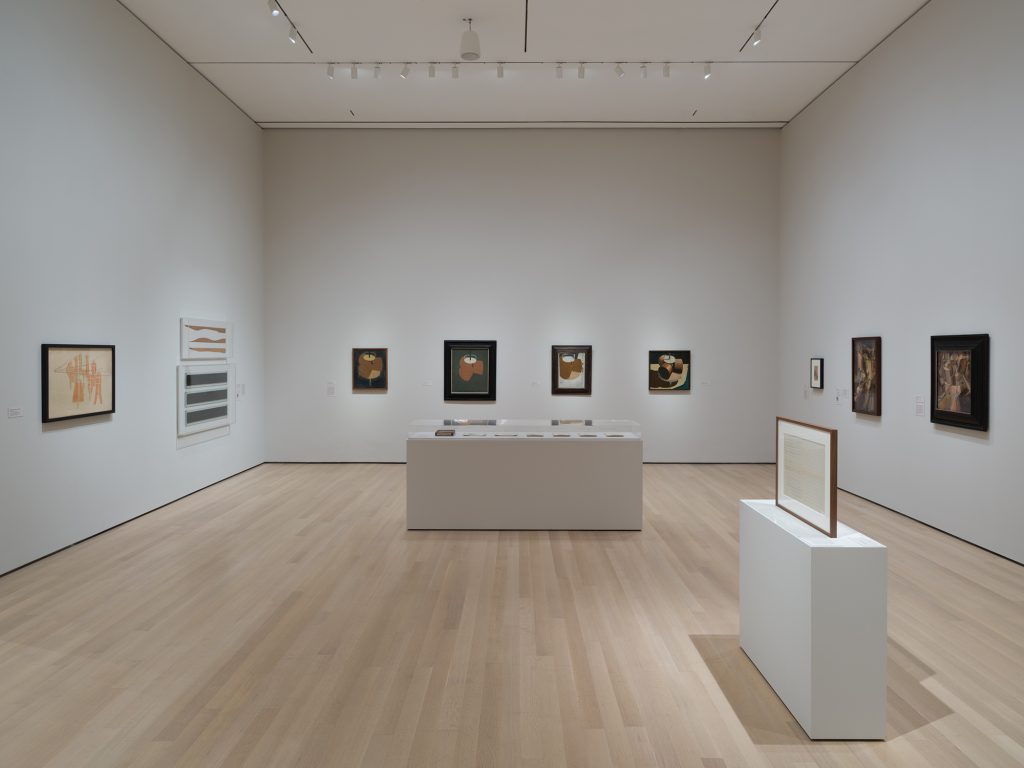
The exhibition culminates with Nu descendant un escalier n° 2 (1912), a Cubist work that caused a resounding scandal at the 1913 Armory Show in New York. This fragmentation of the human body in motion marked a radical break with traditional representation. 

However, it was with the invention of the readymade that Duchamp definitively upended the parameters of art and authorship. Fountain (1917), an upturned urinal signed with the pseudonym “R. Mutt,” remains the most scandalous embodiment of this conceptual revolution. The exhibition brings together the original readymades that still exist, bearing witness to this approach that placed artistic intention at the heart of the work, beyond its materiality.

View of the exhibition Marcel Duchamp at MoMA © Jonathan Dorado

View of the exhibition Marcel Duchamp at MoMA © Jonathan Dorado
 The Box in a Valisee: A Portable Museum

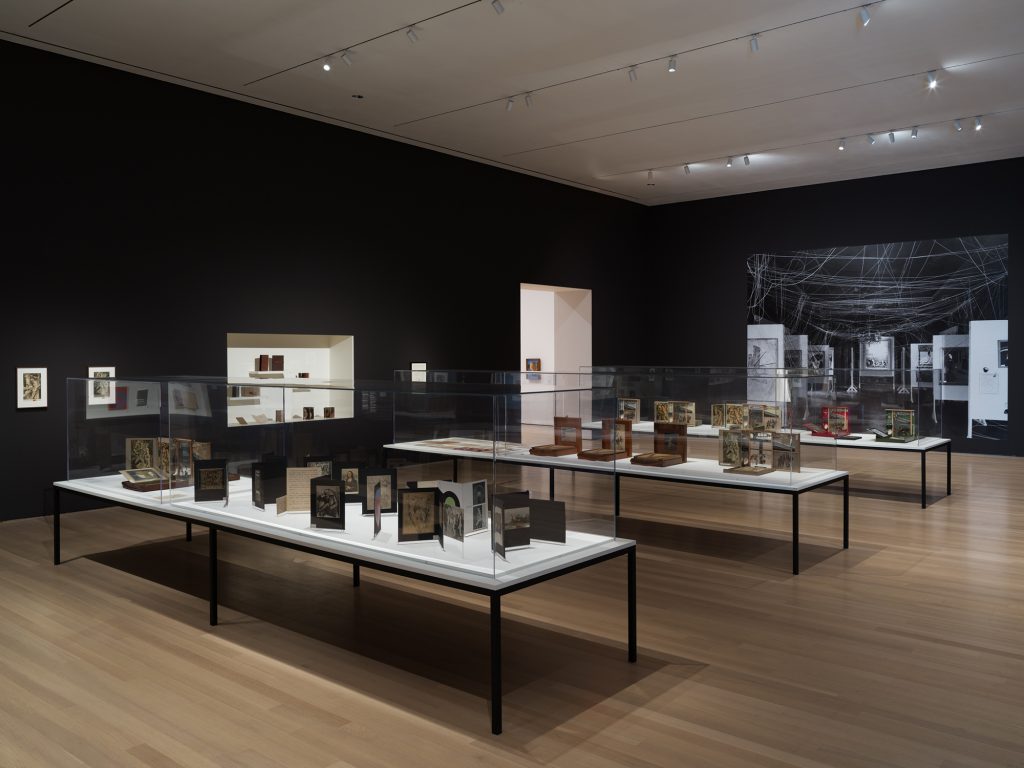
One of the highlights of the exhibition is the exceptional presentation of The Box in a Valise (1935–41), which Duchamp conceived as a fragmented self-portrait. Rather than creating new works, the artist gathered miniature reproductions of his earlier work, forming a “portable museum” that retrospectively traces his artistic journey. From his Cubo-Futurist beginnings, through the conceptual explorations of The Large Glass, to readymades and optical experiments, each element becomes a trace of his evolution. The ensemble takes the form of a portable theater, where the works become manipulable and active, blurring the boundary between contemplation and participation.

View of the exhibition Marcel Duchamp at MoMA © Jonathan Dorado

View of the exhibition Marcel Duchamp at MoMA © Jonathan Dorado
 A Work Kept Secret Until the Very End

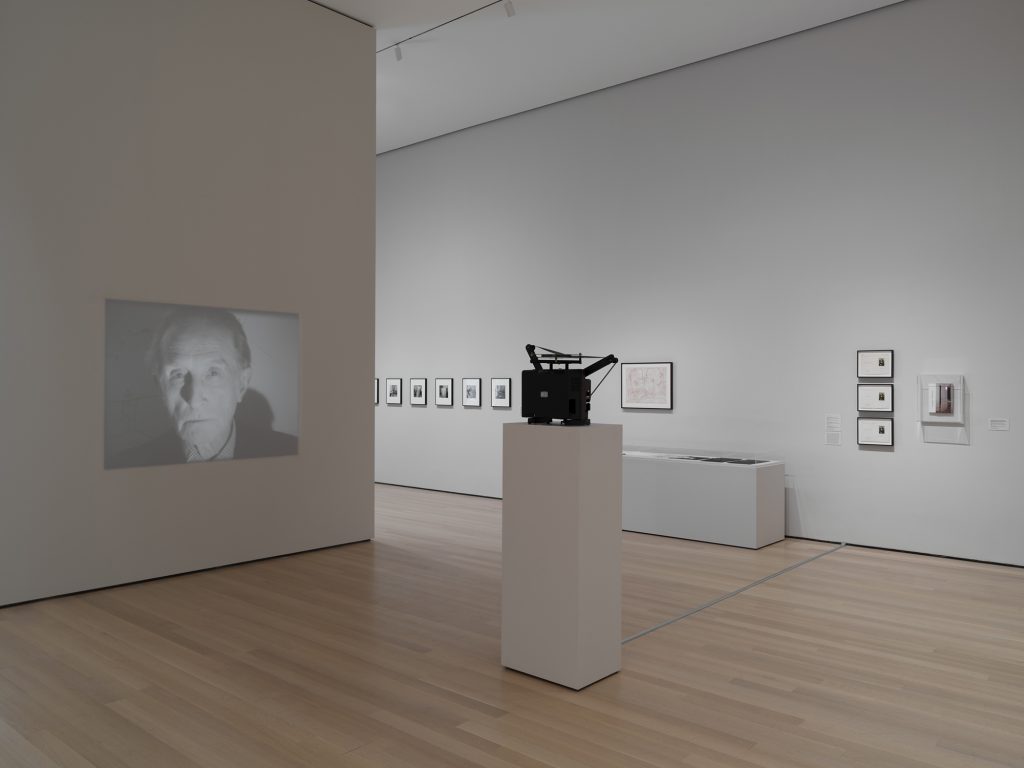
The exhibition concludes with Étant donnés (1946–66), a painting-installation secretly prepared over two decades for the Philadelphia Museum of Art. The exhibition brings together preparatory studies for this final work, installed at the PMA a year after the artist’s death, demonstrating his capacity for innovation right up until the end of his life.

This retrospective at MoMA offers 21st-century audiences a unique opportunity to grasp the scope of Duchamp’s creative output. While research on the artist’s enigmatic work has proliferated over the past half-century—as have myths and misconceptions—this exhibition presents a comprehensive account of his multifaceted career.

The MoMA and the Philadelphia Museum of Art have a long-standing, special relationship with the artist. MoMA was the first museum to acquire a work by Duchamp, while the Philadelphia Museum of Art holds the largest collection of his work, including two monumental pieces: Le Grand Verre (1915-1923) and Étant donnés (1946-1966).

Marcel Duchamp  
Museum of Modern Art, New York  
April 12–August 22, 2026  
Steven and Alexandra Cohen Center for Special Exhibitions
 The Foundational Shocks

The exhibition culminates with Nu descendant un escalier n° 2 (1912), a Cubist work that caused a resounding scandal at the 1913 Armory Show in New York. This fragmentation of the human body in motion marked a radical break with traditional representation. 

However, it was with the invention of the readymade that Duchamp definitively upended the parameters of art and authorship. Fountain (1917), an upturned urinal signed with the pseudonym “R. Mutt,” remains the most scandalous embodiment of this conceptual revolution. The exhibition brings together the original readymades that still exist, bearing witness to this approach that placed artistic intention at the heart of the work, beyond its materiality.
Dina Vierny Vue de l'exposition Marcel Duchamp au MoMA © Jonathan Dorado

Marcel Duchamp at the MoMA

22.05.2026
 
 Since April 12, 2026, the Museum of Modern Art in New York has been hosting the first North American retrospective dedicated to Marcel Duchamp in over fifty years.
This monumental exhibition, featuring some 300 works, does more than simply celebrate one of the most influential artists of the 20th century: it fundamentally questions our relationship to art, to the museum, and to the very notion of a work of art.

Redefining the Rules

Marcel Duchamp (1887–1968) spent six decades challenging the very definition of the artwork, ushering in a new era of creative freedom whose repercussions are still felt today. As Ann Temkin, the exhibition’s curator, points out, “it is virtually impossible to answer the question ‘Why is this art?’ without referring to Duchamp’s work.”

The exhibition, organized chronologically, begins with Duchamp’s early works, notably his satirical drawings, which already reveal a critical eye toward social conventions. The drawing Couple au salon, for example, depicts a subtle reversal of gender roles through an active woman and a passive man, foreshadowing the questioning of norms that would characterize his entire career. The use of the airbrush creates a diffuse atmosphere, distancing the work from traditional caricature in favor of psychological suggestion.	

«

It is practically impossible to answer the question “Why is this art?” without referring to Duchamp's work.

»

 The Foundational Shocks

The exhibition culminates with Nu descendant un escalier n° 2 (1912), a Cubist work that caused a resounding scandal at the 1913 Armory Show in New York. This fragmentation of the human body in motion marked a radical break with traditional representation. 

However, it was with the invention of the readymade that Duchamp definitively upended the parameters of art and authorship. Fountain (1917), an upturned urinal signed with the pseudonym “R. Mutt,” remains the most scandalous embodiment of this conceptual revolution. The exhibition brings together the original readymades that still exist, bearing witness to this approach that placed artistic intention at the heart of the work, beyond its materiality.

View of the exhibition Marcel Duchamp at MoMA © Jonathan Dorado

View of the exhibition Marcel Duchamp at MoMA © Jonathan Dorado
 The Box in a Valisee: A Portable Museum

One of the highlights of the exhibition is the exceptional presentation of The Box in a Valise (1935–41), which Duchamp conceived as a fragmented self-portrait. Rather than creating new works, the artist gathered miniature reproductions of his earlier work, forming a “portable museum” that retrospectively traces his artistic journey. From his Cubo-Futurist beginnings, through the conceptual explorations of The Large Glass, to readymades and optical experiments, each element becomes a trace of his evolution. The ensemble takes the form of a portable theater, where the works become manipulable and active, blurring the boundary between contemplation and participation.

View of the exhibition Marcel Duchamp at MoMA © Jonathan Dorado

View of the exhibition Marcel Duchamp at MoMA © Jonathan Dorado
                A Work Kept Secret Until the Very End

The exhibition concludes with Étant donnés (1946–66), a painting-installation secretly prepared over two decades for the Philadelphia Museum of Art. The exhibition brings together preparatory studies for this final work, installed at the PMA a year after the artist’s death, demonstrating his capacity for innovation right up until the end of his life.

This retrospective at MoMA offers 21st-century audiences a unique opportunity to grasp the scope of Duchamp’s creative output. While research on the artist’s enigmatic work has proliferated over the past half-century—as have myths and misconceptions—this exhibition presents a comprehensive account of his multifaceted career.

The MoMA and the Philadelphia Museum of Art have a long-standing, special relationship with the artist. MoMA was the first museum to acquire a work by Duchamp, while the Philadelphia Museum of Art holds the largest collection of his work, including two monumental pieces: Le Grand Verre (1915-1923) and Étant donnés (1946-1966).

Marcel Duchamp  
Museum of Modern Art, New York  
April 12–August 22, 2026  
Steven and Alexandra Cohen Center for Special Exhibitions            

Don't miss any of our news, subscribe to our newsletter!

    Ne ratez rien de nos actualités, abonnez-vous à notre newsletter !