

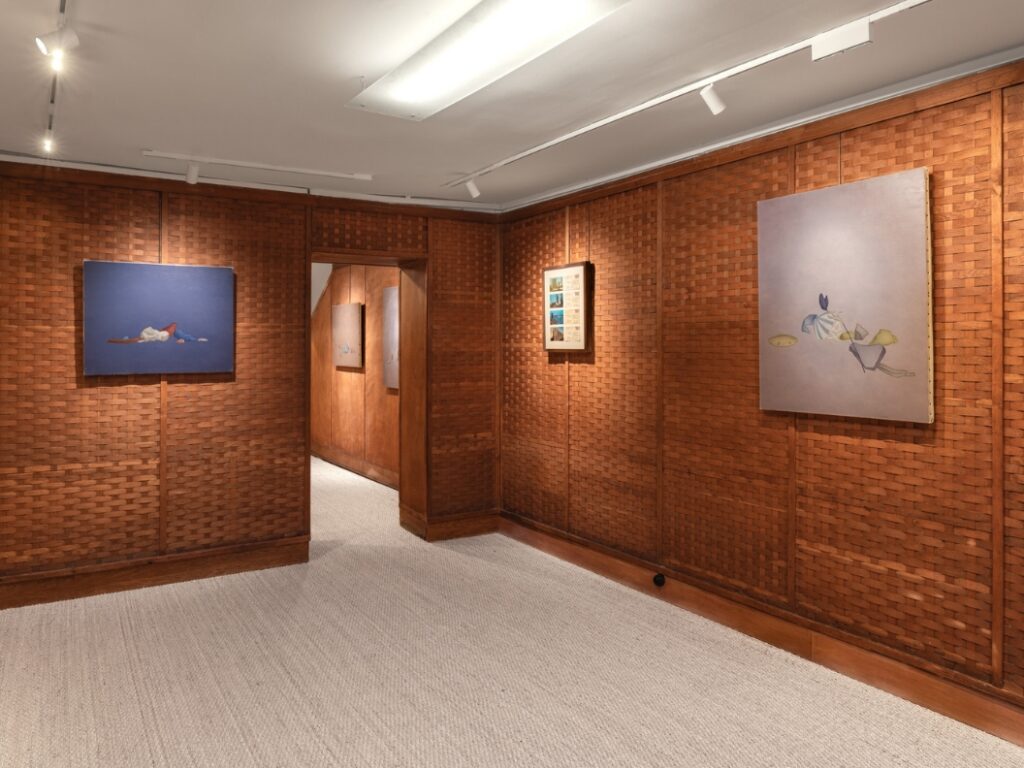
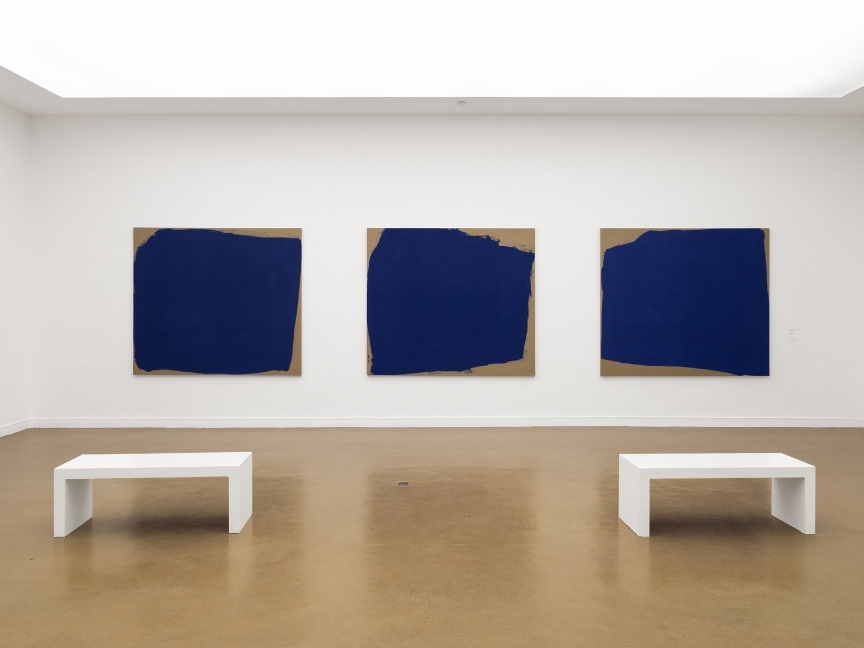
From 20 November 2026 to January 16, 2027, Galerie Dina Vierny takes over its historic premises at 36 Rue Jacob to bring together two distinctive figures from the second half of the 20th century: the American painter Deborah Hanson-Murphy (1931–2018), exhibited at the gallery for the first time, and the conceptual artist On Kawara (1933–2014). To mark the occasion, journalist and art critic Anaël Pigeat sheds light on the work of Deborah Hanson-Murphy.24.11.2026
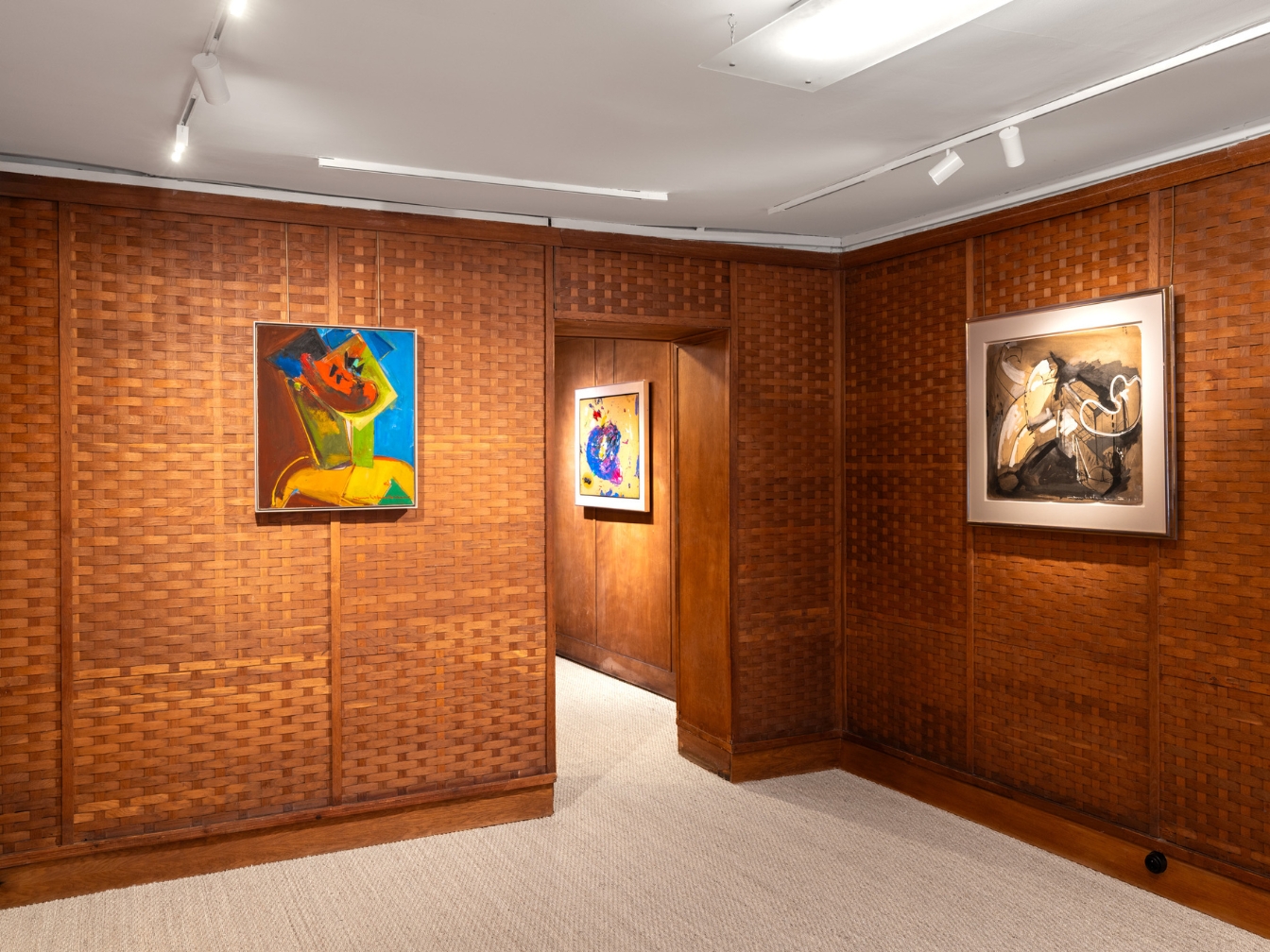
View of the Deborah Hanson Murphy & On Kawara exhibition © Jean Vayssié A group of paintings, spotted at an auction a few years ago by a discerning amateur eye, brought to light the work of Deborah Hanson Murphy (1931-2018) produced in Paris over nearly fifty years in the silence of her studio. Of her life, only scattered fragments are known. In recent years they have been pieced together like a puzzle, through the recollections of friends and a few written lines.

View of the Deborah Hanson Murphy & On Kawara exhibition © Jean Vayssié
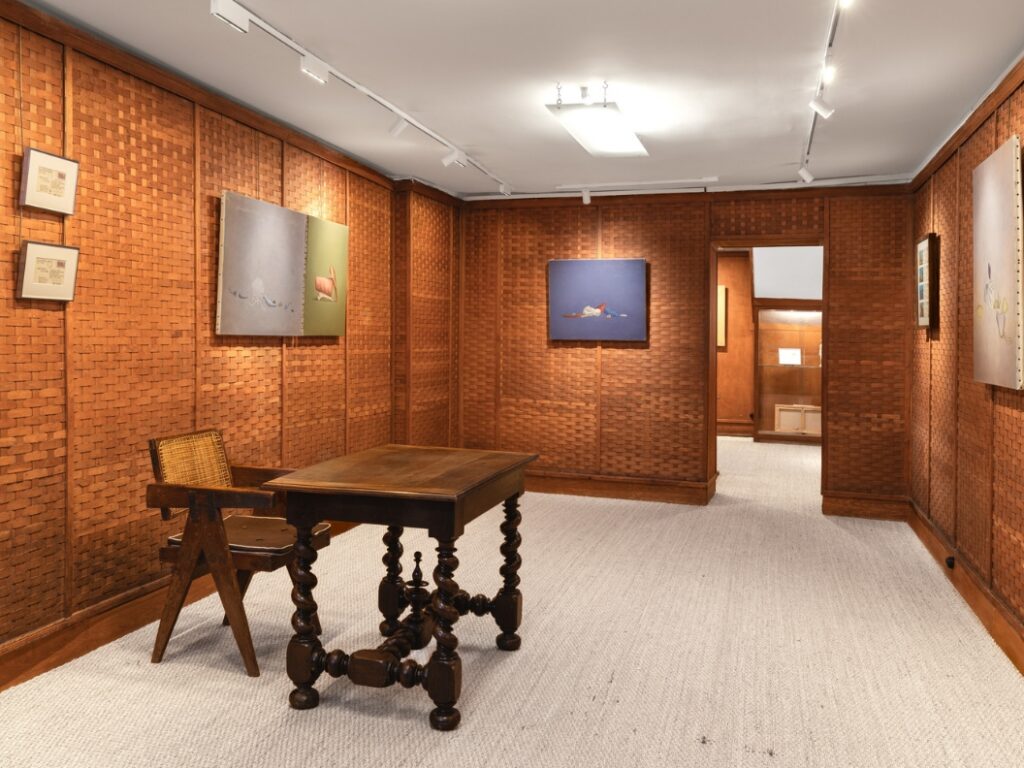
Born in 1931 in Stockton, California, Deborah Hanson Murphy began her studies at Stanford University. After a first trip to Paris, she enrolled at the Art Students League in New York. In the years that followed, she worked for a time as a journalist for Mademoiselle magazine. It was then that she met her husband, Richard Winslow Murphy, himself a journalist for Time. The couple soon crossed the Atlantic and travelled to India and Italy. They spent a year near Naples, in Ravello, then returned to Paris, where they settled for good. They lived first on rue du Dragon, then near rue Lamarck, at the foot of Montmartre. Her early paintings include still lifes, bouquets of flowers and everyday objects, a few self-portraits, and views from her window onto the church of Saint-Sulpice in Saint-Germain-des-Prés.

View of the Deborah Hanson Murphy & On Kawara exhibition © Jean Vayssié
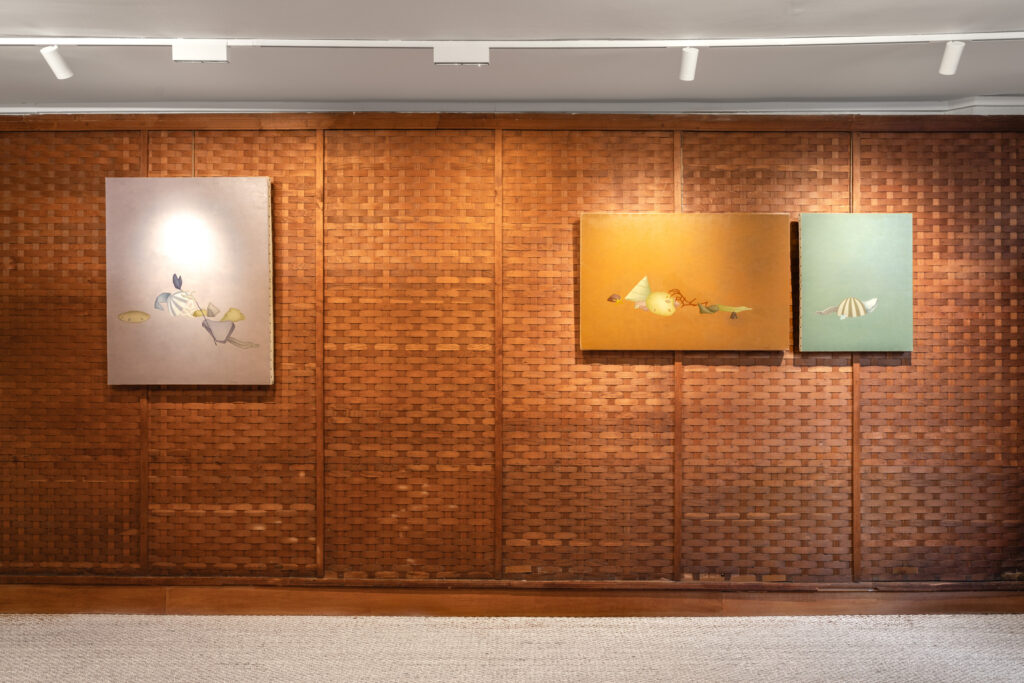
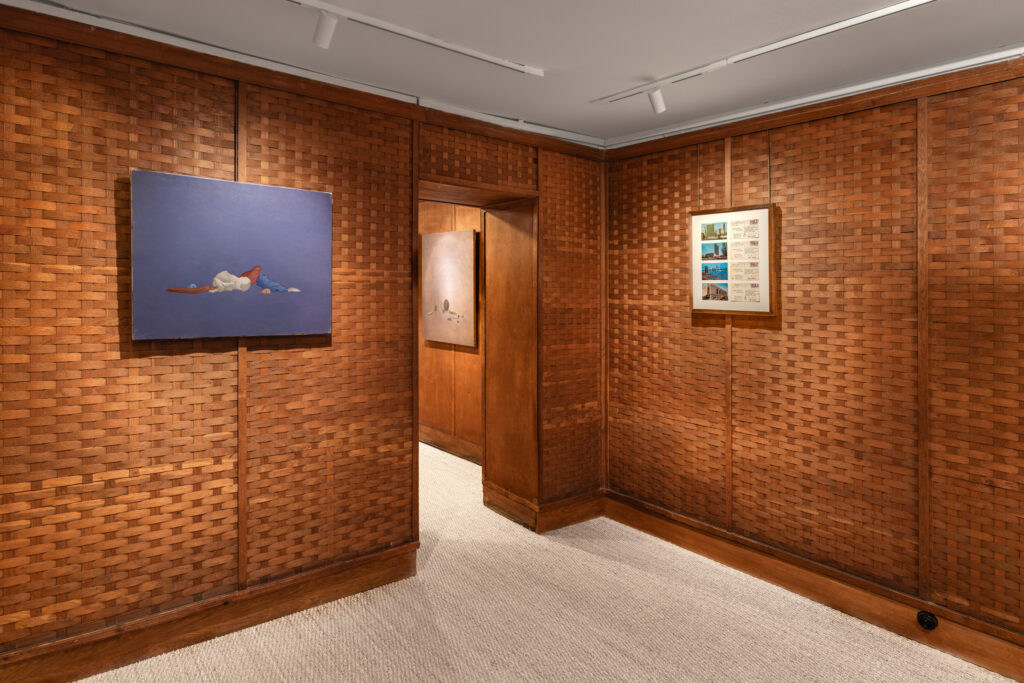
1974 is a decisive year. From then on she devoted herself exclusively to the series of Variations, inspired by the music of Schubert, which she loved. The first in the series stands somehow apart. A gilded putto, painted in grisaille and probably taken from a church interior, occupies the centre of the canvas. It reappears in Variation 3, among others. The ones that follow are compositions that seem almost endlessly built from a limited number of objects: the unbroken thread of her still lifes. Some forms are perfectly recognisable: a sea urchin shell, a small dried leaf, a white onion, a seashell, a piece of coral, a ribbon of steel, a fragment of marble, a poppy seed head… One imagines treasures gathered on a beach during long walks, like those she used to take with her mother during her American childhood. Others are more mysterious: perhaps a pair of angel’s wings, a small cylinder identified as an ancient seal, shards of Egyptian pottery, a miniature capital, a little serpent resembling a seahorse that has uncurled, or perhaps a bean pod… In the first years of the series, the objects are stacked at the centre of the canvas like follies. At times they are aligned along a single line, as though resting on a table, generally lit from the right. Over the years, shadows and horizon lines fade, letting the objects drift free in the space of the canvas, as if the motifs were receding behind increasingly enigmatic forms and muted half-tones.

View of the Deborah Hanson Murphy & On Kawara exhibition © Jean Vayssié
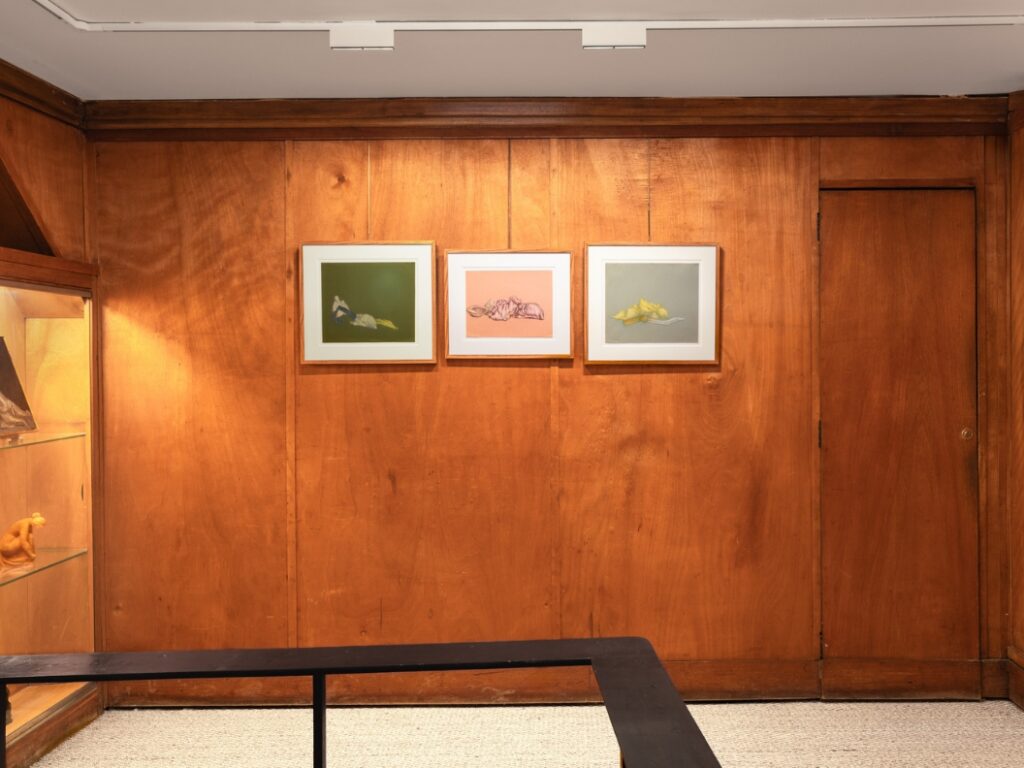
The backgrounds are always neutral: browns, blues or greys, sometimes reaching deep turquoise. The paint grows lighter over time. We know that these fragments of diverse realities, drawn from nature or from the highest cultures, were set on a sculptor’s turntable or on a mantelpiece, in front of a pier glass. These canvases are paintings of reflections: a vain attempt to capture the reality of a moment, ghostly and enigmatic. Little is known of Deborah Hanson Murphy’s habits or artistic circles on the Parisian scene of the 1970s and 1980s. We know only that she liked to surround herself with literature and music lovers. Titian and Chardin were the pillars of her artistic pantheon. Looking at her canvases, it is hard not to think of the quasi-surrealist overtones of Yves Tanguy, or of the metaphysical still lifes of Giorgio Morandi, who was one of the few artists of her time to find favour in her eyes.

View of the Deborah Hanson Murphy & On Kawara exhibition © Jean Vayssié
The Variations occupied Deborah Hanson Murphy until her death in 2018: a long, obsessive loop to which she returned, again and again. Early on, she began noting the dates of her reworkings on the back of each stretcher — sometimes five or even fifteen years after a canvas was begun — often leaving ghostly pentimenti beneath the paint surface. One can picture her living within the slow round of her images as they gradually transformed, like a pocket cinema, or a magic lantern show flickering across a bedroom wall, its forms taking flight just as one drifts off to sleep. One pictures her living inside the circling procession of her images and their slow metamorphoses, a private cinema, a magic lantern flickering on the walls of a bedroom, its forms taking wing at the moment of falling asleep. Anaël Pigeat
Born in 1931 in Stockton, California, Deborah Hanson Murphy began her studies at Stanford University. After a first trip to Paris, she enrolled at the Art Students League in New York. In the years that followed, she worked for a time as a journalist for Mademoiselle magazine. It was then that she met her husband, Richard Winslow Murphy, himself a journalist for Time. The couple soon crossed the Atlantic and travelled to India and Italy. They spent a year near Naples, in Ravello, then returned to Paris, where they settled for good. They lived first on rue du Dragon, then near rue Lamarck, at the foot of Montmartre. Her early paintings include still lifes, bouquets of flowers and everyday objects, a few self-portraits, and views from her window onto the church of Saint-Sulpice in Saint-Germain-des-Prés.
View of the Deborah Hanson Murphy & On Kawara exhibition © Jean Vayssié From 20 November 2026 to January 16, 2027, Galerie Dina Vierny takes over its historic premises at 36 Rue Jacob to bring together two distinctive figures from the second half of the 20th century: the American painter Deborah Hanson-Murphy (1931–2018), exhibited at the gallery for the first time, and the conceptual artist On Kawara (1933–2014). To mark the occasion, journalist and art critic Anaël Pigeat sheds light on the work of Deborah Hanson-Murphy.
A group of paintings, spotted at an auction a few years ago by a discerning amateur eye, brought to light the work of Deborah Hanson Murphy (1931-2018) produced in Paris over nearly fifty years in the silence of her studio. Of her life, only scattered fragments are known. In recent years they have been pieced together like a puzzle, through the recollections of friends and a few written lines.
Born in 1931 in Stockton, California, Deborah Hanson Murphy began her studies at Stanford University. After a first trip to Paris, she enrolled at the Art Students League in New York. In the years that followed, she worked for a time as a journalist for Mademoiselle magazine. It was then that she met her husband, Richard Winslow Murphy, himself a journalist for Time. The couple soon crossed the Atlantic and travelled to India and Italy. They spent a year near Naples, in Ravello, then returned to Paris, where they settled for good. They lived first on rue du Dragon, then near rue Lamarck, at the foot of Montmartre. Her early paintings include still lifes, bouquets of flowers and everyday objects, a few self-portraits, and views from her window onto the church of Saint-Sulpice in Saint-Germain-des-Prés.

View of the Deborah Hanson Murphy & On Kawara exhibition © Jean Vayssié
1974 is a decisive year. From then on she devoted herself exclusively to the series of Variations, inspired by the music of Schubert, which she loved. The first in the series stands somehow apart. A gilded putto, painted in grisaille and probably taken from a church interior, occupies the centre of the canvas. It reappears in Variation 3, among others. The ones that follow are compositions that seem almost endlessly built from a limited number of objects: the unbroken thread of her still lifes. Some forms are perfectly recognisable: a sea urchin shell, a small dried leaf, a white onion, a seashell, a piece of coral, a ribbon of steel, a fragment of marble, a poppy seed head… One imagines treasures gathered on a beach during long walks, like those she used to take with her mother during her American childhood. Others are more mysterious: perhaps a pair of angel’s wings, a small cylinder identified as an ancient seal, shards of Egyptian pottery, a miniature capital, a little serpent resembling a seahorse that has uncurled, or perhaps a bean pod… In the first years of the series, the objects are stacked at the centre of the canvas like follies. At times they are aligned along a single line, as though resting on a table, generally lit from the right. Over the years, shadows and horizon lines fade, letting the objects drift free in the space of the canvas, as if the motifs were receding behind increasingly enigmatic forms and muted half-tones.

View of the Deborah Hanson Murphy & On Kawara exhibition © Jean Vayssié
The backgrounds are always neutral: browns, blues or greys, sometimes reaching deep turquoise. The paint grows lighter over time. We know that these fragments of diverse realities, drawn from nature or from the highest cultures, were set on a sculptor’s turntable or on a mantelpiece, in front of a pier glass. These canvases are paintings of reflections: a vain attempt to capture the reality of a moment, ghostly and enigmatic. Little is known of Deborah Hanson Murphy’s habits or artistic circles on the Parisian scene of the 1970s and 1980s. We know only that she liked to surround herself with literature and music lovers. Titian and Chardin were the pillars of her artistic pantheon. Looking at her canvases, it is hard not to think of the quasi-surrealist overtones of Yves Tanguy, or of the metaphysical still lifes of Giorgio Morandi, who was one of the few artists of her time to find favour in her eyes.

View of the Deborah Hanson Murphy & On Kawara exhibition © Jean Vayssié
The Variations occupied Deborah Hanson Murphy until her death in 2018: a long, obsessive loop to which she returned, again and again. Early on, she began noting the dates of her reworkings on the back of each stretcher — sometimes five or even fifteen years after a canvas was begun — often leaving ghostly pentimenti beneath the paint surface. One can picture her living within the slow round of her images as they gradually transformed, like a pocket cinema, or a magic lantern show flickering across a bedroom wall, its forms taking flight just as one drifts off to sleep. One pictures her living inside the circling procession of her images and their slow metamorphoses, a private cinema, a magic lantern flickering on the walls of a bedroom, its forms taking wing at the moment of falling asleep.
Anaël Pigeat Galerie Dina Vierny
36 rue Jacob, 75006 Paris
53 rue de Seine, 75006 Paris
42 rue de Seine, 75006 Paris
Open from Tuesday to Saturday from 11 a.m. to 7 p.m.
Galerie Dina Vierny
36 rue Jacob, 75006 Paris
53 rue de Seine, 75006 Paris
42 rue de Seine, 75006 Paris
Open from Tuesday to Saturday from 11 a.m. to 7 p.m.